Name: Jon Catler
Nationality: American
Occupation: Composer, guitarist, label founder at Freenote
Current release: Jon Catler's new album The Young Mountain Of The East is out May 22nd 2026 via Chaikin.
Recommendations: Our studio, WildHouse, is a microtonal studio, with guitars, basses, keyboards, drums and percussion available in various tuning systems, and would be of interest to anyone who would like experience playing new pitches.
Things I am passionate about but rarely get to talk about: One of my favorite subjects is evolution. And if there are aliens and they come to visit, I would like to jam with them!
If you enjoyed this Jon Catler interview and would like to know more about his music and upcoming live dates, visit him on bandcamp or on the Freenote website.
When did you first start getting interested in the world of alternative tuning systems? Which artists, approaches, albums or performances using alternative tuning systems captured your imagination in the beginning?
I was 14 years old, and a drummer moved next-door to us and we formed a band. We rehearsed in his room, which was a reformed garage, and he let me practice in there sometimes on my own.
One day, I was practicing my favorite technique, feedback, and playing a low E note, and I was hearing another note feedback. This note was a type of D, but when I tried to find a fret for it, I realized that the note that was feeding back was significantly flatter than the D note which I had a fret for.
At the time, I could not understand why I didn’t have a fret for this beautiful and perfectly in tune note. It turned out I was listening to the seventh Harmonic.
Microtonal approaches and alternative tuning systems are an integral part of many cultures, and traditions. Which of these do you draw from in your playing – and why?
I have studied and performed Indian classical music for many years, which is in Harmonic tuning. I have also studied Arabic music, Latin rhythms, American Indian music, jazz, blues, country and free music, and have always enjoyed listening to all different types of music.
As an American, I put it all in a blender and put my own spin on it.
For The Young Mountain Of The East, what did you start with, including your choice of tuning system? If there were conceptual considerations, what were they?
For the Young Mountain of the East record, I started with 13-limit Harmonic series tuning.
The concept was to create a piece that built upon and expanded the 7-limit dyads of La Monte Young’s composition The Well-Tuned Piano by extending the dyads to include 11 and 13-limit pitches.
Tell me a bit about the way the new material developed and gradually took its final form, please.
I developed the composition so that the initial 7-limit pitches all moved into 13-limit pitches over time, and then reverted back. Then I added some improvisation and a section of Harmonic rhythm.
This all came organically from the original idea.
In as far as it is applicable, were there tuning-specific challenges for your new release or recent performances? In how far has working with alternative tuning systems changed your collaborative practise in general?
This piece was performed on Fretless Sustainer Guitar, so the main challenge was to gracefully slide into the correct higher Harmonic, make it perfectly in tune, so there were no beats, and then sustain that pitch until it was time to move it.
I would love to know a little about the feedback you've received from listeners or critics about your music written for different tuning systems. Were there surprising responses, did you perhaps gain new “insights?”
My first record, Cowpeople, received a nice review in Guitar Player magazine many years ago. My recent record, Devil’s Dance with 13 O’Clock, received ‘Best Of The Year’ in Downbeat.
I have released 15 albums of original Harmonic music, and received a lot of good press. Some of the less stellar press was the most amusing, such as Cowpeople being referred to as ‘Willie Nelson on a root canal’ (NY Post) and my favorite, that my soloing in The Forever Bad Blues Band sounded like I was ‘stepping on the cock of the coyote’.
This critic was in Germany, and said the gig was ‘not to be missed’.
How would you describe the shift of moving from one tuning system to another?
Cowpeople was in 31-tone equal temperament, but after seeing La Monte perform in 1981, I knew that I needed a Just Intonation guitar.
So I designed a Harmonic Series fretting system for interchangeable fingerboard guitar, which allowed me to switch fretboards in seconds. My favorites were the 49-note per octave Just Intonation fretboard and the Fretless, and I switched between both in the Blues Band.
I later developed the 64-note per octave JI guitar, and the 12-Tone Ultra Plus guitar, which added Harmonic Series frets to the standard 12-Tone Equal Tempered system. This led to the 24-Fret Just Intonation design which I currently use. All of these systems, as well as the other multi equal tempered systems I tried, had different qualities which enabled different music.
For example, 31-tone equal allows parallel modulation to 31 different tonal centers, which the 64-tone did not. The Ultra Plus system provided Harmonic intervals and enough modulation options to compose the jazz tunes on the Fretless Brothers records. The 24-Fret JI system gives probably the best combination of available notes and ease of playing.
Terms like consonant and dissonant are used in school, but mostly with very limited understanding of what they mean. How has your own idea of these terms changed over time and how do you see them today?
The 13th Harmonic had been proposed as a potential consonance by Kathleen Schlesinger, who was mentioned in the Harry Partch book Genesis Of A Music, but there was no music from her available. I was the first person to present a body of work using the 13th Harmonic, as I believed it to be a new type of consonance.
Also, the history of music can be viewed as man trying to overcome the obstacle of the comma, which is a tuning discrepancy that results from the stacking of pure intervals. The tempering of pitches in the 12-Tone Equal Tempered system is due to this comma.
By expanding my understanding of consonance and dissonance, I have come to view the comma not as a dissonance, but as a generator of natural beats, which can be used in many different ways.
What was your own learning curve / creative development like when it comes to alternative tuning systems - what were challenges and breakthroughs?
In a 1978 issue of Guitar Player magazine there was an article on Ivor Darreg. It featured a picture of him holding a guitar with more frets than I had ever seen on a guitar. At that point, I had a feeling that the mysterious note I had heard through feedback in my drummer’s garage might be on one those frets.
Soon after, a man named Tilman Schafer was kind enough to give me a 31-tone classical guitar. As he didn’t know how to play it, I took it home and figured out how to play a Harmonic 7th chord, which included the mysterious feedback note. I played the chord for 10 minutes and let it resonate against my chest. I then laid the guitar on my lap and realize my life had changed.
Since then, I have enjoyed the challenge of unlocking the possibilities of each new tuning system.
In how far has working with alternative tuning systems led to creating different music for you personally? Are there creative ideas / pieces which you could not realise in equal temperament?
In equal temperaments, all of the intervals except for the octave are beating. I realized that I wanted to use Nature’s tuning system as my reference.
Harmonic tuning allows beatless intervals as well as acoustical phenomena, including beating commas, Summation tones and Difference tones, Harmonic Rhythms, and Harmonic Clouds.
Our new release by 13 O’Clock, Wolftrap, translates the Fibonacci Series into Harmonics Series pitches.
What were some of the most interesting tuning systems you tried out and what are their respective qualities?
31-tone equal is great for introducing acceptance of a lot of pitches per octave, and it has very good 3rds and Harmonic 7ths in 31 keys!
The 64-tone JI guitar was the most comprehensive design with the most dimensions. The 24-Fret JI Guitar provide the best play ability. And the fretless guitar provides unique tone, freedom and expression.
Do you still use equal temperament? What are some of the aspects and goals for which you find it suitable?
I still use standard Equal Temperament, but I have a Bigsby Palm Pedal on the guitar, which allows me to bend the top three strings individually.
Although I had not written anything in equal temperament for a number of decades, I recently recorded two original compositions using this guitar, and still use it on some gigs.
So far, the focus with regards to alternative tuning systems has mainly been on harmony. But melody is affected, too. How do you personally understand melody and what changes when it becomes part of a new pitch environment?
I had been familiar with the 11th Harmonic as it had been used by blues players through bends and slide.
But I spent a lot of time listening to the 13th Harmonic in a harmonic context before I started naturally using it melodically.
With electronic tools, playing and composing in just intonation has become a whole lot easier. Do you find this interesting? What are some of the technologies, controllers and instruments you use for your own practise?
My ears are accustomed to the complexities of sound of a vibrating string or vocal cord or drum head, and these complexities seem to be lacking in some electronic music.
We do use a Kurzweil keyboard as it has sounds and samples which can be easily tuned.
Some artists approach tuning systems from a strongly scientific angle. In case you're interested in this, what do you feel 'research' could potentially uncover and provide in terms of tuning systems? Where do you see the biggest potential for exploration at the moment?
The study of Harmonics can and should be used in tandem with scientific research. For example, the spiral is evident in everything from our DNA to the cosmos and from the shape of our ears to the shape sound waves take when they travel through the atmosphere.
When I translated the Fibonacci Series into Harmonic Series pitches, it became evident that the spiral that was produced had three parts, so it was a triple spiral.
This was not apparent simply by looking at the numbers. But as soon as we heard it, we divided the triple spiral up amongst three different instruments, and this revealed the true nature of the spiral.
This can be heard on the tracks “Wolftrap” and “Dogbite” from 13 O’Clock’s record WorldWind.

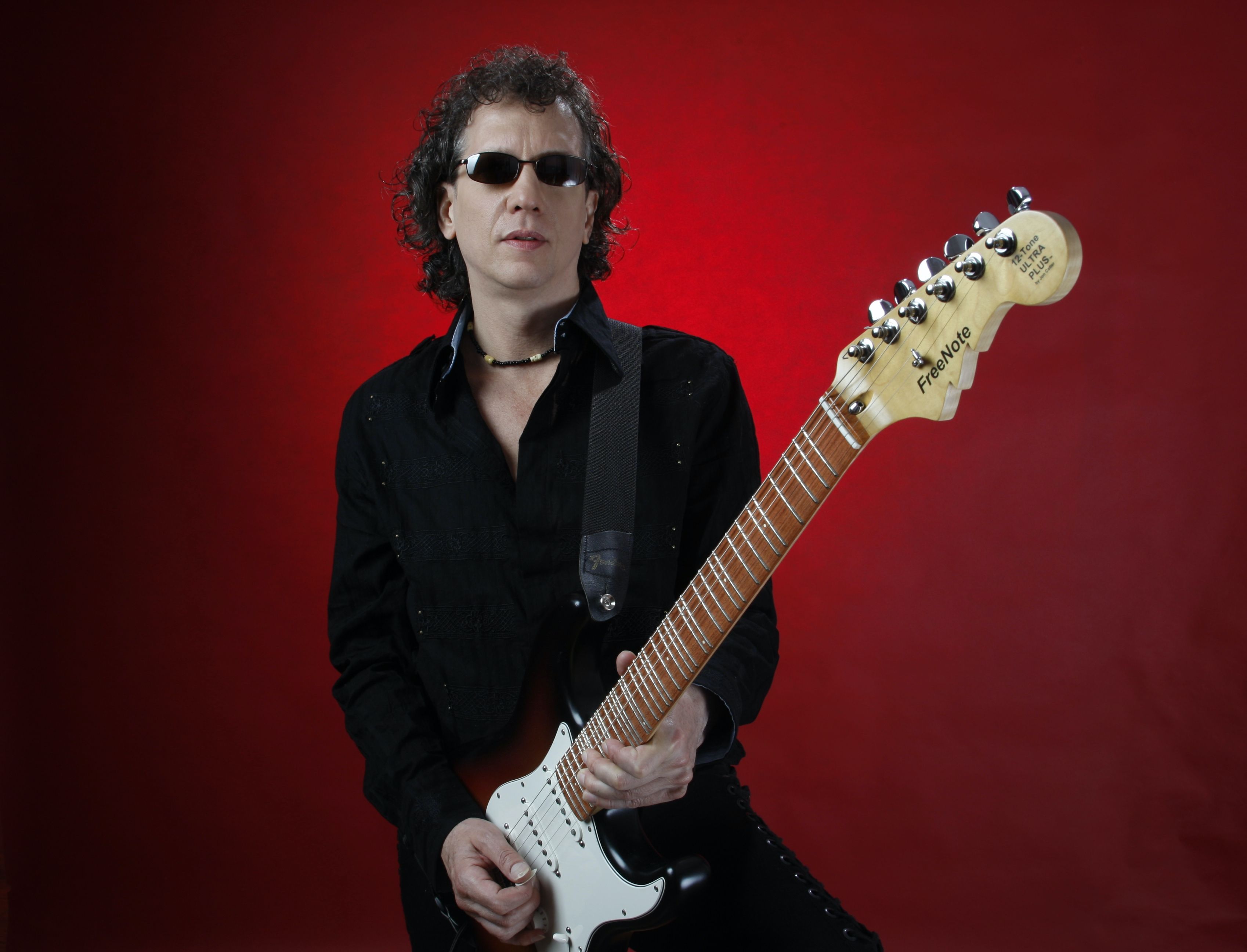 Jon Catler Interview Image (c) the artist
“The study of Harmonics can and should be used in tandem with scientific research.“
Video