Name: Jerome Sabbagh
Nationality: French, NYC-based
Occupation: Saxophonist, composer, band leader, label founder at analog tone factory
Current release: Jerome Sabbagh's Heart, featuring Joe Martin on bass and Al Foster on drums, is out now on analog tone factory.
If you enjoyed this Jerome Sabbagh interview and would like to know more about his music, upcoming releases and live dates, visit his official homepage. He is also on Instagram, and Facebook.
When I listen to music, I see shapes, objects and colours. What happens in your body when you're listening? Do you listen with your eyes open or closed?
I tend to listen with my eyes open, but I do both.
If it sounds good, I find myself relaxing into the music, I often move my feet or my head along with the music.
How do listening with headphones and listening through a stereo system change your experience of sound and music?
I do most of my listening on speakers, even though I have great headphones. I find speakers to be more enjoyable. Headphones are more for on the go listening for me, and also when I’m working on a record, to double check mixes and masters. My neighbors are tolerant, so I can listen late at night without using headphones.
With good speakers and a good recording, I feel like the musicians are playing in the room. It’s harder for me to feel that on headphones. As great and convenient as it can be, it doesn’t quite feel as tactile. I still enjoy it though.
You had released quite a few albums before you released your first vinyl LP. How did you go from there to pursuing a true analog philosophy with the analog tone factory?
My first record as a leader, North (2004) was actually recorded live to two track tape, just like Heart was, and by the same engineer, James Farber! So in a way, I’ve just been persistent in what I like and what I believe in.
The difference was that, back then, none of these records were issued on vinyl. They all became CDs. It took me a while to release vinyl and figure out that not only did it sound better, but it also could be a viable option financially.
In my opinion, it really does sound better to keep the whole chain analog all the way to the listener. I’m glad I am able to do that now.
Can you give a brief overview of how the analog tone factory was founded and the road to your first release?
I started pressing vinyl about ten years ago with my record The Turn. I then did No Filter and Vintage.
All these albums were on Sunnyside Records, but I licensed the digital to them and oversaw everything analog myself, from the mastering to dealing with the pressing plant, selling and shipping. Since I was already doing all that, it felt natural to, with the help of my partner Pete Rende, a great pianist and engineer, create my own imprint for Heart, especially since, over time, I developed a bit of a following in the audiophile community.
The hope is that the label will be an outlet for my own projects but also for other musicians, and not just in jazz. The first recording session in which I will just be producing is happening in November, and I’m really excited about it. Stay tuned …
I notice that audiophile culture has its roots in jazz – a few noteworthy exceptions notwithstanding. Do you think that there is a connection between improvisation and "analogism"?
I am not sure. I think audiophiles tend to like jazz records from the 50s and 60s, because they were generally effective at capturing the energy, the feel and sound of the musicians playing in the room. I think it’s the same with classical or pop records from that era.
Things get less direct and more processed after that in general, and I question whether that’s really for the better. The seemingly infinite control you get over things in digital is a double edged sword. It’s very easy to abuse and the music gets lost in the process.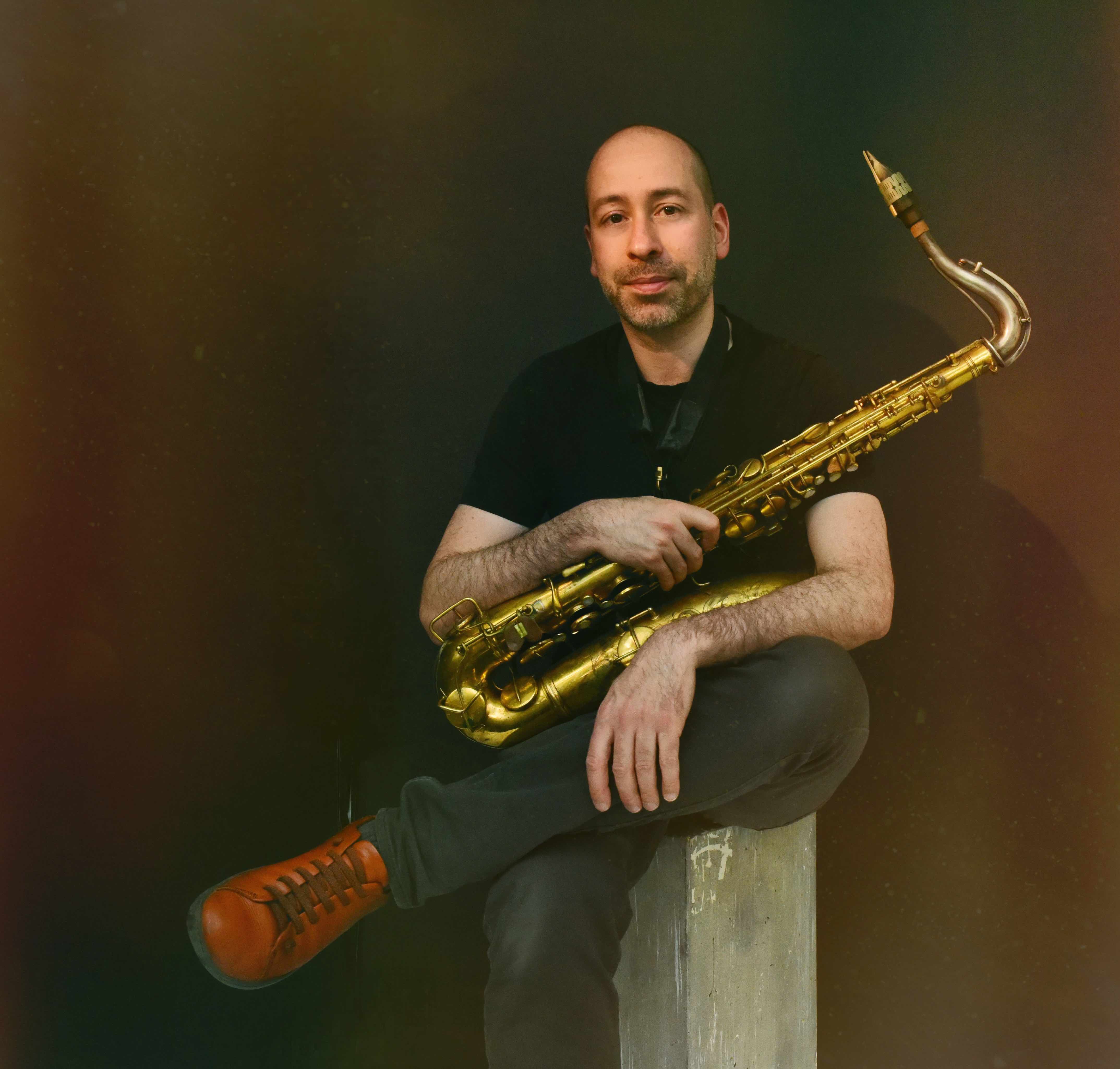
Jerome Sabbagh Interview Image by Shervin Lainez
What I find fascinating about the surge in interest for audiophile releases is the idea that sound is a vital ingredient to enjoying music. Tell me about your own fascination – dare I say fetish – for sound, please. What is the best possible sound for you? What's the ideal?
For me, good sound quality allows me to get into the music more. Good sound brings me a step closer to the live event. I don’t care if there is more or less bass, of if the highs are hyper detailed. I’m not listening for frequency response, I just want to feel like the musicians are playing in the room, because it helps me get into the music. That’s all it is, at least for me.
As far as my fascination for recorded sound, it directly stems from my saxophone practice. I spent years working on and developing my saxophone sound. I still work on it all the time. So when came the time to do my first record, I tried to learn about what would help to record it well. That then led me to get a decent stereo system, so I could assess things and take my time to do it outside of the studio. And having a decent system led in turn to my enjoying listening to recorded music a lot more …
I listen to a lot of live music here in New York and I play with real musicians all the time. Live music is my benchmark for sound, so anything that brings me closer to that feeling is a good thing.
My own interest in vinyl was shaped by several almost spiritual listening sessions as a teenager by actually quite cheap 80s vinyl which sounded otherworldly good to me. What are your own, important early experiences in this regard?
I grew up with vinyl records. My first jazz vinyl records were Miles Davis’ Four & More and a Duke Ellington compilation.
I also had some pop and, growing up in Paris, some French chanson. All these records were important to me, although CDs took over quickly. Now most of my listening is vinyl records again.
I feel that listening to records is a different experience in terms of mindset. When you put a record on, you tend to really listen to it. It’s more time consuming, it’s more of a commitment. It’s harder to go from one track to the other, like one might do when streaming. It’s like watching a movie in a movie theater, it’s a fuller experience. I prefer it.
Tell me about some of the albums or artists that you love specifically for their sound, please.
Dexter Gordon, Stan Getz, Miles Davis, Camarón de la Isla, Keith Jarrett, Abbey Lincoln, Maria Callas, Joe Williams, Thelonious Monk, Elvin Jones, Sonny Rollins, Clara Haskill, Horowitz, Wilbur Ware are some of them … I find myself inspired by singers in general, and players who have a singing quality in their playing, whatever their instrument may be.
In terms of recordings, both for sound and music, I love the Ray Charles & Betty Carter record, Elis & Tom, Sonny Rollins’ Way Out West, and the Joe Williams and Count Basie record called Just the Blues.
There are many others, of course.
What does your listening system at home look like?
My system actually just changed, for the first time in a really long time. For many years I had Rogers JR 149 speakers but I was recently entrusted with a pair of upgraded Quad ESL 57 as a long term loan, so I am trying them out. 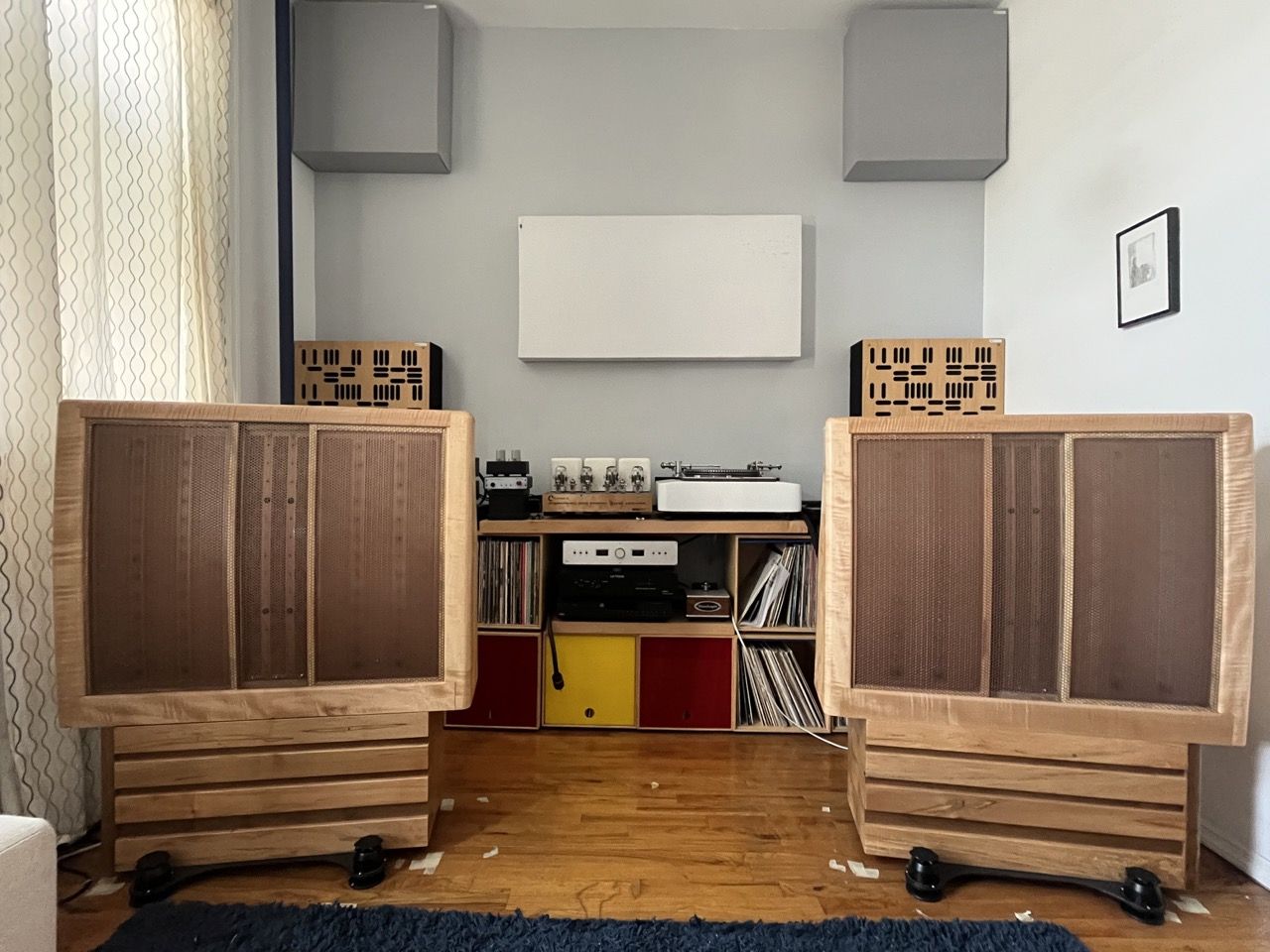
Jerome Sabbagh Listening Room Image (c) the artist
I have a Townshend Allegri passive preamp and a Harman Kardon Citation II tube amp that was completely redone. I also have a Garrard 401 turntable, a Fidelity Research FR-64S tonearm with a Supex 900 cartridge with a new tip by Ana Mighty Sound, an Arcam CD23 CD player and a Wavelength Cosecant N2 DAC. I have a Fairchild 225-A cartridge for mono records. 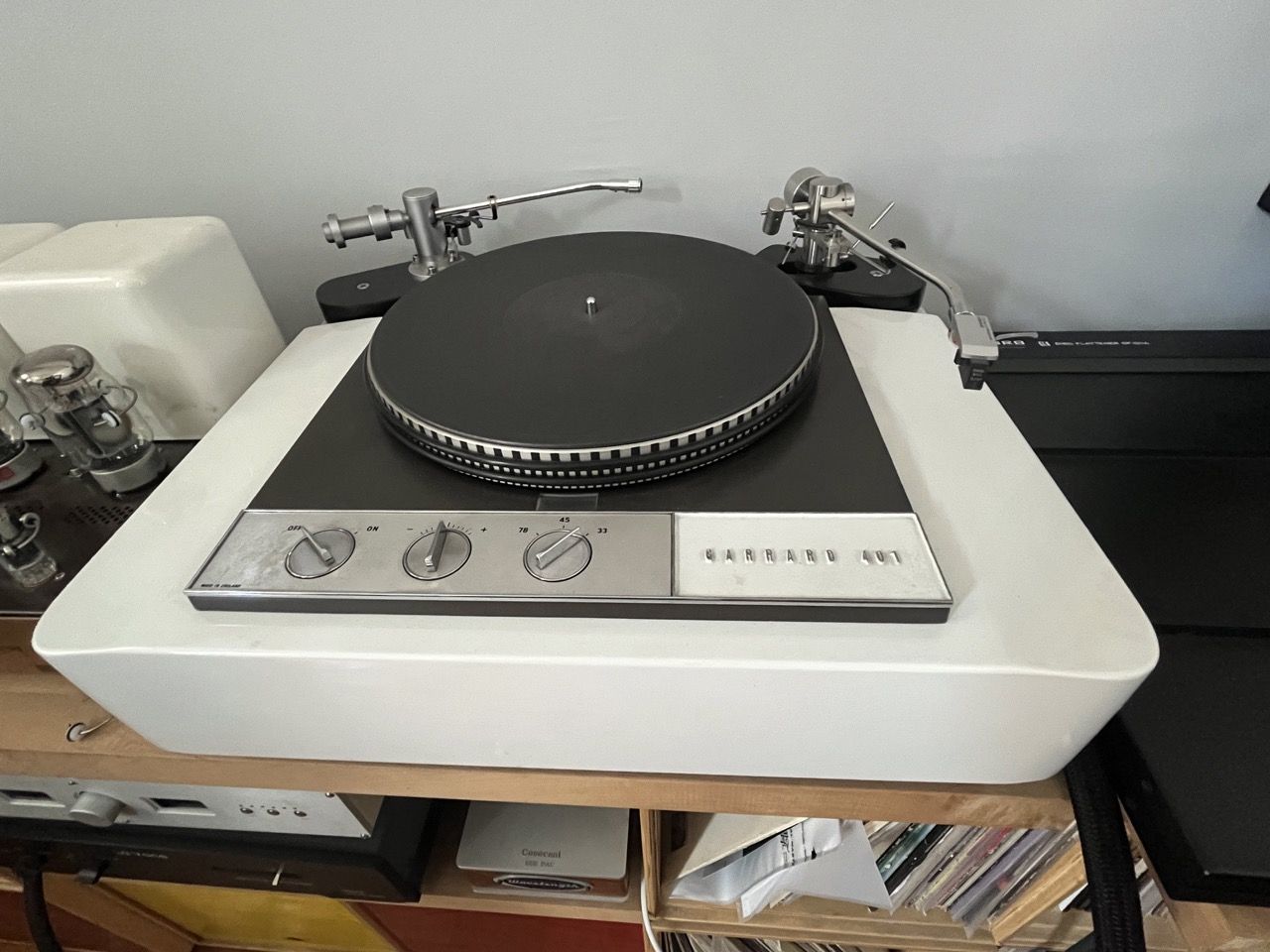
Jerome Sabbagh Listening Room Image (c) the artist
Most of what I have is vintage gear. I have Audeze LCD-X headphones and the small Neve headphone amp. On the go, I use the Etymotic Research ER-4S.
I love great sounding releases, but I can see where that love can turn into an obsession where it's no longer about the music anymore. Where do you personally draw a line, if at all?
Everything I do when recording is aimed at creating the conditions for the music to be better. We record all in the same room for that reason, so we can play as a band and really hear each other naturally.
I don’t really do edits and everyone knows that from the get go, which puts everyone in a different mindset when playing music. It’s a more focused experience. We just try to play like we would at a concert, and record it as well as possible. I am using certain tools because I think they sound better, and make the music translate better to the listener, but it’s all for the music.
I am never trying to make a “great sounding record” from a - rather vain - sonic point of view. In fact, it’s happened for my own records that I’ve picked takes that sounded worse to me than others purely in terms of sonics, but they were the better takes musically. I’m just trying to allow for the music to emerge, and record it as well as I can.
I don’t buy any “audiophile” records of music that doesn’t interest me, unless I have a really good reason to do so, like checking out a particular pressing plant’s work, or an engineer’s work etc. I don’t see the point.

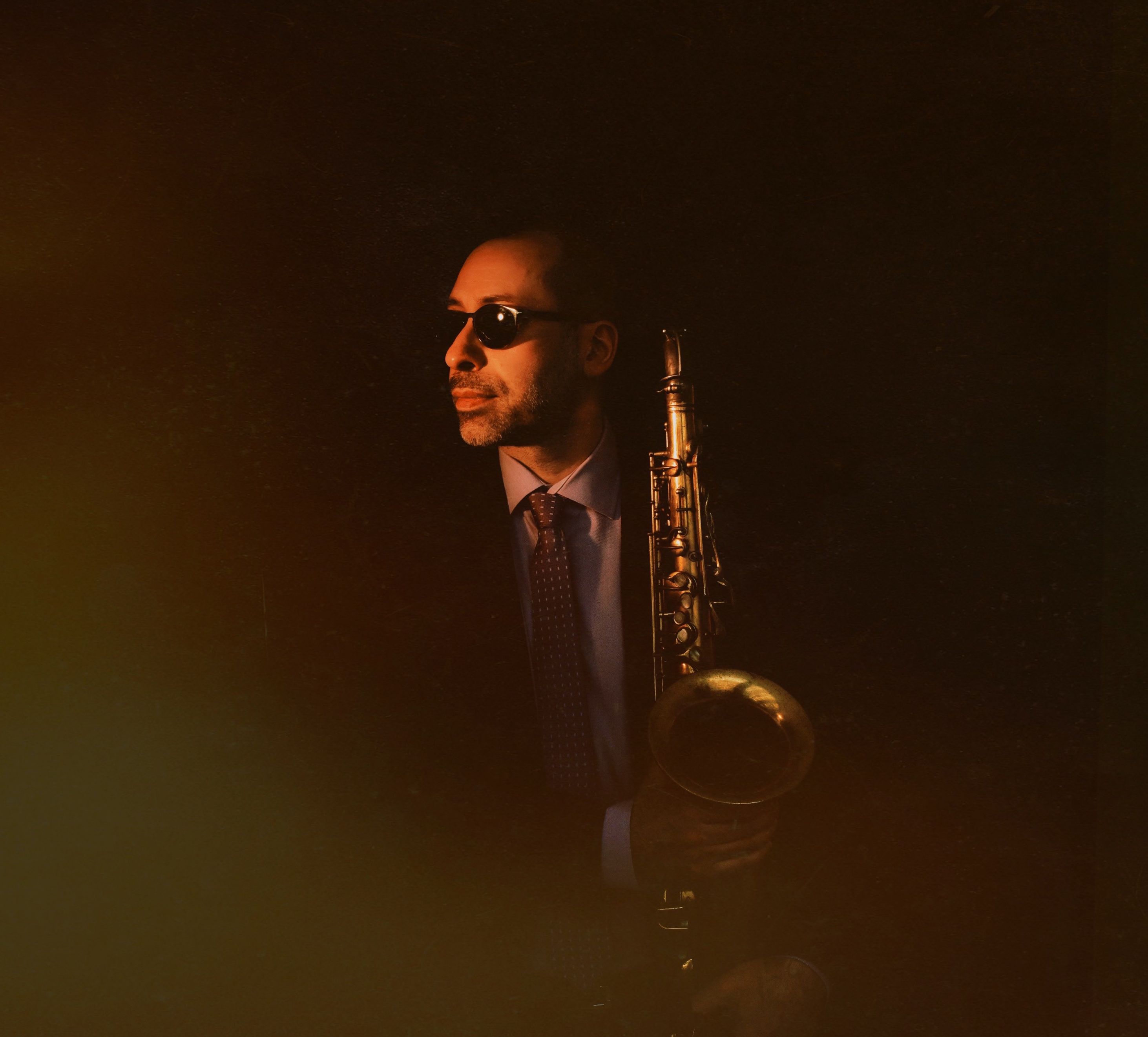 Jerome Sabbagh Interview Image by Shervin Lainez
"I just want to feel like the musicians are playing in the room."
Video