Name: Janis Siegel
Nationality: American
Occupation: Singer, songwriter
Current Release: Janis Siegel's new album The Art of Vocalese is out via Origin.
Hometown Recommendations: I would recommend visiting the Cooper-Hewitt Design Museum on the upper east side and on the other end of the spectrum, Coney Island. Go to a freak show, eat a Nathan’s hot dog, ride the Cyclone, be there for the Mermaid Parade.
Things that I am passionate about but rarely get to talk about: I am an avid cook and often try and recreate dishes I taste in my travels. I can talk incessantly about food and drink and love writing about meals as well. Cooking relaxes me and feels very much like creating music.
I also still love medicine and the miracle that is the human body. I’m endlessly fascinated with medical oddities, diseases and the chemistry of the body.
If you enjoyed this Janis Siegel interview, and would like to know more about her music and live performances, visit her official homepage. She is also on Instagram, and Facebook. For information on her former band, visit the Manhattan Transfer website.
When did you first consciously start getting interested in singing? What was your first performance as a singer on stage or in the studio and what was the experience like?
My first experience on a stage I remember quite vividly.
I was in 2nd grade at P.S. 197 in Mrs O’ Riordan’s class and for some reason she wanted me to sing in assembly and she picked a tune for me to sing: “Too- Ra- Loo-Ra Loo-Ra” which is an Irish lullaby written in 1913.
I don’t remember being particularly frightened or unnerved. I think Bing Crosby sang it in his film Going My Way.
My first experience in the studio was at age 12, recording 2 singles with my group The Young Generation for Red Bird Records. We sang on one mic (there were 3 of us) with a LIVE orchestra and rhythm section. The producer was Richard Perry.
This ignited my love of the studio … and it is still to this day my happy place. I wasn’t serious about becoming a singer until age18 though.
What were some of the main challenges in your development as a singer/ vocalist? Which practices, exercises, or teachers were most helpful in reaching your goals – were there also “harmful” ones?
One of my first challenges was that I never had any formal vocal training and when we started touring heavily for months at a time … I started to lose my voice regularly. Plus I was also staying out late, smoking, drinking, and with the arrogance of youth I thought I could just continue on that path.
I had to make a decision about the longevity of my voice. I started studying voice in LA around 1980, stopped smoking pot and cigarettes and started being more protective of my throat and conscious about my choices.
What are the things you hear in a voice when listening to a vocalist? What moves you in the voices of other singers?
The first thing that hits is the vocal tone and timbre. I then naturally listen for pitch … out of tune singing disturbs me physically.
Then comes story telling … and following that, authenticity within a style, harmonic sophistication, phrasing, and swing.
How would you describe the physical sensation of singing? [Where do you feel the voice, do you have a visual sensation/representation, is there a sense of release or tension etc …]
The perfect physical manifestation of singing to me is surfing effortlessly on a big wave. Critical thinking and over intellectualization stops, everything is instinctual.
You are relaxed, flying and focused.
We have a speaking voice and a singing voice. Do these feel like they are natural extensions of each other, ends on a spectrum or different in kind?
Your singing voice should be your speaking voice … but with pitch.
How do you see the relationship between harmony, rhythm and melody? Do you feel that honing your sense of rhythm and groove has an effect on your singing skills?
Honing your sense of rhythm and learning about other rhythmic templates from other parts of the world is a thrilling and beneficial practice and puts new skills in your toolbox.
My background really is pop music and R+B and so 2 & 4 is my groove. In the Manhattan Transfer, this gave me the ability to authentically tackle songs like "Boy from New York City" or the songs Rod Temperton wrote for us, because they were already in my body rhythmically.
Curiosity drove to me to study Brazilian music and those rhythmic feels and modalities, then Latin music with its salsa, son, bomba, plena, montuna, cumbia, etc. And let’s not forget Indian music with its rhythmic complexities.
Learning how to feel and phrase to some of these modalities led to actual work, collaboration and new musical experiences which I treasure.
As a singer, it is possible to whisper at the audience, scream at the audience, reveal deep secrets or confront them with uncomfortable truths. Tell me about the sense of freedom that singing allows you to express yourself and how you perceive and build the relation with the audience.
Making the audience feel something is a goal of mine, whether it’s to compel them to move their bodies, feel a rush of tears, smile, laugh, or remember someone. Singing is the most direct connection to emotions.
The first goal of performance I think, is to put the audience at ease and make them comfortable.
I'd love to know more about the vocal performances for The Art Of Vocalese, please, and the qualities of your voice that you wanted to bring to the fore.
Vocalese requires flexibility, storytelling within a very specific framework and really good intonation.
These things have been my focus for this new project The Art Of Vocalese.
Does it need to feel and sound “good” or “right” to sing certain words? What's your perspective in this regard of singing someone else's songs versus your own?
Yes. Words need to feel right in the mouth. When writing vocalese lyrics this is particularly important … certain consonants and certain words sing better than others and some combinations work better for singing at a fast tempo. I learned this from Jon Hendricks.
As far as the meaning of the words … yes, I need to be able to relate to someone else’s words and find someplace within myself that resonates. This is so I can communicate authentic feeling to an audience.
I’ve changed words and I’ve even stopped singing certain songs that just don’t jive with where I’m at at the present moment.
Strain is a particularly serious issue for many vocalists. How do you take care of your voice? Are the recipes or techniques to get a damaged voice back in shape?
I warm up around 30 minutes before studio work and also before a live performance.
I try and loosen the embouchure and all the muscles of the cheeks and especially the tongue (for articulation). Moderation in alcohol, sleep, hydration, strengthening of immunity, exercise especially cardiovascular activity, all play a part in taking care of the delicate chords.
I study with a teacher regularly and have had many wonderful ones (and also a couple of clunkers) … although lately I take lessons when I have a big or challenging project coming up, to work on specific areas.
As a touring musician, I have often had to sing on top of a tired, swollen, or infected throat. It’s no fun I can tell you that- your instrument is compromised and you have to immediately assess what you can or cannot do.
My go-to bandaids are steam, medications like prednisone and the queen of all remedies- voice rest whenever possible before stepping on the stage.
For recording engineers, the human voice remains a tricky element to capture. What are some of the favorite recordings of your own voice so far and what makes voices sound great on record and in a live setting?
“Trouble Man“ from At Home ...
… “How Deep Is The Ocean“ from The Tender Trap w/ Fred Hersch, “Spice Of Life” - w/ The Manhattan Transfer from Bodies and Souls …
... “Slow” - from Night Songs …
… “Fotographia” - from Honey & Air by Requinte Trio.
[Read our Fred Hersh interview]
Motherese may have been the origin of music, and singing is possibly the earliest form of musical expression, and culture in general. How connected is the human voice to your own sense of wellbeing, your creativity, and society as a whole?
I don’t know what “motherese” is … but my identity is definitely caught up in being a vocal artist and a harmony singer.
I feel that a life of singing has definitely improved my health, both mentally and physically . Touring for over 50 years has increased my stamina and made me flexible in my world view.
I am inspired constantly by other singers and instrumentalists from around the world. Singing for other people as well as for myself has increased my connection to other humans.

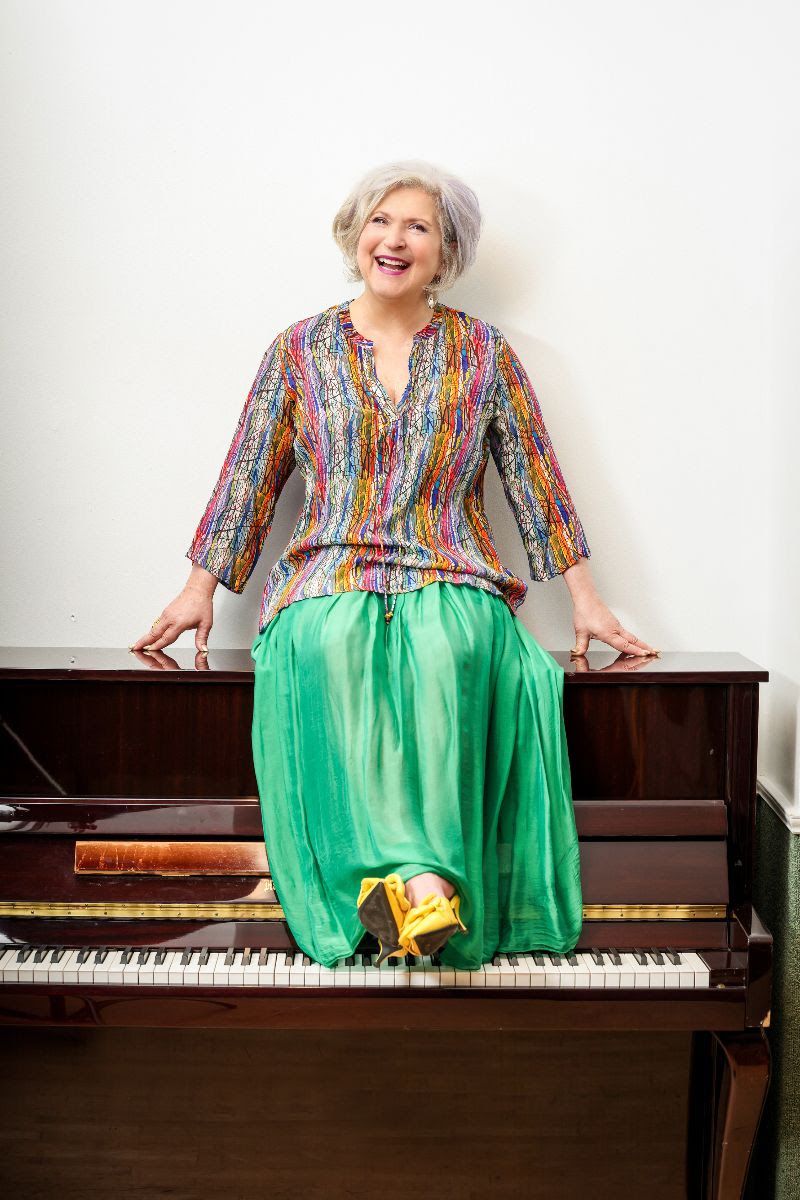 Janis Siegel Interview Image by John Abbott
"Singing is the most direct connection to emotions."
Video