Name: Ida Sand
Nationality: Swedish
Occupation: Singer, songwriter, composer
Current release: Ida Sand's I Will Be Right There EP is out via ACT.
Recommendations for Stockholm, Sweden: You should definitely visit our jazz club Fasching! Great music, vibe and food.
Things that I am passionate about but rarely get to talk about: I´m passionate about strength training. I can talk about bench pressing for hours, haha.
If you enjoyed this Ida Sand interview and would like to know more about her music and upcoming performances, visit her official website. She is also on Instagram, and Facebook.
When did you first consciously start getting interested in singing? What was your first performance as a singer on stage or in the studio and what was the experience like?
I can’t remember NOT singing. Singing was a great part of my upbringing, since my father was an opera singer and we had music in our hose all the time.
I have a recording from when I was about 2 years old which I can’t remember doing but when I hear it it makes me smile, since I sound so happy.
If you're also playing other instruments, how does the expressive potential of these compare to your own voice?
Since piano is an equal part of my artistry.
I have always felt like my voice is very much intertwined with the piano. It's like I have a two-part instrument. When I sing and do not play at the same time, I can feel less connected to the music in a way.
A bit hard to explain, but my voice and my piano hands are more or less depending on each other.
Singing is an integral part of all cultures, and traditions. Which of these do you draw from – and why?
Opera and classical music were my first musical experience and one thing I think I draw from that is a kind of dramaturgy.
My father talked about being able to affect the listener through using dynamics, words, tempo ect and I think classically trained singers do this more consciously and deliberately. I use that in my own singing.
What were some of the main challenges in your development as a singer/vocalist? Which practices, exercises, or teachers were most helpful in reaching your goals – were there also “harmful” ones?
Actually, the best experience I’ve had with singing lessons was with a classical teacher who gave me a very solid foundation for the technical part which I use still to this day.
I haven’t had a bad experience and I’m glad a haven’t had any big troubles with my voice.
What are the things you hear in a voice when listening to a vocalist? What moves you in the voices of other singers?
Oh, that’s a hard question, but I would say that a singer that doesn’t have any filters between the voice and the ”soul” always captures me.
Anyone who sings with truth, intent and presence.
How would you describe the physical sensation of singing? [Where do you feel the voice, do you have a visual sensation/representation, is there a sense of release or tension etc …]
Singing always gets better when you’re relaxed, first of all. But of course there are some potentials for tension, like a vibration in the chest.
I focus on breathing and listening, more than pressure and force.
We have a speaking voice and a singing voice. Do these feel like they are natural extensions of each other, ends on a spectrum or different in kind?
That’s interesting, because I think my talking voice and singing voice are very different.
My speaking voice is not so strong and I have trouble speaking in loud environments. But my singing voice is much more full-bodied and I feel I can ”go through” easier when I sing.
How do you see the relationship between harmony, rhythm and melody? Do you feel that honing your sense of rhythm and groove has an effect on your singing skills?
Rhythm and groove always impact the sound.
I adapt the placement of the tone to what the song is about, how the groove is and the vibe of the song.
What are the potentials and limits of your voice? How much of your vocal performance can and do you want to control?
My limitation is about range, as most singers have.
But I don’t aim to fix it anymore. Now I feel comfortable with what I know and do best. You can also use your limitations to your own benefit.
As a singer, it is possible to whisper at the audience, scream at the audience, reveal deep secrets or confront them with uncomfortable truths. Tell me about the sense of freedom that singing allows you to express yourself and how you perceive and build the relation with the audience.
Singing is absolutely a therapeutic experience. Anyone who sings can relate to that I think.
I don’t think so much of the audience when I sing, to be honest. I’m in my own place and try to stay present and centered.
I´d love to know more about the vocal performances for I Will Be Right There, please, and the qualities of your voice that you wanted to bring to the fore.
As always I just try to do the words justice and my voice is an extension of the vibe, groove and theme of the song.
I try to do my vocal track at the same time as the band with some edits afterwards. I think the vocal track gets more organic that way.
When you´re writing song lyrics, do you sense or see a connection between your voice and the text? Does it need to feel and sound “good” or “right” to sing certain words? What´s your perspective in this regard of singing someone else’s songs versus your own?
When I write my own music I often adjust the words and notes to suit my voice.
When I sing other people's music I try to just let the words decide how I approach the note. Sometimes you have to take ”artistic liberties” and sing the phrase in another way than the original to get a good version.
But I enjoy both things equally, I must say.
Strain is a particularly serious issue for many vocalists. How do you take care of your voice? Are the recipes or techniques to get a damaged voice back in shape?
I´m blessed with a voice that is quite resilient, but I always prioritize sleep. That’s a non negotiable.
And I am cautious around what I eat. Reflux has been an issue in the past, so I cant eat heavy food late in the evening. I’m bad at drinking water, but I try to be better..
How has technology, such as autotune or effect processing, impacted singing? Has it been a concrete influence on your own approach?
It hasn't affected me, since I don’t use it.
For recording engineers, the human voice remains a tricky element to capture. What are some of the favourite recordings of your own voice so far and what makes voices sound great on record and in a live setting?
The best vocal sound for me is the one I always get in the Atlantis Metronome Studio in Stockholm. The have the best Diedrick microphones and an echo chamber. For live performances I will use any mic except Beta Shure 87. That mic doesn’t sound good for the mid in my voice.
My best case scenario for live performances is when I can hear the FOH very well and just have a touch of monitor. I hardly never use In-ear.
Motherese may have been the origin of music, and singing is possibly the earliest form of musical expression, and culture in general. How connected is the human voice to your own sense of wellbeing, your creativity, and society as a whole?
Humans made rhythmic, vocal sound before we even had a language so I think it's very much rooted in our biology.
Singing is so much more than an activity some like to do, if you think about how the slaves were singing in the cotton fields for instance. There’s is a much deeper meaning to it. It can install hope, be empowering and make people feel connected to each other.
Singing is very very powerful.
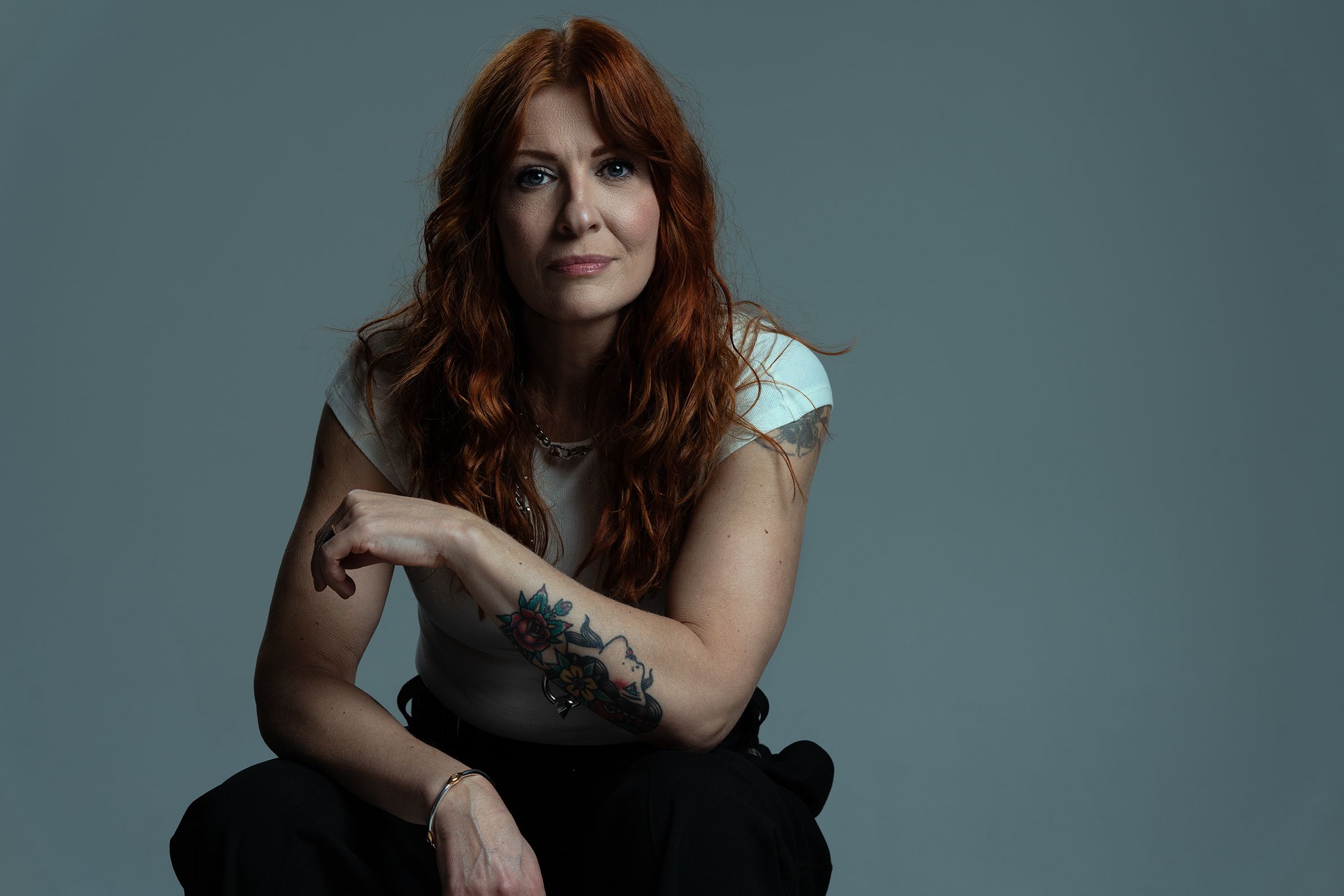 Ida Sand Interview Image by Nikola Stankovic
“Humans made rhythmic, vocal sound before we even had a language. It's very much rooted in our biology.“
Video