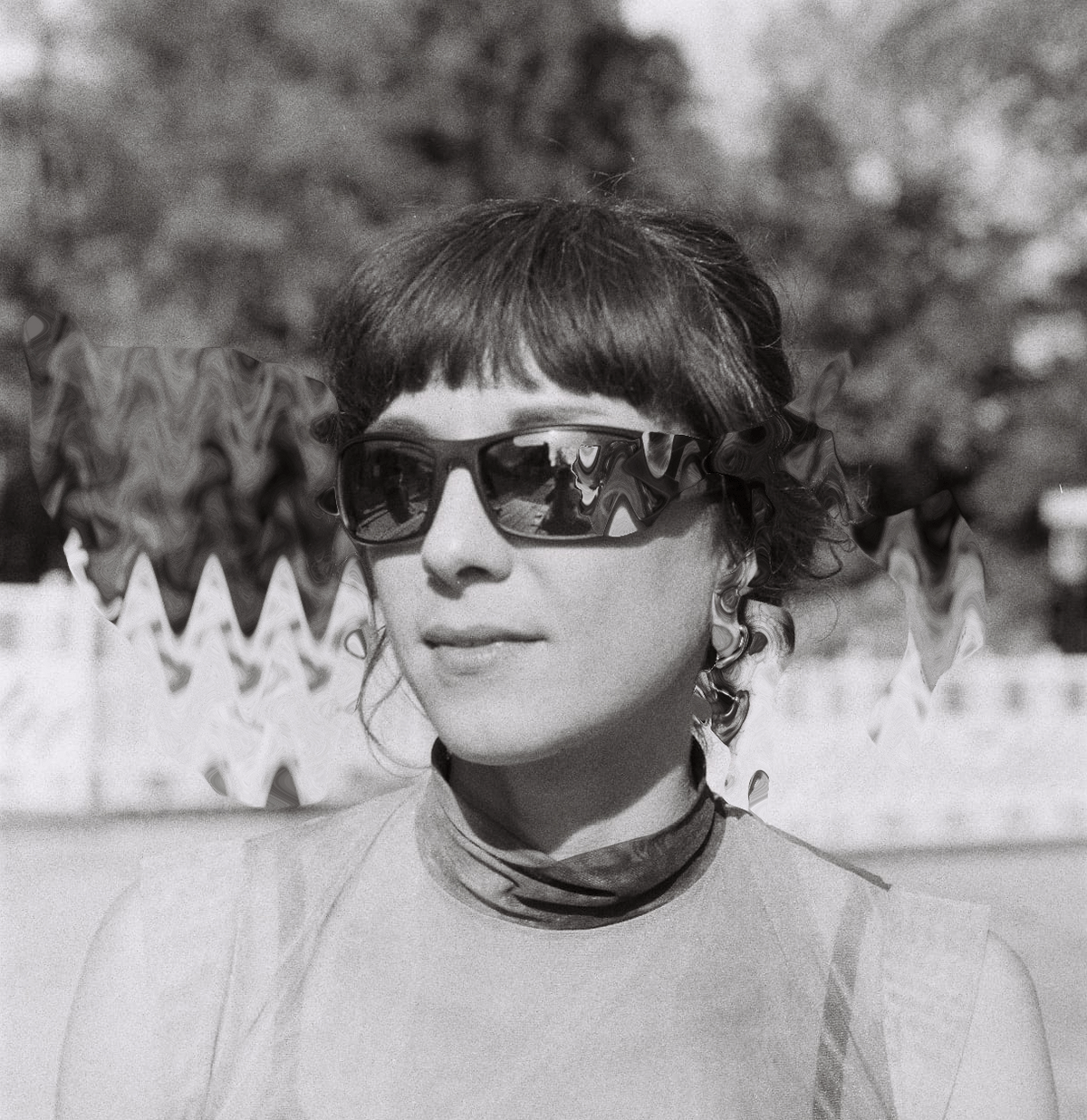


Name: Hèlo Moondi
Nationality: French
Occupation: Producer, sound artist, DJ
Current release: Hèlo Moondi is one of the artists contributing to the new compilation Atmosphères Vol. 1, curated by Emme Moises and released via Atmosphères Records.
If you enjoyed this Hèlo Moondi interview and would like to know more about her music and upcoming performances, visit her official website. She is also on Instagram, and Soundcloud.
How did you get in touch with Emme and Atmosphères - or how did Emme get in touch with you?
We met at Kimchi record shop, where Emme Moises was performing a live electronica set.
I was immediately struck by the depth and subtle balance of her music. There was something both deep and immersive, which really resonated with me.
When you look at the artists who have been part of Atmosphères – do you think that despite all of you having very distinct personalities, there are musical/creative aspects that most of you share?
Yes, I felt that we share a common interest in creating immersive and universal sound experiences. There’s also a strong connection to electroacoustic practices.
Each artist was deeply exploring their own sonic language, allowing their life experiences and cultural roots to resonate organically through the Funktion-One sound system at Kater Blau club.
Describe the creative process for your contribution to the sampler, please.
My track is conceived as a form of sound healing. It is tuned around the frequency often associated with the heart chakra, and I incorporated binaural effects to enhance a sense of immersion.
It begins with flamenco palmas that I recorded in my region, as a way to connect with my cultural background. From there, I introduce other layers, including recordings of my accordion and blending acoustic elements like flutes with electronic processing.
Could you name one or two pieces by other artists from the compilation that stand out for you - and why?
I really enjoy Telva’s “Ocean Kiss”, it has a soft, great quality, like a sweet moment with coffee and cake.
If you’re in the mood for something warmer, more playful and sunlit, Aloe’s “Ozone Treatment” brings a funky, dub-influenced energy …
And (sorry you said two) impossible to not mention Peryl’s “Powder Fault” that is a real impactful DJ tool.
What do you still remember about your performance as part of the series?
I always had the best time playing at Atmosphères events.
Everything felt very carefully and delicately crafted, the lighting was always beautiful. Sometimes there were even art or large abstract paintings suspended in the space. Beautiful !
The press release to Atmosphères Vol. 1 emphasises the importance of active listening. What does active listening mean to you and how do you practise it?
For me, active listening is a moment where attention is fully directed toward the music and the present. It’s about grounding yourself in the moment and becoming aware of how sound unfolds in time and space.
I practice it more deeply with when I do sound-walk and record the environment.
Do you think that as an artist it is possible to create music that actively encourages active listening – or is a quality that the audience has to contribute?
I don’t think you can ever force someone into a deep listening state. But you can definitely create the right conditions for it to emerge.
In the end, it remains a shared responsibility: the artist opens a space, and the listener chooses how deeply they want to enter it.
Disco, house, techno, drum n bass, IDM and many other genres were about a lot more than just music. For you personally, is electronic music (still) a way of life – and if so, in which way?
Coming from the world of hip-hop and graffiti, I’ve always experienced music as part of a wider culture.
So for me, electronic music is definitely more than just sound: it’s also something spiritual and quiet political. It's about colors, movement, community, sharing …
What are some of the most recent innovations in sound design for you - and what are currently personal limits to realising the sounds you have in your mind?
For me, innovation in sound design doesn’t lie in AI-generated music.
I’m much more inspired by the ongoing development of Eurorack modular synthesizers. These analog instruments are becoming increasingly accessible and user-friendly, while offering a high level of experimentation.
I’m particularly interested in tools like Befaco’s Oneiro, which encourages more exploratory approache to sound design.
How, would you say, are your live performances and your recording projects connected at the moment? How do they mutually influence and feed off each other?
I would say they are connected through a shared sonic language. Maybe a kind of dreamy, bass-driven electronica that runs through both my live sets and studio work.
In the studio, I have access to a wide range of tools and can go much deeper into detail, layering and refining the sound. Live performance, on the other hand, involves a certain rawness as you play with more limited setup.
Even if AI will not entirely replace human composition, it looks set to have a significant impact on it. What does the terms composing/producing mean in the era of AI, do you feel?
AI will probably have a strong impact in commercial contexts, such as advertising or certain areas of the music industry. However, I don’t believe it can replace the unpredictable and deeply intuitive creativity of the human mind.
For me, composing and producing still mean shaping sound through personal intention, sensitivity, and experience.
Whether in sound design, structure, or lyrics, powerful musical expression is ultimately a calling of the human soul.