Name: Helge Andreas Norbakken
Occupation: Drummer
Nationality: Norwegian
Recent release: Helge Andreas Norbakken teams up with Julian Argüelles (compositions, saxophone), and Martin France (drums/percussion) for Doublespeak, out via Escapade.
[Read our Julian Argüelles interview]
[Read our Martin France interview]
If you enjoyed this interview with Helge Andreas Norbakken and would like to find out more about his music, visit him on Instagram.
For the thoughts of one of his collaborators, read out Mari Boine interview.
What was your first drum set like and what are you using today? What, to you personally, are factors in terms of build and design that you appreciate in drums and percussion instruments?
My parents bought me a “Pearl” kit when I was 8. I wasn't very interested in brands until the age of 16 perhaps, when I heard 3 Norwegian drummers (Audun Kleive, Chrico, Bjørn Jensen) playing sonorlight, birchkit. Since then it has been my favourite when it coms to kit sound (coated Ambassador on top).
But since I rarely play regular drumkit - since 30 years now - I like to use a mix of African drums, partly with manipulated sounds (water, or objects on top of the heads), combined with bassdrums from a kit, or Brazilian surdo. Combining low pitched skins, wood, and metals, textures and timbres.
Late Rush-drummer Neil Peart said: “The equipment is not an influence. It doesn't affect the way I play. It's an expression of the way I play.” What's your take on that?
For me the SOUND of my work has a lot to do with how I will be able to play. Brands mean nothing to me, but the quality of the sounds determines everything.
How many times do I want to hear that particular sound? Muffled or sustained? High pitched or low pitched? Hard transient or soft attack? Multiple attacks. Where is it a space in the music right now (or the next minute) where a particular activity could be desired?
The equipment and the soundproduction on that, particularly at live gigs, are providing you with these oppurtunities (or not).
Drumming is an integral part of many cultures, and traditions. Which of these do you draw from in your playing – and why?
The tradition of always improvising, changing things from minute to minute, day to day, is the heritage I take from jazz, I believe.
The sounds and phrasing from West African music have been a major influence on the imagination of my own drumming for 25 years. The phrasing and the strong melodies in Scandinavian folk music have also been a constant input the last 25 years.
What were some of the main challenges in your development as a drummer / percussionist? Which practices, exercises, or experiences were most helpful in reaching your goals?
One of the biggest challenges for me personally was after I stopped playing with (world music / Sami music) Mari Boine in 1998.
I was already an improvising musician. But in her band my setup changed from kit to that “ethno-UFO” (combining African drums with kitdrums). In her band it was mainly grooves, and improvisation was more on a subtle or development-level. Learning to continue with the “new” sounds, but treating them in a more improvised and perhaps unpredictable manner was what I wanted and found hard to do.
One of my colleagues said the easiest word that has followed me ever since; don't only practice rudiments and techniques, practice improvising, practice making music. The new agenda for me was then to work with motives and sounds and developing those.
What is the relationship between harmony, rhythm and melody? How do non-percussion instruments contribute to the overall rhythmic texture of a piece?
There are at least 2 elements, or 3 that come to mind immediately:
1) The dramaturgy of the changes, where there is tension, where there is release, gives many hints as to where to try stuff.
2) The pace that the harmonic changes change also gives ideas to activity or making “holes” in the drumline.
3) How the melodic phrases go, how long they are, how long the brakes are in between the phrases. Especially working with singers, that is what I need to know approximately to find places to comment … (or not..)
Different drums have a distinct sound and drums and percussion are also timbral instruments. What drum sound are you aiming for and how are you making use of the timbral potentials and possibilities of your instruments?
Somewhere between a normal drumkit (at least the functions), an “ethnic” or “tribal” drum, and something that could be electronic - although I play
amplified, I only work acoustically - no electronics at my “workstation.”
In relation to drumming, Stewart Copeland said: “Listening is where the cool stuff comes from. And that listening thing, magically, turns all of your chops into gold.” What do you listen for?
Harmony, melody, intensity, frequencies, activity levels. I need that information to find spots that stands out, or if I should go really close to another musician's activity.
Do you feel that honing your compositional / songwriting skills has an effect on your drumming skills?
I am not a fantastic composer, but I do think that doing some composing teaches me how I COULD LIKE the music to sound. I think everybody should try it.
As a musician I do have the opportunity to shape the music I am participating in, by my playing, and by suggestions. A bit of composing exercises help to support this development.
How has technology, such as drum machines and sequencers, impacted the way rhythm is created and perceived? Has it been a concrete influence on your own approach?
I work very closely, fpr more that 30 years, with a handful of sound engineers, in studio but more importantly for me, at live gigs. I do think that “my sound” is not entirely mine, but also a product of THEIR commitment, imagination and skills.
I understand just enough of their work to be able to “play” with them, and I adjust to what they are working on. I hardly have any of my drums in the monitor, only the other musicians - as little as possible, just for orientation. I want to hear from stage, how the frequencies and length of the sounds or reverbs, stays in the room. So that I can choose when to fill the room and when to leave space.
It is much like playing with musicians, you know … :-)
Physical strain is a particularly serious issue for many drummers. How does it manifest itself, how do you deal with it and in how far does it affect your creativity?
I try to keep healthy.
Walking, skiing, swiming etc Nothing radical, but a little bit of an active life. I eat healthy and I try to be a little bit careful with alcohol.
Many recording engineers have remarked that the drums can be particularly hard to capture. What, from your perspective, makes drums sound great on record and in a live setting?
Hire a good engineer and listen to how it works …
Drums and percussion are remarkably often used for physical therapy / healing. What, from your point of view, makes them particularly suitable tools for this?
Sorry, I am not sure if I have that gene.
I enjoy playing so much, I enjoy not knowing what is going to happen but feeling that I am able to participate.
I've been fascinated by pure drum / percussion recordings and even drum solos for a long time. Do you have some recommendations in this direction?
Doudou N'Diaye Rose's album Diaboute has been the most important to me. Jon Christensen's playing with Masqualero and Keith Jarrets European quartet, too.
Miles Davis: Four and more with Tony Williams on drums. 18 years old.
Audun Kleive, especially with Jøkleba,Terje Rypdal, Arve Henriksen.
Recordings that I am happy about where I play:
Jon Balke, Haffla, (2022) ECM records.
Daniel Herskedal, -Harbour, Edition records 2021
Batagraf, Delights of decay, Jazzland 2018
Kari Bremnes: Reise, KKV (2007)
Becaye Aw: Sibi, Etnisk musikklubb (2009)

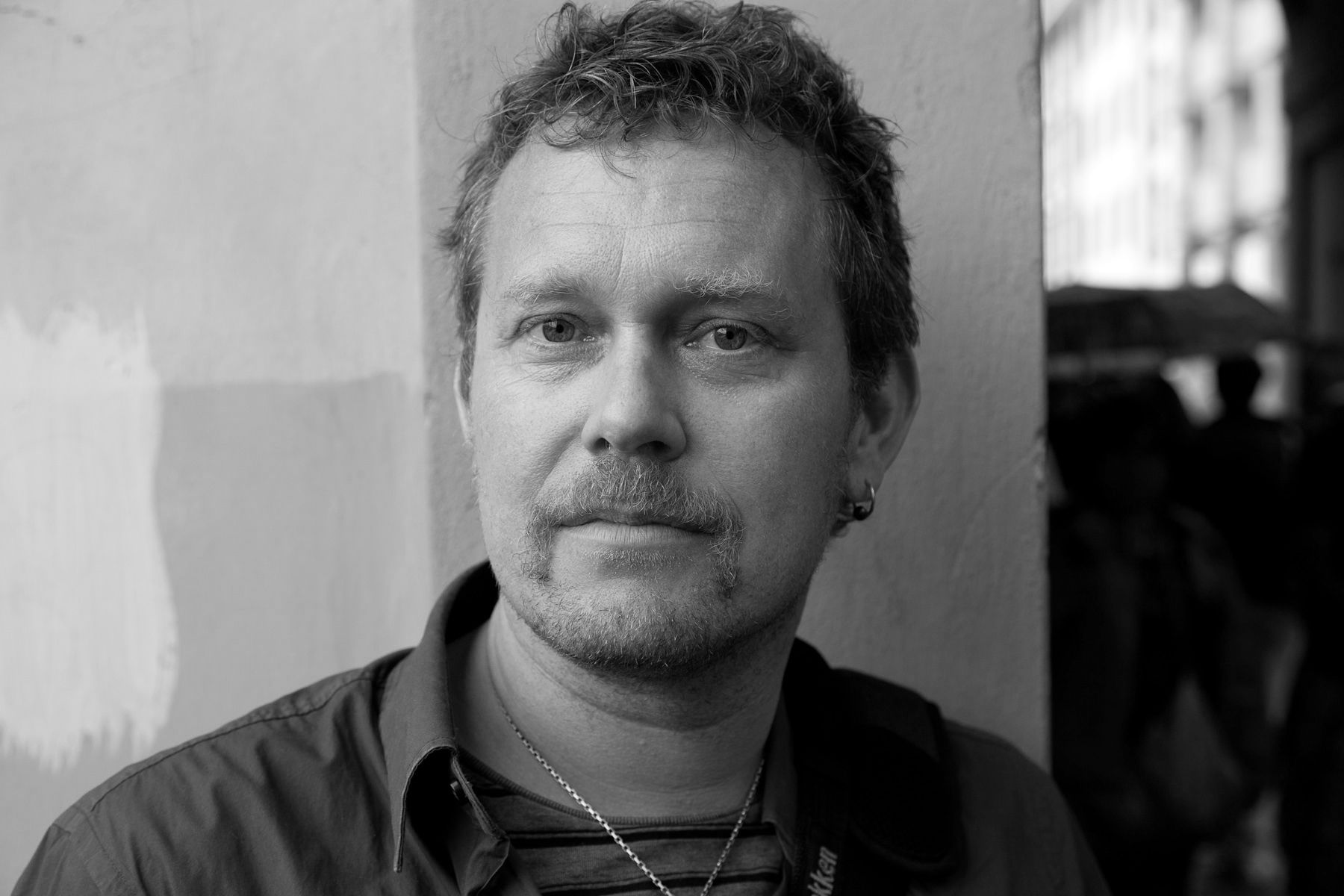 Helge Andreas Norbakken Interview Image (c) the artist
“I enjoy not knowing what is going to happen but feeling that I am able to participate.”
Video