Name: Habibi
Members: Rahill Jamalifard (lead voice, synths), Lenny Lynch (guitar, voice, synths), Lyla Vander (drums, percussion, bongos), Yukary Morishima (bass), Ana Becker (guitar)
Interviewees: Rahill Jamalifard (RJ), Lenny Lynch (LL)
Nationality: American (Lenny Lynch, Lyla Vander) Iranian (Rahill Jamalifard), Japanese (Yukary Morishima)
Current release: Habibi's Dreamachine is out via Kill Rock Stars.
Recommendations:
LL: That’s a hard one but I think because it inspired our music video for “In My Dreams”, I will say the Japanese film, Hausu. I saw it in the theater maybe 15 years ago on mushrooms and it was a bizarre psychedelic joy ride that is a must see!
RJ: Two films by Iranian director Majid Majidi. As an Iranian I am proud that Kiarostami's work is universally loved, who is a favorite of mine. But there are many other incredible directors of cinema from Iran and Majidi is one of them.
Children of Heaven by Majid Majidi; The Color of Paradise by Majid Majidi
If you enjoyed this Habibi interview and would like to stay up to date with the band and their music, visit them on Instagram, Facebook, and twitter.
Where does the impulse to create something come from for you? What role do often-quoted sources of inspiration like dreams, other forms of art, personal relationships, politics etc play?
LL: As soon as I picked up a guitar at nine years old, I wanted to make my own songs, not just play other people’s songs. If you want to be a creator, I think almost any experience can be an impetus for creating songs and melodies; travel, nature, books, films, breakups, love, death.
A very important thing that I’m trying to work on for myself is time! For me, I need a lot time for my mind to wander and to be bored in healthy ways or to go for a walk without a phone or distraction.
When you come up with an idea, record it. You might throw it out later but record everything. Later, you might find yourself humming the melody absentmindedly and if it sticks in your head, then you have to work on it and finish it.
RJ: I source my inspiration from everywhere. Daily interactions, dreams, a phone call, a conversation I overhear, the sight of a stranger, something I've written down ... it's really free form and there's potential in everything.
For you to get started, do there need to be concrete ideas – or what some have called a 'visualisation' of the finished work? What does the balance between planning and chance look like for you?
LL: It’s a bit 50/50 honestly! For this album, Lyla and I sublet some rooms in Rah’s house for two months so we could get to brainstorming. We had some distinct ideas that we brought together and fleshed out but … we have never known every song that’s going on the album before we start recording in the studio. We bring some fully fleshed, half fleshed and then some bare-boned skeletons! And then there’s always a last minute surprise.
For the Anywhere But Here album, we threw out the last song idea and wrote “Stronghold” in one day and it’s still one of my favorite songs on the album.
For Dreamachine, we worked on an old demo from Rah and Lyla’s other band, Roya, and put together a whole new arrangement and energy for “On the Road.” It was last minute and again, worked so well and continues to be one of my faves of this album.
So sometimes you can be stumped for months on what the songs should be and then you can start getting knee deep in the recording process and something is borne through that.
Is there a preparation phase for your process? Do you require your tools to be laid out in a particular way, for example, do you need to do 'research' or create 'early versions'?
LL: Every song is different. I think it’s beneficial to think about what kind of vibe you want the song to have, what you want people to feel when listening to this. Also, what instrumentation and recording style do you want to create that vibe.
For “Alone Tonite,” I really loved Sylvia Robinson’s disco album, how it drips with this sensuality and the vocal is so up front.
Also “Love Hangover” by Diana Ross is one of the greatest songs of all time and that breakdown is everything! So we focused on these ideas to make the song move and be the album climax.
RJ: I like demos, I like skeletons of songs, sometimes it takes 1 sometimes it takes 15 drafts ... no exact recipe or process.
But I'm a fan of putting something down as soon as I feel there is potential in the idea.
Do you have certain rituals to get you into the right mindset for creating? What role do certain foods or stimulants like coffee, lighting, scents, exercise or reading poetry play?
LL: For originally coming up with ideas, walking, driving, laying in a beach chair and even yoga can be times of fruition. I rarely come up with the very first idea while playing guitar or keys.
However, when we all get together and are expanding on ideas, I think having your instrument ready to go, dim lighting, cozy chair and perhaps some cava or champagne for me. Also I prefer to be in a space where there’s no time limitations for that part of things.
RJ: Coffee is definitely present, mornings are the most active and most creative time for me. So it usually happens then. I love to listen to what I've worked on in the car, it is the real test to see whether I like it.
I am not precious about things like lightning and scents ... I like my bed to be made and my room to be clean, and I prefer a lot of natural light.
What do you start with? And, to quote a question by the great Bruce Duffie: When you come up with a musical idea, have you created the idea or have you discovered the idea?
LL: Again, every song is different. Rah can come to me with a melody or I come to her. For the ones I bring, I usually come up with the chorus or hook part so that the concept of the song can be based on that.
We’ve definitely both created and also discovered things that were already in front of us.
RJ: Most often a vocal melody, most often or the lyric of a hook. 
Habibi Interview Image by Bailey Robb
When do the lyrics enter the picture? Where do they come from? Do lyrics need to grow together with the music or can they emerge from a place of their own?
LL: To expand on what I had previously mentioned and use an example, I had the concept for “In My Dreams” and the chorus written and then Rah came up with the verse lyrics. That’s not the case with every song though and it varies wildly. Rah can speak to lyric writing more since she writes the majority.
RJ: Lyrics come from everywhere, conversations, dreams, thoughts, emotions ... they start very concentrated and then I either flush it all out in one session or I let the idea ruminate and wait till more arranging to inform the lyrics.
What makes lyrics good in your opinion? What are your own ambitions and challenges in this regard?
LL: Being an earworm! Something that stays in your head. It should be catchy and flow but also convey imagery and be relatable.
RJ: Story telling, I love the art of story telling. I am fine with abstract or avant lyrics, but I personally love a story and introspection. Vulnerability goes a long way for me.
Many writers have claimed that as soon as they enter into the process, certain aspects of the narrative are out of their hands. Do you like to keep strict control or is there a sense of following things where they lead you?
LL: Don’t sacrifice something important to you about the song BUT do let it flow where it takes you in the studio. Even when you play it live, an idea will come to sing a harmony of this or do these notes an octave higher, etc.
What stinks sometimes is that you record the song too early and then you start playing it live and it grows so much and you find it’s a new animal and you’re like: Damn, now we need to record it again!
RJ: I never stick to or steer the course, I let the inspiration lead.
Often, while writing, new ideas and alternative roads will open themselves up, pulling and pushing the creator in a different direction. Does this happen to you, too, and how do you deal with it? What do you do with these ideas?
RJ: It happens, and when it does I bookmark them by a quick voice memo recording to come back and further explore when the time is right.
And if the time feels right in that moment then I go down that road.
There are many descriptions of the creative state. How would you describe it for you personally? Is there an element of spirituality to what you do?
LL: I grew up, like many people, where music was apart of spirituality and worship and of course that is something you carry with you. It’s an elevated state and invokes all this emotion.
I love when you hear a song and it takes you back to a time and place. I can’t hear “Singing in the Rain” by Gene Kelly without getting emotional because I grew up watching the film and it’s this gorgeously simple song about falling in love even when the weather is bad. I love how powerful that is and it makes you want to create songs that conjure that.
RJ: I believe a creative state is just living.
When you're in the studio to record a piece, how important is the actual performance and the moment of performing the song still in an age where so much can be “done and fixed in post?“
LL: As we’ve now spent a lot of time in the studio and know the recording process well, you don’t want to have to fix it later. It doesn’t sound as good and authentic. Ideally, you wanna play a bunch of takes together to get that energy flowing between you as well.
If it’s late at night and it’s still not hitting (you might be hitting all the notes but it doesn’t sound groovy or fun) wake up and do it fresh in the morning.
AND sometimes a mistake sounds great and takes it somewhere else.
Once a piece is finished, how important is it for you to let it lie and evaluate it later on? How much improvement and refinement do you personally allow until you're satisfied with a piece? What does this process look like in practise?
RJ: I don't tinker. I wait, I listen, on headphones, in the car and shower, I sleep on it. I ask my trusted sources, then I'm good.
Even recording a solo song is usually a collaborative process. Tell me about the importance of trust between the participants, personal relationships between musicians and engineers and the freedom to perform and try things – rather than gear, technique or “chops” - for creating a great song.
RJ: Trust is extremely important. I know this and have watched, witnessed and felt how it affects the music.
In order to make great music there must be honesty and vulnerability, and you can not have either without trust.
After finishing a piece or album and releasing something into the world, there can be a sense of emptiness. Can you relate to this – and how do you return to the state of creativity after experiencing it?
LL: I’m lucky that I haven’t felt that. But maybe it’s because staying busy helps and always moving onto the next ideas and projects and songs!
Music is a language, but like any language, it can lead to misunderstandings. In which way has your own work – or perhaps the work of artists you like or admire - been misunderstood? How do you deal with this?
RJ: Music doesn't come with instructions. I don't set expectations for my listeners, I make music knowing any work that makes it out into the world will be subject to infinite interpretations.
Creativity can reach many different corners of our lives. Do you personally feel as though writing a piece of music is inherently different from something like making a great cup of coffee? What do you express through music that you couldn't or wouldn't in more 'mundane' tasks?
LL: I have to ask my boyfriend about that one because he bought this insane espresso machine that nobody knows how to use except him and he makes me a delicious coffee everyday with latte art …
I do cook a lot though and in a sense, it’s like writing a good song. You need to make something that hits all the tastebuds. What’s that book - salt, fat, acid, heat? You need that umami type of song where it’s comforting and delicious and people want more. Also it’s less procedural than baking and takes more empathy (in my opinion ).
RJ: I find adventure and entertainment in everything. If you saw the way I make coffee you would maybe not consider it mundane.

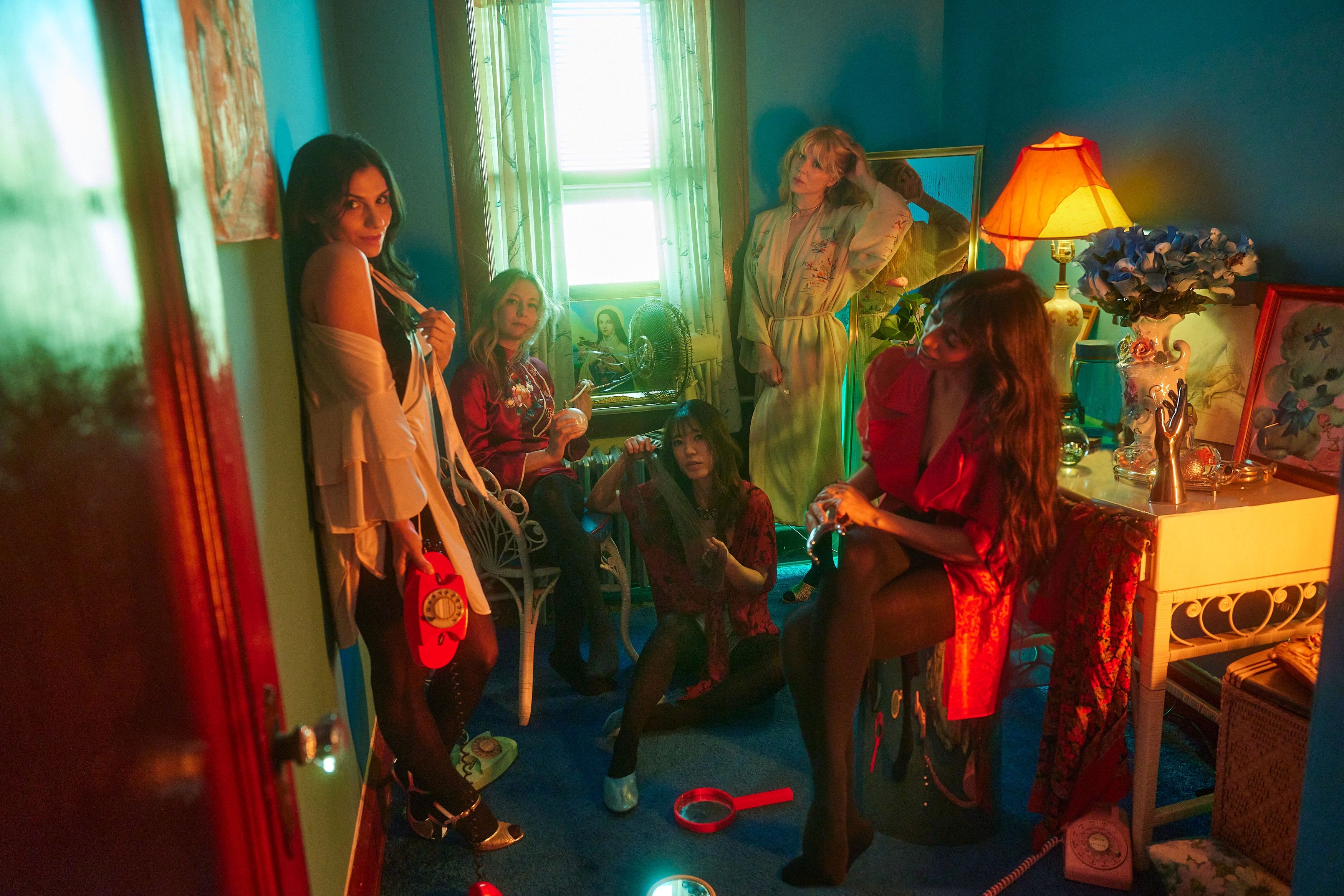 Habibi Interview Image by Bailey Robb
Rahill Jamalifard: “Vulnerability goes a long way for me."
Video