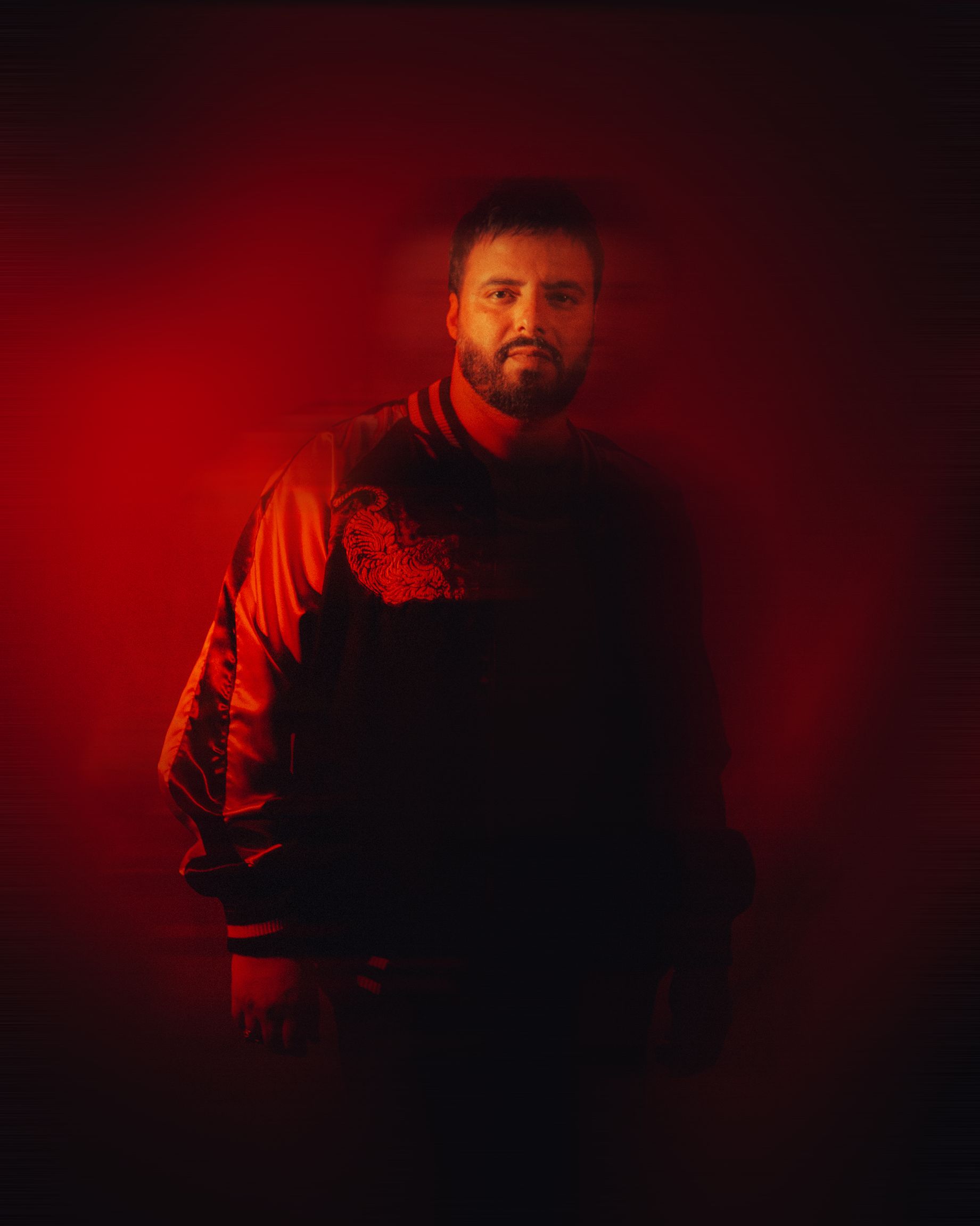


Name: Guri Assis Brasil aka Animal Invisível
Nationality: Brazilian
Occupation: Guitarist, composer, producer
Current Release: Animal Invisível's self-titled debut album is out via Nublu.
Hometown Recommendations: SESC Pompeia is one of my favorite places in São Paulo, where I’ve lived for the past sixteen years. I love performing there, and I also love going there to watch concerts.
Things I am passionate about but rarely get to talk about: Gastronomy. Right now I’m in Madrid, discovering things I’d never eaten before. Today I tried navajas (razor clams) for the first time, and I absolutely loved them. In fact, I’m going back to the same bar tonight just to have them again.
One of my closest friends started out playing in a band with me, and we also began cooking together. Today he owns a restaurant called Trova, in Tossa de Mar, and I’m planning to visit him there. I may never open a restaurant myself, unlike him—but it’s something I genuinely love.
If you enjoyed this Guri Assis Brasil interview and would like to find out more about his music and current tour dates, visit him on Instagram, and Facebook.
Where does the impulse to create something come from for you? What role do often-quoted sources of inspiration like dreams, other forms of art, personal relationships, politics, etc. play?
Creating music is a necessity for me—a biological necessity. In the case of Animal Invisível, it was a way of escaping the anxiety and stagnation of the pandemic, when the album was recorded.
Personal relationships didn’t have much influence on the compositions for this record, but I do believe that making music is, in itself, a political act. Creating art today is an act of resistance.
For you to get started, do there need to be concrete ideas—or what some have called a “visualization” of the finished work? What does the balance between planning and chance look like for you?
It usually starts with an initial idea, and then I build layers, different harmonies, and rhythmic ideas around it.
When I compose something from beginning to end on the guitar or piano, I generally have a very clear vision of how it will sound in the end.
That said, there are always surprises, especially thanks to the improvisation and creativity of the incredible musicians I invite to record with me.
Is there a preparation phase for your process? Do you require your tools to be laid out in a particular way? For example, do you need to do research or create early versions?
I don’t usually make demos of my songs. This album, in particular, came together with very few changes along the way.
I do sometimes research rhythms and sounds to help me compose and achieve better results, but I prefer not to rely too heavily on references or try to imitate instrumentation that already exists.
Do you have certain rituals to get you into the right mindset for creating? What role do things like food or stimulants such as coffee, lighting, scents, exercise, or reading poetry play?
I love drinking chimarrão, a traditional South American herbal infusion from the region where I grew up, on the border with Uruguay in the far south of Brazil. It stimulates me differently from coffee. I can’t really explain why, but I feel more creative, and my mind works faster.
I also like working in low light—it helps me immerse myself in the music. That’s one of the reasons I built a studio in my living room, where I feel completely at home.
For Animal Invisível, what did you start with? If there were conceptual considerations, what were they?
The songs came very naturally. In less than a month, I already had the entire repertoire finished.
The only clear idea I had from the beginning was that it would be an instrumental album and that I wanted it to sound big, almost like a big band.
I also wanted it to feel more Brazilian, although I believe the music on Animal Invisível is ultimately quite universal.
Tell me a bit about the way the new material developed and gradually took its final form.
I recorded the entire album during the pandemic. Like many musicians, I learned how to record myself at home. Since we couldn’t perform live, recording remotely became both a way to make a living and to stay connected with other musicians.
I started by creating riffs and melodies, building the song structures on my computer. Once the ideas became clearer, I sent them to musician friends whose work I admire, and they recorded additional parts in their own home studios.
That’s how the album gradually came together—a beautiful patchwork made by many hands.
Once a piece is finished, how important is it for you to let it rest before evaluating it again? How much refinement do you allow before you’re satisfied?
I think it’s important to take some time away before listening again to a song or a mix. But I also don’t like waiting too long, because eventually you can grow tired of your own record.
I don’t think it’s healthy to be excessively perfectionist. An album captures a specific moment in your life—a moment that will almost certainly never happen again. That’s something I really value: preserving the exact feeling of that moment.
How do you think the meaning—or effect—of an individual piece is enhanced, clarified, or contrasted by the EP or album it belongs to? Does each piece need to be consistent with the larger whole?
I don’t think every song has to be stylistically consistent with the rest of the album.
However, I do think there needs to be an aesthetic thread that connects the record as a whole—whether that’s the overall sound, a particular instrument, or even the way it’s mixed.
Music and the accompanying artwork are often closely related. Can you talk about that in relation to your current project?
Before releasing the album on streaming platforms, I released two live session videos featuring nine musicians—four horn players and two drummers, among others. It was a huge ensemble, designed to recreate the scale and energy of the album as closely as possible.
I felt that this was the best way to introduce an instrumental project: letting people actually see musicians performing together, without edits, and with improvisation, which makes the live versions quite different from the studio recordings.
After finishing a piece or album and releasing it into the world, many artists experience a sense of emptiness. Can you relate to that? How do you return to a creative state afterwards?
I don’t really experience emptiness when it comes to composing. If anything, it’s the opposite. I feel like I’ve put something into the world that means a great deal to me, and I hope it resonates with others as well.
The real frustration is realizing how difficult it is to release music today—and even more difficult to tour an ambitious project like this one.
That said, I feel very fortunate to have released the album through the New York label Nublu, and to have had support, publicity, and even a vinyl release.
I’d love to hear about the feedback you’ve received from listeners or critics. Were there any misunderstandings, or did their interpretations give you new insights?
There weren’t any major misunderstandings! (Laughs.) I think most people understood the album quite well and picked up on the references and sonic direction I was aiming for.
One review, for example, gave the album a 9 out of 10 and praised it highly—but criticized my use of the vocoder. I found that interesting, and it reminded me that you simply can’t please everyone.
Creativity can reach many different corners of our lives. Do you feel that writing music is inherently different from something like making a great cup of coffee? What do you express through music that you couldn’t express in more everyday activities?
I love cooking, and I think music and food are deeply connected.
Preparing a balanced dish is a lot like creating a balanced mix. Too much salt ruins it; too little leaves it bland. The smallest details and ingredients can make all the difference.
I think I’m much more instinctive when making music than I am in everyday activities. I don’t overthink an improvisation the way I would think carefully about seasoning a dish.