Name: Georgia Cecile
Occupation: Singer, songwriter
Nationality: British
Current event: Georgia Cecile is one of the artists on the bill of this year's Cheltenham Jazz Festival 2026. For more information and tickets, go directly to the festival's website.
Current release: Georgia Cécile's new EP City Girl is out via Mahogany Songs.
If you enjoyed this Georgia Cecile interview and would like to know more about her music and current tour dates, visit her official homepage. She is also on Instagram, and Facebook.
What were some of the musical experiences which planted a seed for your interest in jazz?
Listening to my grandfather play the piano - he was a jazz piano player and had a deep love for Oscar Peterson and Erroll Garner.
What does the term jazz mean today, would you say?
I think it means freedom of expression.
For me, it's the kind of music that gives a framework for creativity to exist. It’s a music centered around communing with others, and best experienced in a live context.
As of today, what kind of materials, ideas, and technologies are particularly stimulating for you?
I think in the current age of AI, I (and many others) and seeking out more analog, organic ways of making and experiencing music. More than ever, I am trying to conserve the humanity in my music. The things that make it human.
For example - I'm only interested in recording my whole band in the same room and capturing the sound of the air moving, as opposed to separating everyone and making it super clinical. I want to hear the breaths and ruffles of clothing.
My ear is tired of clinical, hyper-processed music, and I long to create something that sounds real.
Where do most of your inspirations to create come from – rather from internal impulses or external ones? Which current social / political / ecological or other developments make you feel like you need to respond as an artist?
Most of my musical ideas come when I'm most relaxed - sitting at home with my guitar or walking around the park. The ideas come as melodies, and sometimes poems. A lot of my lyrics start as poems which I then mould into a lyric.
Thematically, I'm inspired by a lot of experiences in my surroundings. For example, being in Los Angeles last summer I wrote a bunch of songs inspired by my direct surroundings: the beautiful Californian landscapes, the social inequalities between Beverly Hills and folks sleeping on the benches.
The history of a place can really evoke creativity for me.
Tell me a bit about the sounds & creative directions, artists & communities, as well as the colleagues & creative hotspots of your current hometown, please. How do they influence your music?
My current home is in London, so there is a great wealth of inspiration at all times! I go to loads of gigs - jazz, classical, theater, I just try to immerse myself in the culture around me.
It’s an incredible place to meet new musicians and producers - I'm lucky to have worked with some of the most creative, interesting people I have ever met in London.
My last record City Girl was exactly about that! I featured all of my friends on the record - people from all corners of the globe. I think you can hear that in the music.
What role do electronic tools and instruments play for your creative process?
None really. I’m fully analog. I write with a notebook, pen, piano and newly guitar.
I use an iPhone to record ideas until I bring my band together and we workshop the songs and create arrangements.
Thanks to technological advances, collaboration has become a lot easier. What have been some of the most fruitful collaborations for you recently and what approaches to and modes of collaboration currently seem best to you?
I have worked with my co-writer Euan Stevenson for many years - we have developed a really strong synergy in our work.
We tend to forsee what the other is thinking and can help one another realise an idea. We seem to have a synchronized sense of the destination of a song, and we are able to bounce ideas around and arrive at the end quicker than perhaps we would alone.
Jazz has always had an interesting relationship between honouring its roots and exploring the unknown. What does the balance between these two poles look like in your music?
I draw from many of my influences - I pay attention to how they recorded and arranged their work. People like Nina Simone, Stevie Wonder, Shirley Horn, Les McCann ...
I like to maintain an integrity in my process, and honour the traditions of the music. That's also just my taste! I love the sound people used to get in the 1960s and 70s. I don’t like autotune and things that steal from the emotion of a song.
That being said, I am bringing much of my lyrical content from living in the modern world. My music is contemporary because I'm a contemporary woman writing it.
How much potential for something “new” is there still in jazz? What could this “new” look like?
They say there is nothing new under the sun, but I think creativity is always about exploring the boundaries and playing with bringing worlds together to create something original.
One day I could be listening to Ravel, and the next day Tame Impala - and then I might think of a melody that is somewhat faintly imbued with both artists signature. That's the beauty of creativity.
For many artists, life-changing musical experiences take place live. How do you see that yourself?
I am first and foremost a live artist and I see my performance as a way of communicating. It’s how I express myself - in the hope that It touches someone in the right way.
Many of my best experiences have been as an audience member at a gig - when an artists has touched me so profoundly that my entire perspective shifts forever.
To connect and resonate so deeply in one's soul - only music can do that.
How, would you say are your live performances and your recording projects connected at the moment? How do they mutually influence and feed off each other?
I love to experiment with a new song live first. I think it’s important for it to breathe and live a life first before committing to tape.
After performing it a few times, a song begins to grow its own branches and eventually flowers. I think that’s the best time to then go in and record it.
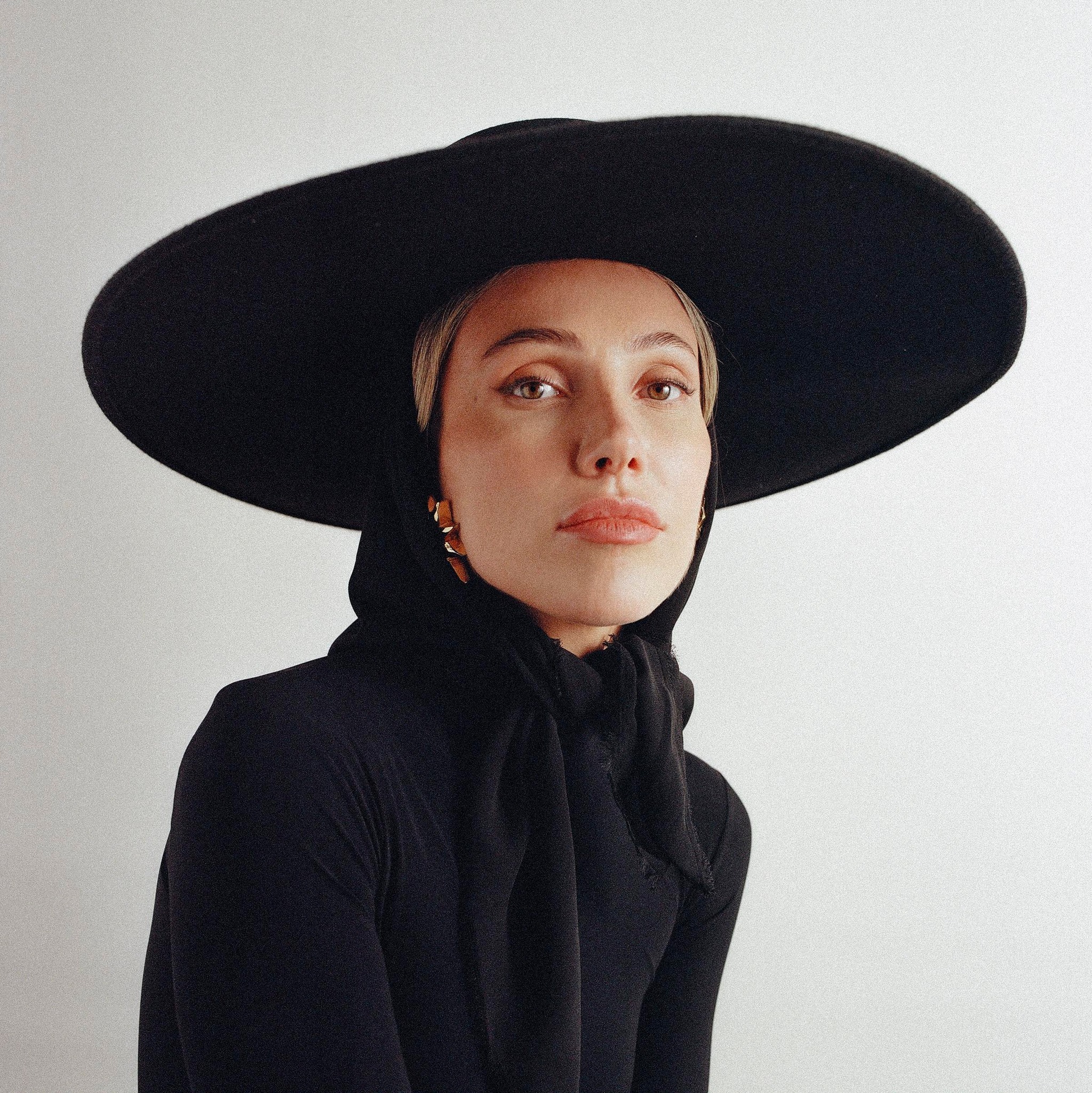 Georgia Cecile Interview Image (c) the artist
“More than ever, I am trying to conserve the humanity in my music.”
Video