Name: Gavin Bryars
Nationality: British
Occupation: Composer, double bassist
Current release: Gavin Bryars new album 11th Floor (After Film Noir) is out now.
Current event: Gavin Bryars was awarded the Ivor Novello Award for Outstanding Works Collection at the Ivors Classical Awards on 12th November, which recognises the composer of a consistently exceptional body of classical compositions.
Recommendations: "My Foolish Heart" by the Bill Evans Trio at the Village Vanguard 1961; Thomas Pakenham: Meetings With Remarkable Trees
If you enjoyed this Gavin Bryars interview and would like to know more about his music, visit his official homepage. He is also on Instagram.
Where does the impulse to create something come from for you? What role do often-quoted sources of inspiration like dreams, other forms of art, personal relationships, politics etc play?
For the last 30 years virtually all my work has been commissions. So the clear impulse is the need to deliver on time! But within that minor constraint I find ways to locate things that are of interest to me – other than the course or subject of the commission.
Occasionally I have written a piece as a gift to, or in memory of, a friend. An example would be Cadman Requiem following the death of my sound engineer Bill Cadman in the Lockerbie air crash in 1988 …
… or Incipit Vita Nova for the birth of a friend’s first child, who was called “Vita”.
And two recent commissions were turned into memorials: the recent harpsichord quintet for Mahan Esfahani subtitled Mr Bryars, his sadness, at Miss Bley, her passing or String Quartet no 5, which, although dedicated to the performers, was added “in memoriam” for a friend in my village who died in tragic circumstances.
For you to get started, do there need to be concrete ideas – or what some have called a 'visualisation' of the finished work? What does the balance between planning and chance look like for you?
I can’t start until I know where I’m going or at least the direction it will take – the choice of text, for example, in a vocal work is paramount and that can take longer than the actual period of composition.
Is there a preparation phase for your process? Do you require your tools to be laid out in a particular way, for example, do you need to do 'research' or create 'early versions'?
I certainly undertake research, and there are habits and routines in terms of my work environment.
There two places where I work: my studio, in the garden of my house in East Leicestershire; and a dedicated space in our house on Vancouver Island, where I spend part of each year.
There are several other specific requirements. For example, I compose using pencil and paper and, since 1982, I have only used one make of pencil the Aztec Scoremaster 101, which could be bought in a shop in W54th Street, New York, where it was manufactured.
The account of what happened when the store closed down is in a journal entry on my website.
Do you have certain rituals to get you into the right mindset for creating? What roles do certain foods or stimulants like coffee, lighting, scents, exercise or reading poetry play?
Not really.
For your latest composition, what did you start with? If there were conceptual considerations, what were they?
This would be String Quartet no. 5, which, somewhat heretically, is for soprano and quartet.
The first was the decision to call the work, for soprano and string quartet, a “quartet” in the first place. This came after I had met and spent some time with Nura Schoenberg, the daughter of Arnold Schoenberg whose second quartet has a solo soprano in the last movement and which I had always consider to be cheating, and not within the historic of the genre.
Other considerations related to which of the many settings that I had done of Petrarch’s sonnets would I use.
Tell me a bit about the way the new material developed and gradually took its final form, please.
It simply involved a lot of very careful thinking, of rigorous and sometimes ruthless self-editing.
Many writers have claimed that as soon as they enter into the process, certain aspects of the narrative are out of their hands. Do you like to keep strict control or is there a sense of following things where they lead you?
It is a mixture of both. There are times when I am led into what may seem to be “in parentheses” or “footnotes” before going back to the path I thought I had established.
But then, sometimes, towards the end of the composition process, I go back and decide these were not necessarily the best route after all, and find another …
There are many descriptions of the creative state. How would you describe it for you personally? Is there an element of spirituality to what you do?
Not consciously spiritual, but there is a strange sense of being unfocussed in relation to everyday life, which is why a phone call would be quite startling, and why I don’t have internet or mobile phone signal in my studio.
My wife always apologises if she has to call me when I’m in the studio, and I tell her that I have just lost the most beautiful melody that the world would ever have heard …
Once a piece is finished, how important is it for you to let it lie and evaluate it later on? How much improvement and refinement do you personally allow until you're satisfied with a piece? What does this process look like in practise?
Once I’ve finished the manuscript it is done.
There is then a quite lengthy and detailed series of exchanges involving Chris Hinkins, who has done the computer setting of all my work for the last 30 years, and my editors, verifying the sometimes-ambiguous pencilled notes, many of which had been made very late at night …
How do you think the meaning, sound or effect of an individual piece is enhanced, clarified or possibly contrasted by the EPs, or albums it is part of? Does the piece, for example, need to be consistent with the larger whole?
As I have my own label, I make sure that this is never an issue.
Even recording a solo song is usually a collaborative process. Tell me about the importance of trust between the participants, personal relationships between musicians and engineers and the freedom to perform and try things – rather than gear, technique or “chops” - for creating a great song.
My personal musical relations are with performers, especially my ensemble, which comprises people who I have worked with for many years – some for almost 40 years – who are also my friends. And now there are my four children who have become regular members of the ensemble too.
These are all people I have chosen to work with and who I trust completely, and who are simply the best I know.
What's your take on the role and importance of production, including mixing and mastering for you personally? In terms of what they contribute to a song, what is the balance between the composition and the arrangement (performance)?
With recording, I leave all mixing to my engineer Dennis Patterson in Toronto, and for mastering, Don Tyler in Hollywood. I have almost never had to make any changes to what they send me
After finishing a piece or album and releasing something into the world, there can be a sense of emptiness. Can you relate to this – and how do you return to the state of creativity after experiencing it?
There is no sense of “emptiness” for me at all. It’s just “on with the next thing …”
I would love to know a little about the feedback you've received from listeners or critics about what they thought some of your songs are about or the impact it had on them – have there been “misunderstandings”, or did you perhaps even gain new “insights?”
I get lots of feedback from audiences and listeners which is always of interest. I also receive a lot of severe and quite hostile response – which is also interesting …
Creativity can reach many different corners of our lives. Do you personally feel as though writing a piece of music is inherently different from something like making a great cup of coffee? What do you express through music that you couldn't or wouldn't in more 'mundane' tasks?
It’s not like anything else at all.

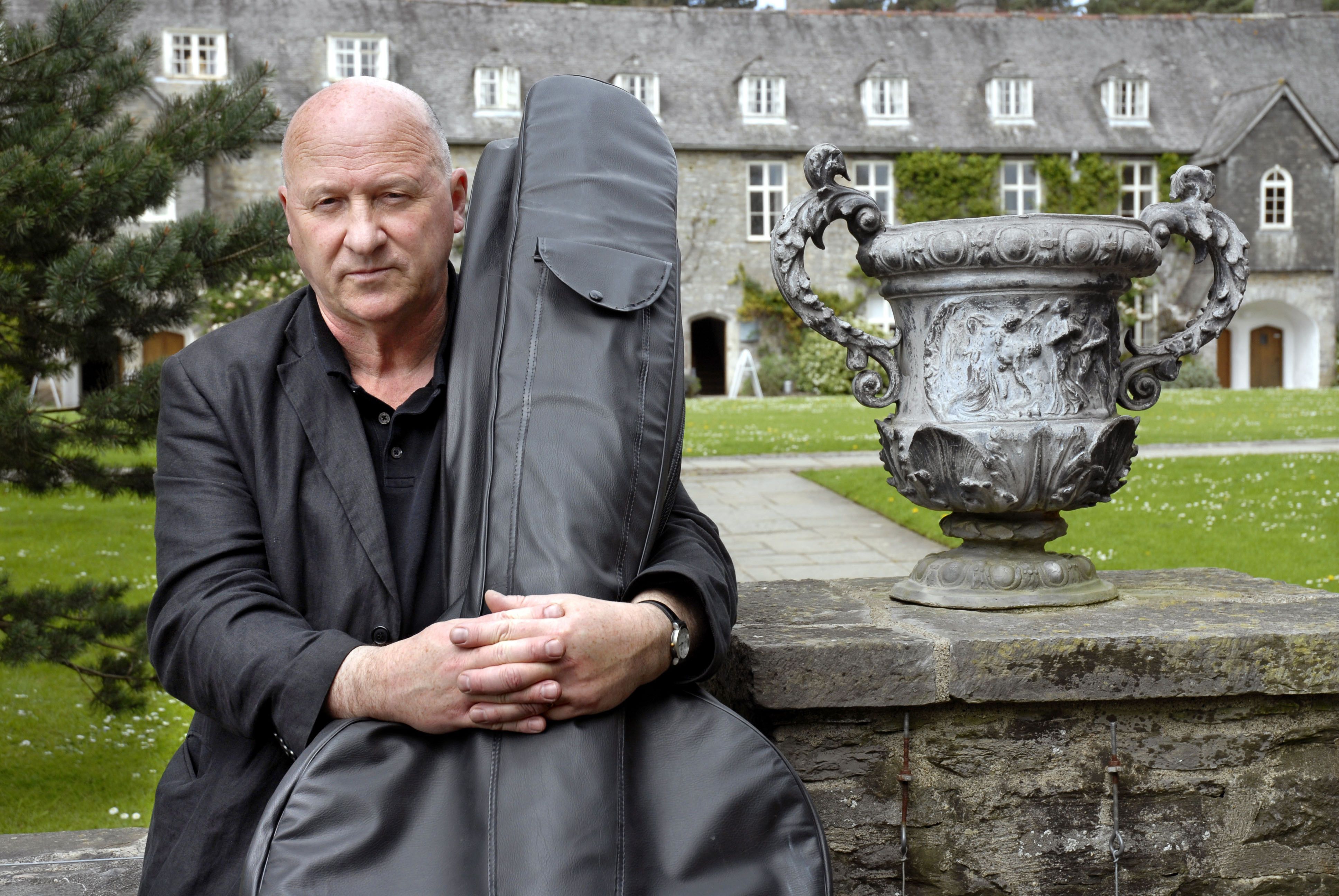 Gavin Bryars Interview Image by Kate Mount
“I can’t start until I know where I’m going.“
Video