Name: Gary Holldman
Nationality: Polish
Occupation: Producer, DJ, composer
Current release: Gary Holldman' new album Traveler is out via International Day Off.
Recommendations for Poznań, Poland: It’s hard to choose just one place, but if you enjoy Thai street food, you should definitely visit Gotuyam. The food there tastes exactly like the street food you find in Thailand, which is something I really appreciate. After the meal, I’d recommend taking a walk along the river — it’s a great way to slow down.
Things I am passionate about but rarely get to talk about: Whisky, definitely. The difference is that I talk about it because I’ve managed to pass this passion on to other people. For many, whisky is simply alcohol, but for me it’s something much deeper. The whole tasting process is completely different from casually drinking at home or in a club.
Whisky carries culture, history, and an incredible range of flavors and aromas. I really appreciate the ritual around it. One of my favorite moments is sitting in my living room after the kids have gone to sleep, lighting the fireplace, and enjoying a good Springbank or Bowmore.
If you enjoyed this Gary Holldman interview and would like to know more about his music and upcoming live dates, visit him on Instagram, and Facebook.
Are there examples of minimalism in music – and outside of music - that impressed you early on?
Daniel Bell aka DBX – is a perfect example of how less is more.
[Read our Daniel Bell / DBX interview]
Were you ever interested in minimalism as a style – from the Philip-Glass-variety to solo instrumental work to minimal techno? If so, tell me a bit about your interest in this.
I didn't need any outside inspiration to get into minimalism in music.
When I was 13 or 14, my cousin gave me the CD Tresor 94 Headquarters. This compilation captures the true spirit of minimal techno.
It was also the beginning of my fascination with the underground electronic music scene.
Do you tend to find that, as many claim, “less is more?” Are the notes you don't play really as important as the ones you do play?
Yes, I think there’s a lot of truth to the idea that ‘less is more.’ In music, and honestly in most creative work, restraint can be just as powerful as complexity. The notes you choose not to play create space and contrast.
To me, strong production is more about intention and balance than about adding more layers. I’d rather focus on two or three strong MIDI sequences and let them evolve over time, building tension, fading elements in and out, and creating movement through dynamics and arrangement.
Do you feel as that making music is a process of adding elements until it is done – or one where you chisel away pieces from something that is already there?
Everyone has their own individual approach to this process. Personally, I usually begin with an idea I already have in mind. Earlier in my career, my work relied much more on chance and experimentation, but over time that balance has changed.
Of course, unpredictability is still an essential part of working in the studio — machines and instruments can often surprise you in unexpected ways and lead the music somewhere new. I naturally tend to build tracks by adding elements rather than subtracting them.
At the same time, there are moments when a piece becomes overcrowded, and too many layers can disrupt its flow, groove, or energy. When that happens, I have to take a step back.
What were some of the starting points for Traveler?
I decided to record an album for a very simple reason — I had never done it before, and the idea had been with me for a long time. I knew I wanted it to be both diverse and cohesive at the same time.
Techno has many facets, and this album is the perfect place to showcase that.
Do you like to set yourself limitations? If so, which were some of those limitations for the new pieces?
Oh …. no way! Zero limitations. Music is a wonderful realm to explore and discover.
I do what I feel like, what I feel at the moment.
Thanks to sampling and digital synthesis, there are endless possibilities for sculpting the sounds and overall sound design of a piece or album. What are your considerations in this regard?
It’s true the digital world is essentially limitless, and I understand why many people are drawn to that. My approach, however, is quite different. I don’t use any VST, and I only occasionally use Ableton’s instruments. In that sense, I focus almost entirely on hardware.
This comes mainly from my workflow and the way I like to interact with sound. I enjoy working with physical instruments and having a direct, tactile connection to them. I bought my first synthesizer KORG MS2000R, about 20 years ago, and I still use it.
I don’t reject digital tools at all, but they simply haven’t been my main environment or experience. Hardware gives me a certain focus and limitation that I find creatively useful.
Would you say that you approach your creative tools with a minimalist mindset? Or do you need a wide choice of instruments and tools to make music?
I take quite a minimalist approach in this regard. I don’t feel the need to constantly expand my studio, because the machines I already have still have a lot to tell me.
At the moment I work with around five synthesizers, and that is more than enough for my needs. Rather than adding more gear, I prefer to go deeper with what I already know.
What were some of the most important pieces of gear or instruments for this release?
Novation KS rack, Dreadbox TYPHON, KORG MS2000.
With so much incredible music instantly available, are you finding that you want to take it all in – or that you need to be more selective? How do you pick the music you really want to invest in?
With the amount of music being released every day, it’s impossible to keep up with everything.
Unfortunately, in my opinion, a lot of it simply isn’t very good. The accessibility of software and production tools means we’re constantly flooded with new music.
Finding truly interesting niche music takes time and patience, but so far that search has always been worth it.
Would you say that minimalism extends into other parts of your life as well?
I was born in 1987 and grew up in the 1990s — surrounded by color TVs, Walkmans, VHS tapes, the first home computers, and early game consoles. My childhood was shaped by that entire wave of technology and culture, and those influences have stayed with me ever since.
For as long as I can remember, technology has been a natural part of my life, and it still is today. I enjoy using technological tools and solutions, so I wouldn’t really describe myself as a minimalist in that sense.
At the same time, I do experience a different kind of minimalism when I leave Poland and travel somewhere like the Scottish Highlands or Southeast Asia. In those environments, I realize I don’t actually need very much from life, and that simplicity becomes something much more personal and meaningful.

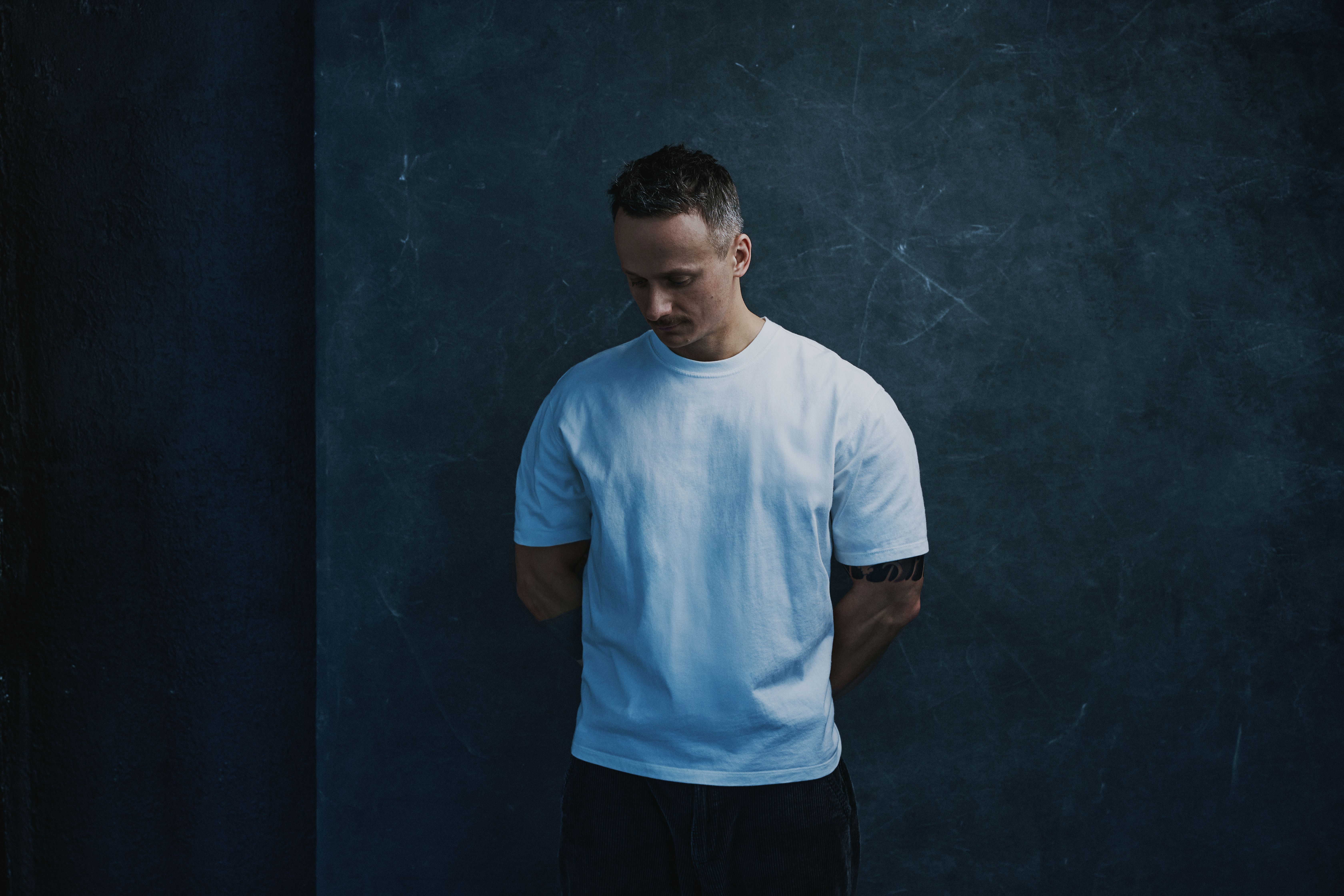 Gary Holldman Interview Image (c) the artist
“I don’t feel the need to constantly expand my studio. The machines I already have still have a lot to tell me.“
Video