Name: The Panturas
Members: Abyan Nabilio, Bagus "Gogon" Patria, Rizal Taufikurahman, Surya Fikri Ashidiq
Interviewee: Abyan Nabilio
Nationality: Sundanese-Indonesian
Current release: The Panturas's Galura Tropikalia EP is out now.
Recommendations: Beauty is a Wound by Eka Kurniawan (novel). “Kembang Kilaras“ by Group Kamajaya (song).
If you enjoyed this The Panturas interview and would like to know more about the band and their music, visit them on Instagram, tiktok, and Soundcloud.
When I listen to music, I see shapes, objects and colours. What happens in your body when you're listening? Do you listen with your eyes open or closed?
I see scene, like in the movies. That’s when I close my eyes.
Nothing really happens when I listen to music with eyes wide open.
Entering/creating new worlds through music has always exerted a strong pull on me. What do you think you are drawn to most when it comes to listening to and creating music?
There’s always something to explore in making music.
We started playing and listening to some surf rock references. After our first release, I had no clue to what direction we could explore this kind of music because what we played was quite specific.
But when we worked on our next release we realized that we can add anything to our music. I tried to add Sundanese scales and gypsy jazz licks on my guitar and it turned out really satisfying.
According to scientific studies, we make our deepest and most incisive musical experiences between the ages of 13-16. What did music mean to you at that age and what’s changed since then?
My music taste’s stuck there. What I listen to now is always related to ones that I listened to in my early teenage era.
When I was 14 or 15 I really wanted to be in a band like The Libertines, the third person who shared the mic with Carl and Pete. There’s always them in my music without me consciously intending to sound like them.
Tell me about one or two of your early pieces that you're still proud of (or satisfied with) – and why you're content with them.
“Tafsir Mistik.”
It’s not that early because it was part of The Panturas’ second album. I always wanted to slip some Django Reinhardt’s lick and add cryptic in my music and I think I was quite successful in that one.
What is your current your studio or workspace like? What instruments, tools, equipment, and space do you need to make music?
It’s just a normal studio, nothing really special.
An acoustic guitar is enough for me to make music. I don’t really need special condition to make music, just some space for myself.
Sometimes the music just came to my brain when I was riding motorcycle on my way home or sitting on the toilet.
From the earliest sketches to the finished piece, tell me about the creative process for your current release, please.
“Lasut Nyanggut” is the prototype for this release. We made it in 2019 and it sounded nothing like the one we’d already released.
The lyrics were already in Sundanese (something we’ve never done before) but the bass was really ordinary and the drums were just the duk-tak-tak that you’d listened in some surf standards.
Our producer, Ricky Virgana (White Shoes and the Couples Company), gave us new direction. He made Kuya (The Panturas’ drummer) listen to Eka Djaja Combo. Kuya learned to play the drums more like a percussion set. Ricky is a bass player so he gave Gogon (bass) a free lesson an hour before recording his part.
“Lasut Nyanggut” was out as a split release with Sundancer’s Dedare Tanjung in 2020. We wanted to release it digitally this year so we added five more tracks for the next release based on that song’s atmosphere.
What role and importance do rituals have for you, both as an artist and a listener?
My daily ritual is for personal use only. It doesn’t really affect my music because my parents say that music is harram.
Are you acting out parts of your personality in your music which you couldn't or wouldn't in your daily life? If so, which are these?
Yeah of course, especially in live performances.
I’m not that expressive in my daily life but everybody always has something to express. So I compress the twisted part of me and blow that craziness on stage.
Late producer SOPHIE said: “You have the possibility [...] to generate any texture, and any sound. So why would any musician want to limit themselves?” What's your take on that?
I agree. You can put anything to your music.
Like the grind musicians who cross the note, anything that produces sound can have their own note.
Do you feel that your music or your work as an artist needs to have a societal purpose or a responsibility to anyone but yourself?
No. Too much responsibility.
I play music just to be cool, or trying to be cool at least.
I would love to know a little about the feedback you've received from listeners or critics about what they thought some of your songs are about or the impact it had on them – have there been “misunderstandings” or did you perhaps even gain new “insights?”
Some of our songs are shallow and we don’t really like to explain the other some to our listeners. So the latter is more suitable.
People are free to interpret our songs. But I was always flattered if our songs have good impact on people.
Sound, song, and rhythm are all around us, from animal noises to the waves of the ocean. What, if any, are some of the most moving experiences you've had with these non-human-made sounds? In how far would you describe them as “musical”?
Like I said before, every sound can be a note.
With a suitable accompaniment, a sheep’s mixed falsetto can be a song.
We can surround us with sound every second of the day. The great pianist Glenn Gould even considered this the ultimate delight. How do you see that yourself and what importance does silence hold?
It’s a delight but silence too has its function.
Too much of anything is not good for your health.
Do you feel as though writing or performing a piece of music is inherently different from something like making a great cup of coffee? What do you express through music that you couldn't or wouldn't in more 'mundane' tasks?
I don’t really express myself in my daily life so I have enough ammunition when I do music.
What is a music related question that you would like to add to this interview for other artists to respond to – and what's your own answer to it?
What’s the difference between making music when you’re young and when you’ve already had a grey hair?
To quote Carl Barat: I’m too young to answer this question.

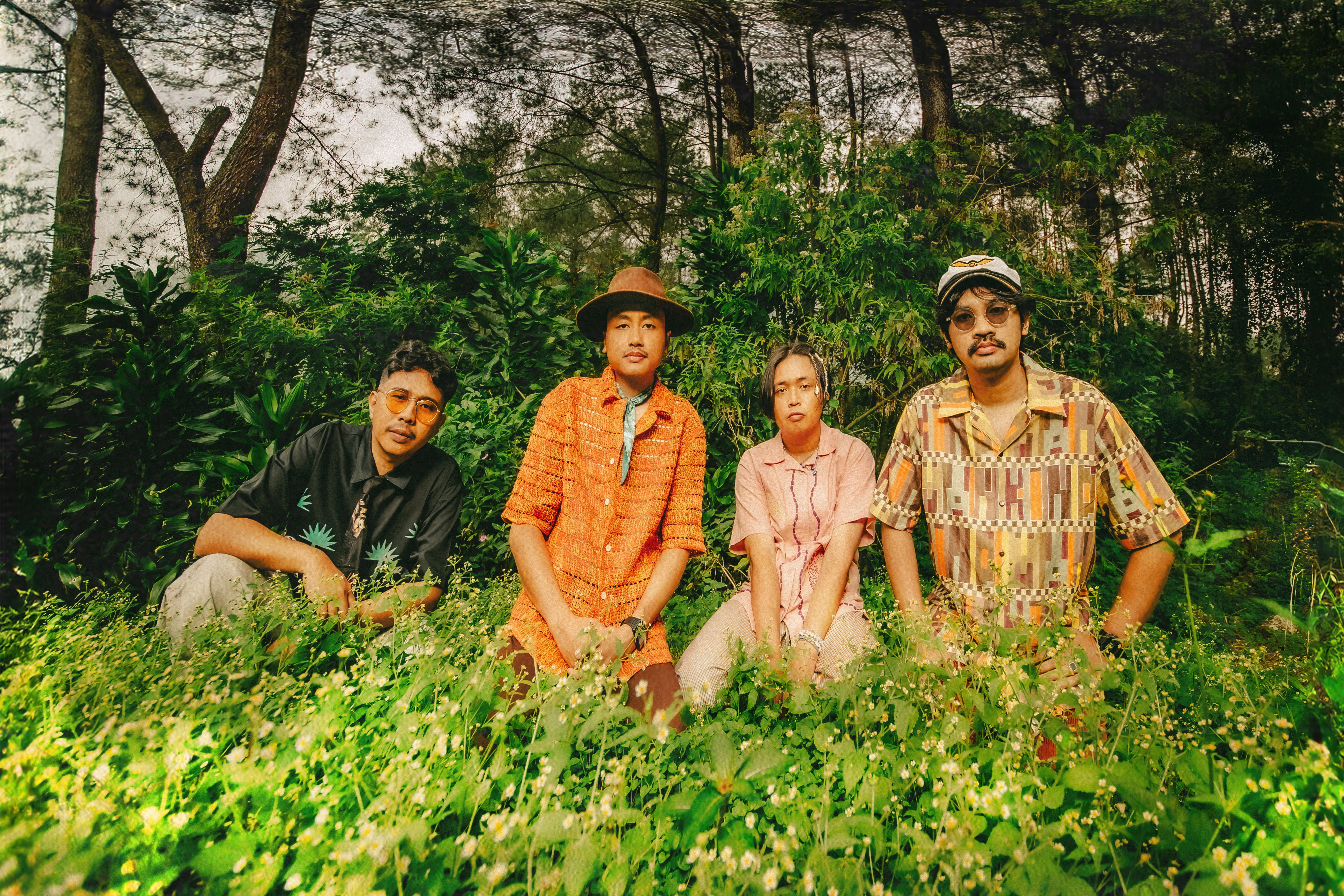 The Panturas Interview Image (c) the artists
“I compress the twisted part of me and blow that craziness on stage.“
Video