

Part 1
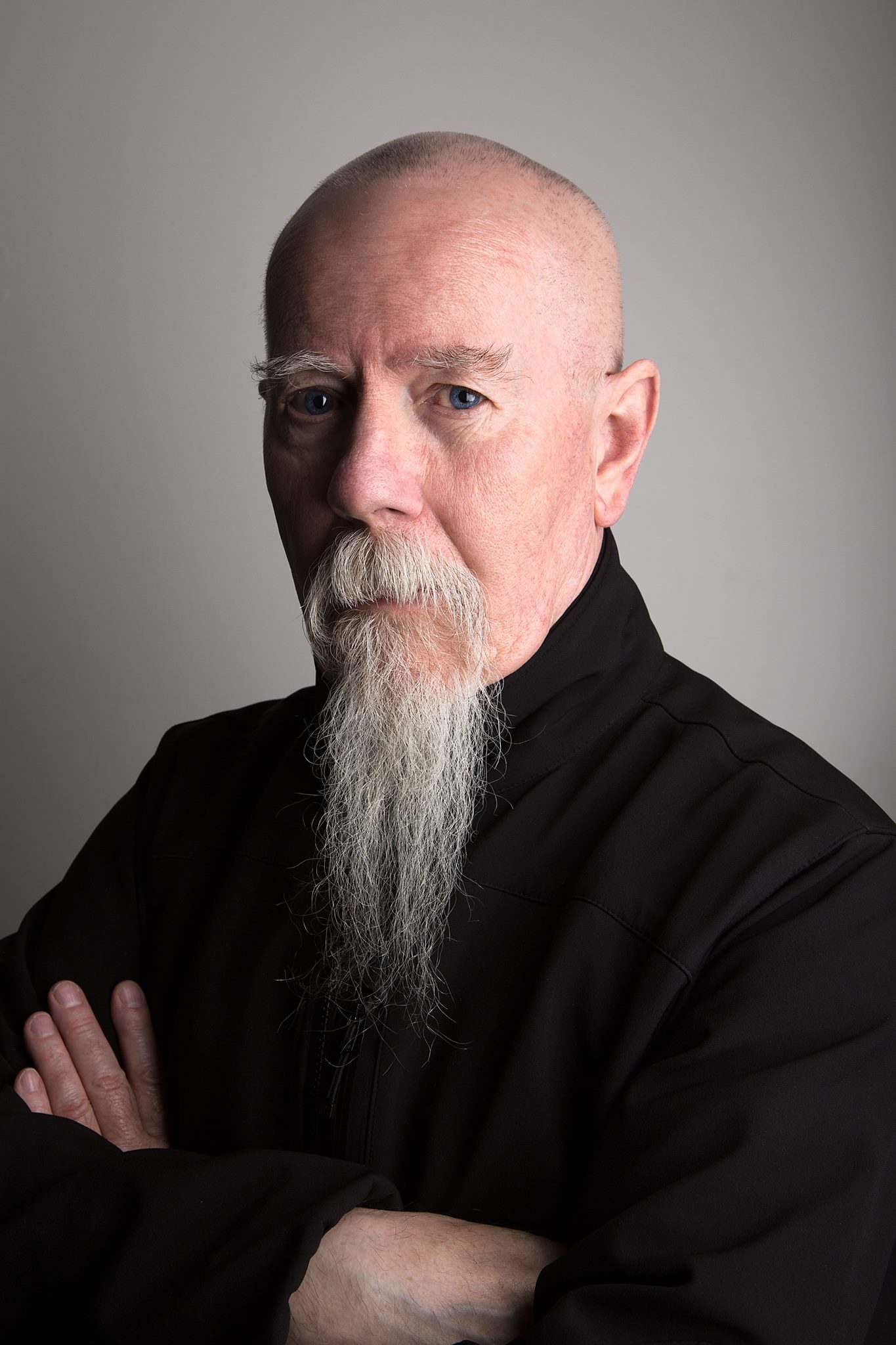
Name: Bernhard Living
Nationality: British
Occupation: Composer
Current release: Bernhard Living’s From Here to There is out now.
If you enjoyed this Bernhard Living interview and would like to know more about his music, visit his official homepage. He is also on Facebook. His complete work is available from his bandcamp page.
This feature does not actually contain fifteen questions - for clarity, we have split up the interview into three parts. Parts two (a closer look at his compositional process) and three (about digital silence and negative space) will follow soon.
When I listen to music, I see shapes, objects and colours. What happens in your body when you're listening?
As far as I know - nothing happens to my body when listening to music. Of course - there are bodily functions of which I have no direct control - but I do not think that music or sounds have anything to do with it. The effect that music has on me is an intellectual one - either in perception or appreciation - and that listening to music is a thoughtful intellectual process - and not a bodily one.
I do not experience any form of synesthesia - and so I do not hear colours or taste sounds. However - my work as a composer is profoundly influenced by the visual arts - particularly different styles of geometric or painterly abstraction. This work includes; early twentieth century paintings by Kazimir Malevich (notably his black square paintings) - Olga Rozanova - Piet Mondrian - and Josef Albers; the abstract expressionist paintings of Mark Rothko - Jackson Pollack - and Barnet Newman; and the colour field paintings of Morris Louis.
All of my compositions from 2010 to date have been based on a fixed structural grid - with the different sounds and tones of the composition laid out in a formal way across this grid system. This method of composition has been influenced by the grid paintings of Agnes Martin and Bridget Riley - and the minimalist sculptures of Donald Judd and Carl Andre.
The above artists and work have informed my own compositional practice at a very deep level - and my work would be nothing without this visual inspiration.
Do you listen with your eyes open or closed?
One of my favourite ways of listening to music is to follow the music with a score - and - of course - I need my eyes open for this.
Score Reading
Apart from my mother teaching me to read music - and attending evening classes in composition when I was a teenager - I have had no formal or academic training in the composition of music - so I am largely self-taught. Score reading - of reading a score while listening to the music - looking at the ‘dots’ on the music score - and to see how these symbols or ‘code’ related to the sounds of the music being played - was a very important part in my self-study process as a musician and composer.
Reading the score of a composition while listening gives me greater insight into the construction of the music - and of how the composer has used different instruments to highlight different harmonic or melodic elements of the music - or how the instruments have been used to create different textures and timbres. This gives a deeper understanding and appreciation for the music that is long lasting.
Absent-minded Window Gazing
Another way that I appreciate music - and if I want to give a piece of music my full attention - is to gaze out of the window while listening. This may seem contradictory - but gazing out of the window helps me to concentrate more on the music - it blocks out any other thoughts - apart from thoughts about the music and the sounds I am hearing.
According to scientific studies, we make our deepest and most incisive musical experiences between the ages of 13-16. What did music mean to you at that age and what’s changed since then?
My mother was a musician - and played the piano and the accordion. She did not perform - or have an interest in - classical music - but - instead - liked playing the popular music of her time - such as music hall songs and songs from musicals.
She was twenty in 1940 - and during Blitz (the bombing of London) she used to take refuge in the mass bomb-shelters that were in London to help to protect the population. Some of these bomb shelters were deep in the metro stations. My mother used to take her accordion and would play for the crowds to help to cheer them up. They were all very frightened and scared from the bombs that were raining down above them - but having a sing-song - with music being played by my mother - was a good way to boost morale.
We had an old upright piano at home - and my mother taught me to read music when I was about four-years-old. She also taught me basic piano skills. I also learnt to play the recorder when I started going to infants school at the age of five. The recorder was an instrument that I was able to quickly master and I could sight-read from the age of six.
The piano that we had at home had a piano seat - and there was a pull-out drawer that contained old yellowed copies of vocal and piano sheet music from the 1930’s and 1940s. I would play the vocal part on my recorder and my mother would accompany me on the piano. It was an idyllic way to learn about - and experience - music.
One of my favourite songs to play was ‘Brother Can You Spare a Dime’ which was a popular song from the 1930’s Depression. It’s a very poignant piece of music - which I still find to be profoundly moving.
When I was seven - my uncle Wallace gave me an old wind-up portable gramophone that played 78 rpm records - and also a selection of classical music - including Brahms’ First Symphony - Schubert’s Unfinished Symphony - Beethoven’s Fifth Symphony and Egmont Overture.
The first record that that I put onto the gramophone was the Egmont Overture - and I was completely overwhelmed by the opening orchestral chords. It was an earth shattering experience - and one that I shall never forget.
There was a very good and well-stocked leading library where I lived - and so I would regularly borrow records by the great baroque and classical composers - which helped in my musical self-education.
On one occasion I stumbled upon an album that included a recording of Anton Webern’s ‘Symphony’ Op.21 - and hearing this music was another important turning point for me. I was ten years old - and I had now discovered avant-garde music. This experience was to change and influence my musical thinking forever.
From the same library I borrowed Rene Leibowitz’s book ‘Schoenberg and His School’ (pub. 1949) - which gave me greater insight into the understanding of twelve-tone serial music composition - and I was quick to start composing using Schoenberg’s twelve-tone technique.
The third important turning came at the age of thirteen. I was already playing the tenor saxophone at this time - and was interested in not only the music of Arnold Schoenberg and Anton Webern - but also the music of the contemporary jazz masters - such as John Coltrane and Eric Dolphy.
Ornette Coleman was another favourite musician - and I bought his album Free Jazz - this music being the jazz equivalent of the twelve-tone compositions of Schoenberg and Webern.
But what was important for me was the album artwork. The album was a 12 inch vinyl - and the artwork was the abstract expressionist painting ‘White Light’ (1954) by the artist Jackson Pollack. This was an introduction into a whole new world of contemporary art - and which would eventually became such an important influence on my own musical thinking.
Tell me about one or two of your early pieces that you're still proud of (or satisfied with) – and why you're content with them.
Only one composition stands out from my early work - which was entitled ‘Sextet: In Memoriam Eric Dolphy’. This was composed in 1964 - and was composed as part of evening class that I attended at Goldsmith College in London. The class was run by the South African-born composer Stanly Glasser - who was interested in ‘Third-Stream’ music - which was a combination of contemporary classical music and modern jazz. It was a combination of all of my interests in music.
Eric Dolphy was an important musician - and - as a musician - I was greatly influenced by his style of playing. Sadly he died in June 1964 - and so I decided to dedicate my new work in his honour. The instruments of the sextet were flute - alto saxophone - bass clarinet (which were the three instruments that Dolphy played) - plus trombone - violin - and double bass. The instrumentation was inspired by Edgard Varèse’s composition ‘Octandre’.
My work was first performed at an end-of-year concert at Goldsmiths - and the performance included three of the leading British jazz musicians of the time; Trevor Watts (alto saxophone) - Paul Rutherford (trombone) - and Barry Guy (double bass). The music was a combination of Varèse-like instrumental textures - and also used a twelve-tone row - plus the jazz elements. The composition was perfectly played by all of the musicians - everything worked very well - and so I was happy with the result.
Even though my current work is very different from that of 1964 - there are still ideas from ‘Sextet: In Memoriam Eric Dolphy’. that still persist within my musical time continuum.
What is your current your studio or workspace like? What instruments, tools, equipment, and space do you need to make music?
As a minimalist I live a very basic and simple monk-like existence.
I live in a studio flat - which has a little kitchenette at one end - and by work table at the other. I sleep on a camp-bed - and my only possessions are a small collection of books (most of my reading material is digital) and different rocks and stones that I have collected on my many walks. I do not have a couch or a TV set. My apartment is not minimal in a fashionable slick sense - but minimal as in a military-like installation - and so everything is very functional and utilitarian. It is an uncluttered existence that I find very inspiring.
All of my compositions since 2010 have been produced digitally - and I use Ableton Live as my prime production tool. Ableton is very intuitive and flexible - and I am able to get my musical ideas realised very quickly. I have a small collection of digital synthesisers from Native Instruments - but most of my production is done with the instruments within Ableton Live environment.
I use physical modelling and FM synthesis to produce the tones and other sonic elements of my compositions. Between 2010 to 2020 I used distortion on some of the sounds to create a level of timbral complexity - and ring modulation for harmonic complexity - but stoped using these effects after 2020.
In the words of William Wordsworth - who described the life with his sister Dorothy in the Lake District as ‘simple living and high thinking’. This is an ideal to which I try to aspire.
What role and importance do rituals have for you, both as an artist and a listener?
I must confess that I do not fully understand this question. By rituals do you mean ‘habits’?
I do not engage in any kind of ritual in order to work. I work all of the time. I was a professional musician for thirty years - and so I have got used to treating music as a job - it is a means of employment - and I have a driven work ethic. I do not wait around for inspiration - but just get down to work and start composing.
Composting is a fundamental part of my existence. For me - composting is like breathing - I do it without thinking about it - and without it I would be non-existent.
Are you acting out parts of your personality in your music which you couldn't or wouldn't in your daily life? If so, which are these?
My life and my music are one and the same thing. My music is very minimalist - and this is reflected in my austere monk-like existence.
I have reduced my music down to its fundamental basics - and I have down the same with my life.