Name: Cyndi Hounouvi
Nationality: Beninese, German-born
Occupation: Singer, songwriter, community builder, poet
Current release: Cyndi Hounouvi's Innerspace EP is out via her own Hounouvi Records. Her collection of Poems, 17, is out now as well. [Link to Amazon]
If you enjoyed this Cyndi Hounouvi interview and would like to know more about her work, visit her official homepage. She is also on Instagram, and Facebook.
Importantly, find out more about SistaTalk, her support network for young, Black, female Africans in Hamburg.
Entering new worlds and escapism through music have always exerted a very strong pull on me. What do you think you are drawn to most when it comes to listening to and creating music?
Art may be the truest, most authentic expression of our souls. So I agree, when listening to music I very much appreciate the access to other worlds. And to possibly, trough that connect with other people and make a home in worlds similar to mine.
When creating music I’m drawn to the fact that it gives me permission to create my own, a world I haven’t yet found outside.
I think the title of my EP INNERSPACE encapsulates that. The EP was born out of wanting to create an own world, inviting listeners into it while simultaneously suggesting to them to build and watch their own.
According to scientific studies, we make our deepest and most incisive musical experiences between the ages of 13-16. What did music mean to you at that age and what’s changed since then?
That’s interesting ... I need to analyse and go deeper into that.
Music has always meant a lot to me. I think as a teenager I was an addicted music listener, plugged to it 24/7. Since then, my relationship with music has changed in the way that I don’t need to listen it in order to function, have fun or cope. I also understand the power of music better now, how sounds and lyrics can affect our body and subconscious.
A rather big difference is that at these ages I wasn’t creating and writing my own songs on the scale that I’m doing now. There was very little awareness of the creation process.
Where does the impulse to create something come from for you? What role do often-quoted sources of inspiration like dreams, other forms of art, personal relationships, politics etc play?
It varies. But oftentimes my impulse to create comes from a trigger or an energetic overload. To create I like to feel full of life (in a positive or bad way). When that’s the case, I have something to say and need a vehicle to release it.
I draw on everything for inspiration: dreams, movies, personal relationships, my friends' experiences.
Are you acting out parts of your personality in your music which you couldn't or wouldn't in your daily life? If so, which are these? What, would you say, are the key ideas behind your approach to music?
Hmm ... I honestly don’t think so. Not yet haha
My music is pretty much me, be it my thoughts, my observations, my experiences. And even if the story I tell might not be mine, the perspective and the way in which I tell it is. I think there’s a continuity.
Music is about truth/transparency, connection, healing, free expression, authenticity to me. So I keep that in mind when I create.
We can surround us with sound every second of the day. The great pianist Glenn Gould even considered this the ultimate delight. How do you see that yourself and what importance does silence hold?
Hmm ... I’m not sure about that.
I even say it in one of my songs: “silence is a virtue.” I love silence ... no talking, no sounds. Tranquility. Also, I’m sensitive to sound, especially music. We could talk, the right song comes on and I’m not listening to you anymore ... That’s how powerful music is.
There are people that have to have their TV, radio ... everything on. I used to be like that as a teen. Sound had to be on at all times. I’d love to know from a psychological perspective where the need for constant sound comes from.
For you to get started, do there need to be concrete ideas – or what some have called a 'visualisation' of the finished work? What does the balance between planning and chance look like for you?
It usually starts with creating vocal melodies to an instrumental. That is very intuitive and spontaneous, no concrete ideas needed. Sometimes I come up with few words on the spot. After that part I usually try to give the melodies a picture.
At this point more planning is involved. But I still remain open to what could happen by chance. 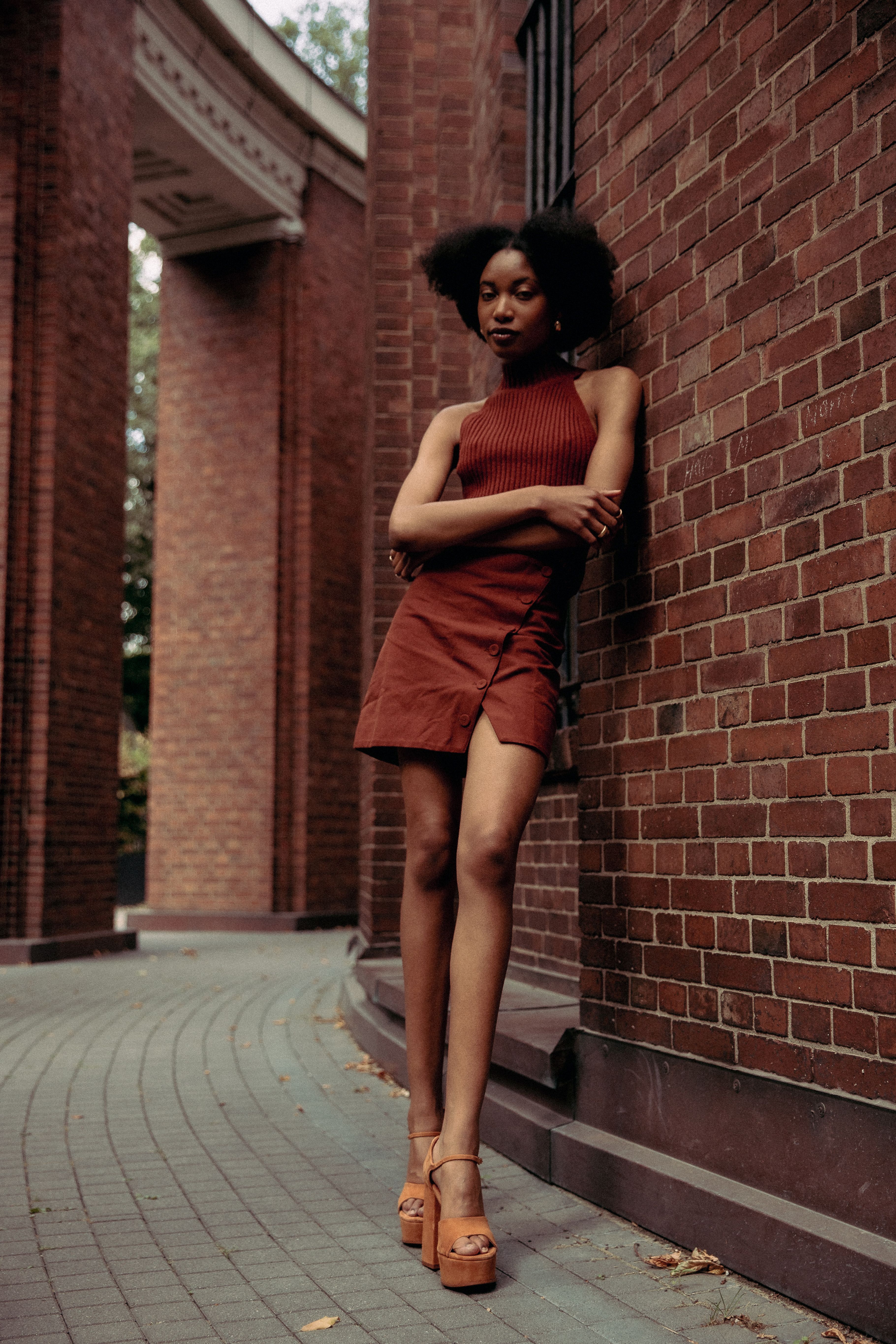
Cyndi Hounouvi Interview Image by Pascal Schmidt
Is there a preparation phase for your process? Do you require your tools to be laid out in a particular way, for example, do you need to do 'research' or create 'early versions'?
I don’t think I have a preparation phase. I just dive into it.
As I said, sometimes during the process I come up with words on the spot and ask myself "Why would I write that, where does that come from? Does this saying even exist?“ and that’s when I may do research on the word or concept.
Also, as a writer and lover of words - I like to look for synonyms of words occasionally. That can happen immediately or later in time when I feel the need to revise the current version.
Do you have certain rituals to get you into the right mindset for creating? What role do certain foods or stimulants like coffee, lighting, scents, exercise or reading poetry play?
I don’t have any tangible rituals. It’s just me ... undisturbed.
Preferably and mostly, I create at nighttime.
When do the lyrics enter the picture? Where do they come from? Do lyrics need to grow together with the music or can they emerge from a place of their own?
It depends. Most of the time I have an instrumental and that’s when the lyrics grow with the music. Either with the creation of the vocal melody or afterwards lyrics enter the picture. In most cases my lyrics are inspired by the title of the instrumental and the feeling of the vocal melody.
Other times it’s reversed. I sing lyrics without an instrumental available. That’s when you have to create chord progressions around them ... Or let it be a vulnerable accapella.
What makes lyrics good in your opinion? What are your own ambitions and challenges in this regard?
I’d say what makes lyrics good is the story, message, stylistic devices and wording. I love when it feels like poetry is accompanied by sound - the lyrics have an effortless ring to it, there’s overall cohesiveness: verses, hook, bridge should all have a connection. Emotion, lyrics itself should be emotionally charged.
I just aim to grow and surprise myself with every upcoming project.
Often, while writing, new ideas and alternative roads will open themselves up, pulling and pushing the creator in a different direction. Does this happen to you, too, and how do you deal with it? What do you do with these ideas?
It gives me headache haha. I like a precise idea and executing it. Whenever I feel like I’m tossing and turning, the chances of me finishing that particular project are slim.
I believe we know what we want to tell. And if it’s right it’ll come together. I have had songs that simply needed time, where I needed to go within and ask "what do I want to convey?“ And then what once was a possibility of multiple roads turned into a clear path after weeks. Other times, you just need to leave it..
There are many descriptions of the creative state. How would you describe it for you personally? Is there an element of spirituality to what you do?
I’d say the optimal creative state is like being led or in "in trance“ … where everything comes fast and very easy. I’m free and flowing. With my EP INNERSPACE I definitely felt led, very inspired and it was a rather effortless process of creating the songs.
And oh yes, I believe everything we do has a spiritual side to it. Actually, lyrically my EP also touches on the concept of mind and matter.
Once a piece is finished, how important is it for you to let it lie and evaluate it later on? How much improvement and refinement do you personally allow until you're satisfied with a piece? What does this process look like in practice?
I definitely think it’s important to give a finished piece some time to rest and to relisten to the track in a new state, with fresh ears, a different perspective.
And if it still feels right when some time has passed, you know for sure it’s finished. For me the song is allowed to get as much improvement and refinement as it needs.
When I’m satisfied, meaning it feels right and I have nothing more to add, it’s done.
Even recording a solo song is usually a collaborative process. Tell me about the importance of trust between the participants, personal relationships between musicians and engineers and the freedom to perform and try things – rather than gear, technique or “chops” - for creating a great song.
The creation of the EP allowed me to experience this collaborative process on a deeper level for a longer period.
In order to perform and try new things, there needs to be a sense of trust between the artist and engineer. Because that trust directly affects how freely and confidently you execute and express your ideas/changes.
During the making of the EP there were moments where I just freestyled and departed from the original idea. And the beauty of having been in an environment where trust reigns is that it gives you room for that spontaneity, imperfections and growth.
After finishing a piece or album and releasing something into the world, there can be a sense of emptiness. Can you relate to this – and how do you return to the state of creativity after experiencing it?
With my EP INNERSPACE I experienced that feeling of emptiness for the first time after the release. I held on to it for so long and suddenly it’s out in the world, out of your hands.
I must say it hasn’t hindered my ability to continue creating. Because that feeling of emptiness was just linked to that specific project, not to my whole existence.
Creativity is all around and within me, so there was no real return - because it never left.
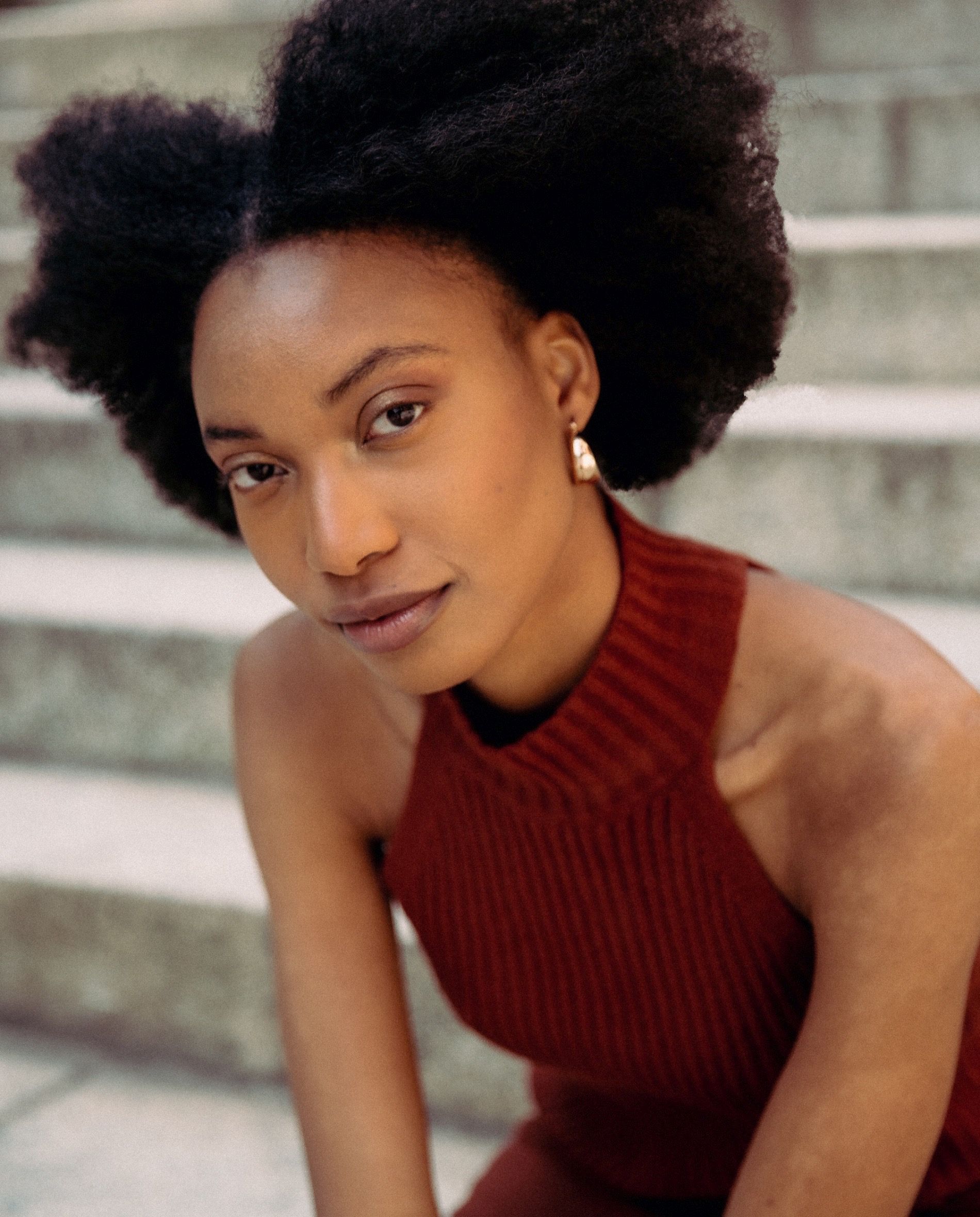 Cyndi Hounouvi Interview Image by Pascal Schmidt
"I don’t think I have a preparation phase. I just dive into it."
Video