

Part 1
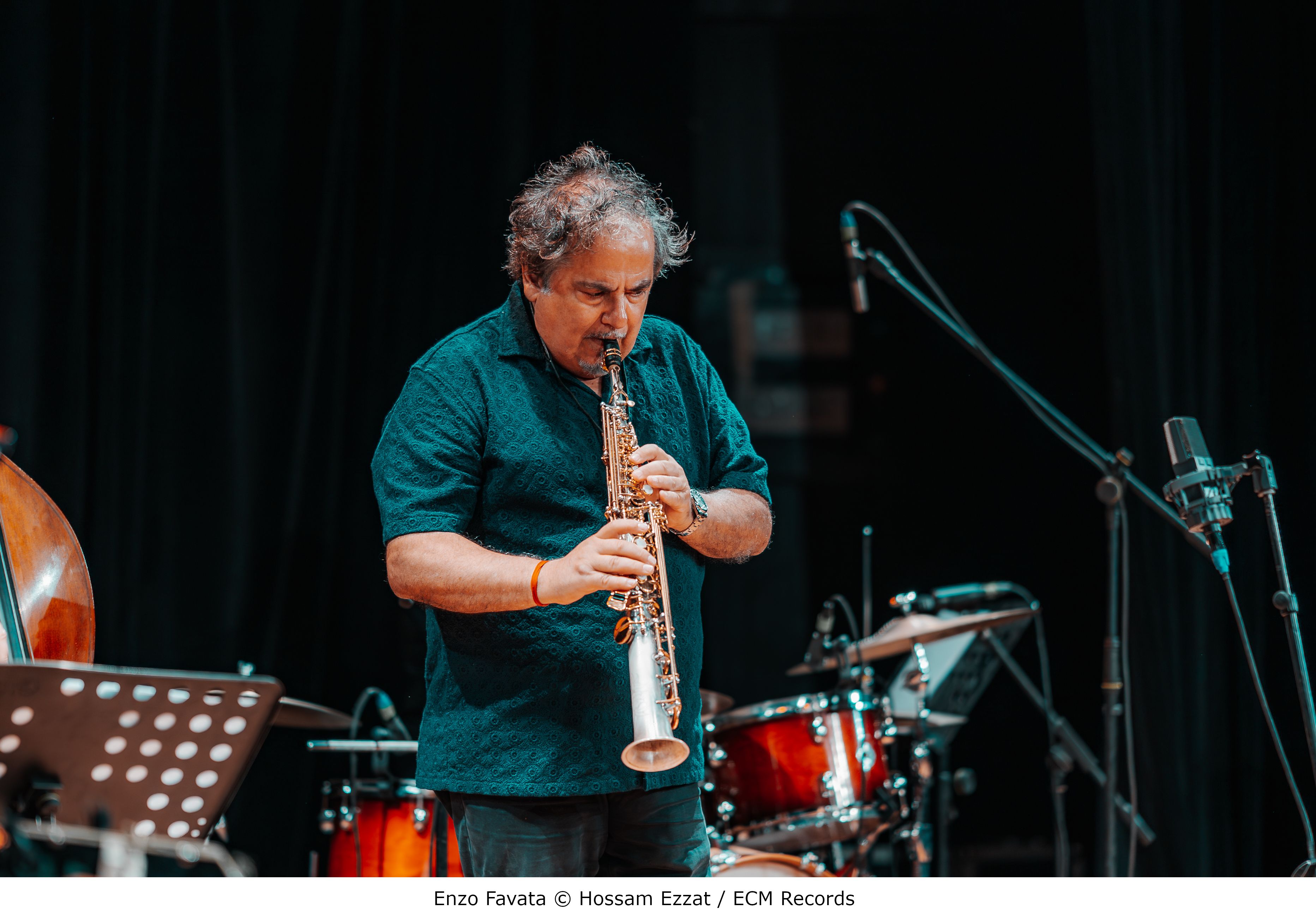
Name: Enzo Favata
Nationality: Italian
Occupation: Saxophonist, clarinetist, composer, improviser
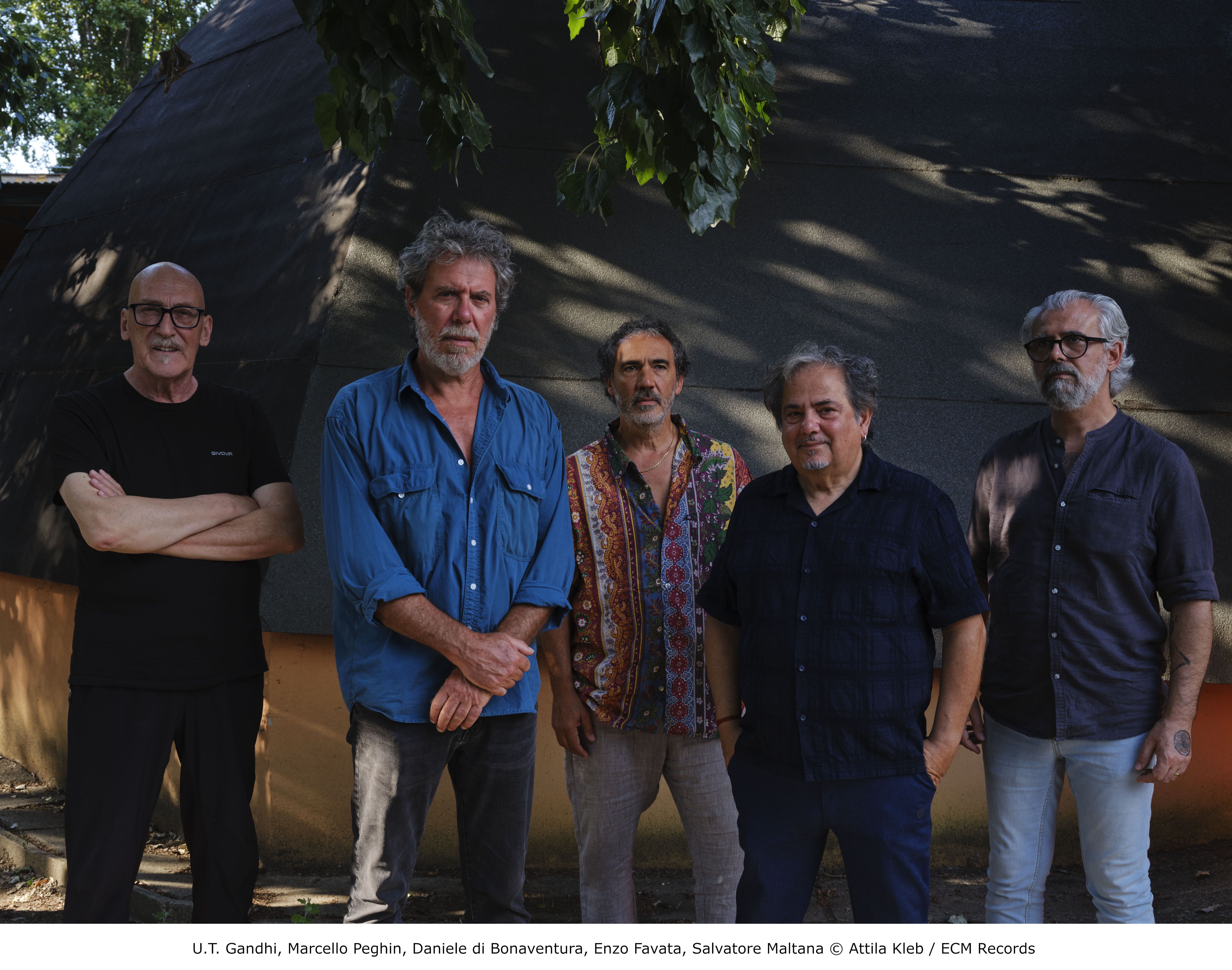
Current Release: Enzo Favata's Ritornare, featuring his Atlantico Quintet with guitarist Marcello Peghin, bandoneonist Daniel di Bonaventura, double bassist Salvatore Maltana and drummer U.T. Gandhi is out via ECM.
Hometown Recommendations: Alghero. But I would recommend not visiting it simply as a beautiful seaside town. You should walk slowly through the historic centre, listen to the Catalan language of Alghero, reach the ramparts and look towards Capo Caccia. At that point, you understand something about Sardinia that interests me deeply: you are profoundly inside an island, and at the same time you have an enormous open space in front of you that connects you with the rest of the world. It is a feeling that can probably also be found inside much of my music.
Things I am passionate about but rarely have the chance to talk about: My real passion is the relationship between landscape and music. For 26 years, on my island, I have been running a festival that has by now become iconic in many respects: Musica sulle Bocche. We have built it among beaches at sunrise and sunset, small villages, nuraghi, churches, mountains, coastlines, mines and places where music is not simply hosted, but enters into a relationship with everything around it. For me, there is no clear separation between the concert and the place. The landscape changes the way you listen. The way you listen changes the way you play. Musica sulle Bocche is probably the clearest synthesis of my passion: to make sound correspond to a place, music to a particular light, a moment of the day to a particular form of listening. It is a search I have been pursuing for many years, and one that I feel is deeply connected with the way I compose as well. Everything must have a relationship. Everything must correspond. And, somehow, everything must Ritornare.
If you enjoyed this interview with Enzo Favata and would like to find out more about his music and upcoming live dates, visit him on Instagram, Facebook, and bandcamp.
For a deeper dive, read our earlier Enzo Favata interview.
Where does the impulse to create something come from for you? What role do what are often described as sources of inspiration play — dreams, other art forms, personal relationships, politics, and so on?
For me, the creative impulse almost always comes from the meeting point between memory, travel and imagination. I rarely begin with music in a purely musical sense. It can be a landscape, someone I met many years ago, a sentence from a book, a city crossed during a tour, a story heard in Sardinia or on the other side of the world.
I was born and raised on an island, and I believe this has profoundly shaped the way I think. An island teaches you both the sense of a boundary and the desire to cross it. This is why my music has always contained a very strong relationship between belonging and travel.
When Atlantico was born, in the late 1990s, I also had a very strong fascination with South American literature and magical realism, an imaginary world that has continued to flow through my music ever since. What fascinated me was the possibility of telling the real world while constantly leaving a door open to dreams, mystery and the unexpected. In the books of that literary tradition, a village could be a precise physical place and at the same time belong to another dimension. I have always looked for something similar in music.
Atlantico was born precisely from this idea: to create a sonic geography in which the Mediterranean, South America, Sardinia, jazz and imagination could coexist without having to constantly explain where every element came from.
Almost thirty years later, Ritornare comes from a different but connected condition: returning inside a story without trying to reconstruct it. It is like finding again a place you knew in a dream many years later: you recognise the streets, but something has changed. We were the same musicians, but time had transformed all of us.
To begin working, do you need concrete ideas, or what some people call a “visualisation” of the finished work? What is the balance between planning and chance for you?
I can almost never see a work completely finished before I begin. What I need is rather to sense its direction. It is like seeing a distant place without yet knowing which road you will take to reach it.
When I compose, I may have a structure, an interval, a melodic cell, a rhythm or simply an atmosphere. But I try not to lock the music too early into a definitive form. In jazz, chance is not really randomness: it is the ability to react to what happens.
With Atlantico, this principle is fundamental. With Daniele di Bonaventura, Marcello Peghin, Salvatore Maltana and U.T. Gandhi, there is a very long shared musical history. This means you can bring a written page, but you know that the moment those five personalities enter the music, the composition begins to transform.
During the recording of Ritornare we kept this balance as well: a form precise enough to have an identity, but open enough for something to happen that none of us had foreseen.
Is there a preparatory stage in your process? Do you need your instruments to be arranged in a particular way? Do you research or make early versions?
Yes, but for me preparation is never a project completely defined in advance.
Very often the idea and the artistic project are initially set out in a schematic way: a structure, some compositions, a sonic concept, a possible direction of development. Then the project is truly built together with the musicians.
It is a way of working I have used for many years, and with Atlantico it happens very often. I bring a composition, a form, perhaps a precise narrative idea or a colour I imagine for that piece. But when Marcello Peghin, Salvatore Maltana, Daniele di Bonaventura and U.T. Gandhi enter, that initial scheme immediately begins to transform.
Each of them brings his own history and language. I do not simply ask the musicians to perform something I have already imagined. I am interested in seeing what happens when that idea passes through their personalities. Sometimes a detail suggested by one of them completely changes the course of a piece. For me, this is a fundamental part of composition itself. So the music is born in two moments: first in the imagination, and then in the relationship.
With Atlantico this is particularly important because there is a very deep shared memory. After so many years, we can begin from a very simple structure and quickly arrive in territories no one had anticipated.
It is still that kind of suspended territory between reality and imagination that has always fascinated me: you prepare a map, but during the journey you discover that the map contains places you had never drawn.
Do you have any particular rituals for entering the right mental state for creating? What role do food, coffee, light, scents, physical exercise or reading poetry play?
I do not have rigid rituals.
But there is one thing I do a great deal, especially while travelling: I listen to an enormous amount of music that is not mine. I do not necessarily do it in search of inspiration. I simply listen.
I can move from very old recordings to new trends, from traditional music to electronics, from jazz to languages that apparently have nothing to do with what I do. Sometimes I also listen to music I do not like. I am interested in understanding why I do not like it. I think that is part of knowledge too.
One thing is certain for me: travelling, listening, dreaming and imagining are all deeply connected with curiosity. Travel constantly challenges what you thought you knew. You look at a landscape through the window of a train or a plane, you listen to music coming from somewhere very far away, and suddenly a connection appears in your mind that you were not looking for.
Perhaps that is my true ritual. Not to stubbornly search for an idea, but to create an inner space in which ideas can arrive. A little like in magical realism: the extraordinary happens while everyone continues to behave as though it were perfectly normal.
For Ritornare , where did you start? If there were conceptual considerations, what were they?
The starting point of Ritornare is contained in the title itself. Atlantico had been a very important part of our musical lives. The first project was born at the end of the 1990s and for years took us to many places through hundreds of concerts. Then our artistic paths moved in different directions.
When we came back together almost twenty years later, the question was not: “Can we recreate Atlantico?” The question was exactly the opposite: “What does Atlantico mean today?” We were the same musicians, but we were no longer the same people. Each of us had gone through new experiences, collaborations, countries and aesthetics.
For this reason, Ritornare is not a nostalgic album. It does not try to restore a sound from the past. The idea was to return in order to go somewhere else.
When, in January 2026, we entered Bavaria Musikstudios in Munich to record with Manfred Eicher, this idea became even clearer. We were not documenting a reunion. We were recording new music born from a shared memory. That is also why the title Ritornare has such a strong meaning for me.
Tell me how the new material developed and how it gradually reached its final form.
The music developed through the relationship between writing and the group’s musical memory. Atlantico has a particular characteristic: five very recognisable personalities who, over time, learned how to leave space for one another.
The bandoneon of Daniele di Bonaventura, the guitar of Marcello Peghin, the double bass of Salvatore Maltana, the drums and percussion of U.T. Gandhi, and my saxophones and clarinets do not function simply as five instruments layered on top of each other. They are five voices.
While working on the new repertoire, we were mainly trying to eliminate whatever felt unnecessary. Then the encounter with Manfred Eicher brought another level of concentration. His way of producing is not about adding elements, but very often about understanding what a piece of music does not need to say.
In this way, the material gradually found its form not through accumulation, but through subtraction.
Many writers claim that once they enter the creative process, some aspects of the narrative escape their control. Do you prefer to maintain strict control, or do you follow things in the direction they seem to want to go?
I love losing control.
Of course, first you need to build a form solid enough to sustain that freedom. But once the music truly begins to live, I like to let its flow carry me, almost as if entering an ocean of new ideas. This happened many times while preparing Ritornare.
We did some of the first rehearsals of the new repertoire as a trio, in my city, with Marcello Peghin and Salvatore Maltana.We started from the scores and structures I had prepared, but very often we went beyond what had been written. A collective process developed in which the creative waves naturally became difficult to control. An idea from Marcello would change one of my phrases, a response from Salvatore would suddenly alter the internal rhythm of the piece, and I myself would begin to follow a direction I had not imagined just a few minutes earlier. In those moments, the piece almost seemed to be taking us somewhere.
The interesting part came afterwards. We recorded those rehearsals and then listened back to them. Out of the apparent chaos came synthesis. By listening, we could understand which of those deviations really contained something important and, starting from them, we often arrived at a new sonic vision of the same piece.
This process fascinates me. First, lose control. Then observe what happened. Finally, find a new form. It is something like a sea voyage: you may know the point of departure and imagine the point of arrival, but the currents determine a fundamental part of the journey.