Name: Double Talk
Members: Ryan Carins, Henry Chatham, Chelsea Foley
Nationality: Australian
Current release: Double Talk's new single "Pictures" is out via Lighter Than Air.
Recommendations: Album: Be Good The Crazy Boys - Art Feynman; Book: A Spy In The House Of Love - Anaïs Nin
If you enjoyed this Double Talk interview and would like to stay up to date with the band and their music, visit them on Instagram, and Facebook.
Where does the impulse to create something come from for you? What role do often-quoted sources of inspiration like dreams, other forms of art, personal relationships, politics etc play?
Henry: I think it comes from all of those places, sometimes something happens or I see a news story and it sparks an idea, or maybe I’ll be feeling kind of crap and get the urge to write a happy song to make me feel better.
Most of our songs are observational. “Palm Springs” and “Human Zoo” are both looking at human behavior but we’re starting to write about more personal topics.
It’s hard to expose how you feel in a song but it’s definitely rewarding.
For you to get started, do there need to be concrete ideas – or what some have called a 'visualisation' of the finished work? What does the balance between planning and chance look like for you?
I wish I could visualise the finished work! For me it’s almost complete chance. Sometimes I have no idea what is going to come next. Even if I have what I think is the finished piece in my mind, it never turns out that way.
Ryan is a lot better at executing what he hears in his head but sometimes that unpredictability is where the special sauce is.
Do you have certain rituals to get you into the right mindset for creating? What role do certain foods or stimulants like coffee, lighting, scents, exercise or reading poetry play?
I don’t think there’s things that get me in the mindset. But once I’ve started it’s definitely lots of coffee and soft lighting that keeps me in the headspace.
I also find exercise to be the enemy of creativity. I love to run and cycle but to work on an idea I need to be sat around doing nothing to let the ideas come.
Creativity definitely pushes me to unhealthy habits and I’m still not sure how to get around it.
What do you start with? And, to quote a question by the great Bruce Duffie: When you come up with a musical idea, have you created the idea or have you discovered the idea?
I think it’s maybe even the idea discovering me. Sometimes it feels like I have no control over the creative process until the end when we’re doing the final recording.
That part is much more controlled but the initial ideas process is terribly random.
When do the lyrics enter the picture? Where do they come from? Do lyrics need to grow together with the music or can they emerge from a place of their own?
Henry: These questions are really opening my eyes to how chaotic our writing process is. Lyrics come in at every step! Sometimes it’s the first thing and you just get the perfect lyrics straight away. This was the case with the last single ‘Swimming’.
Other times it’s a real struggle trying to find the perfect way to get our message across.
What makes lyrics good in your opinion? What are your own ambitions and challenges in this regard?
Henry: To me it’s lyrics that can paint a picture and put you in the song whilst still expressing emotion.
David Bowie is a perfect lyricist, the way he can tell a story and make you feel like you are really there. All his songs feel like true stories but they’re still humourous and outlandish and bizarre.
I aspire to be able to tell other people’s stories, the way Bob Dylan and Bowie tell old folk tales and make it seem less about the first person.
Many writers have claimed that as soon as they enter into the process, certain aspects of the narrative are out of their hands. Do you like to keep strict control or is there a sense of following things where they lead you?
I think the three of us all work differently. Ryan gives the impression of having much more control over his creative process than me and Chelsea. I think that’s why we find it easy to work together.
I can appreciate how Ryan tames or streamlines certain ideas that otherwise might become so bloated they are useless.
Often, while writing, new ideas and alternative roads will open themselves up, pulling and pushing the creator in a different direction. Does this happen to you, too, and how do you deal with it? What do you do with these ideas?
We just roll with it! Anyone that’s listened to even a couple of our songs will realise they all sound quite different.
For example “Banana Moon” is in a completely different space to our latest song “Pictures.”
We just embrace it and we don’t want to keep ourselves stuck in one place.
When you're in the studio to record a piece, how important is the actual performance and the moment of performing the song still in an age where so much can be “done and fixed in post?“
All three of us will always agree the performance is so important! I believe musicians put too much pressure on ourselves, when you’re working on a piece you notice all the little mistakes or timing errors but in reality they take up a fraction of a second.
We’ve recorded all over the world with some songs having parts played across 3 different countries over the span of a year or two! We’re very happy with the outcome but it can definitely be harder for the recording to contain the same spark a live band has when it’s been pieced together this way.
Once a piece is finished, how important is it for you to let it lie and evaluate it later on? How much improvement and refinement do you personally allow until you're satisfied with a piece? What does this process look like in practise?
It’s so important! I think you’ve got to take some time away from an idea after every step, leave the demo for a while then it’s much easier to finish it with a clear mind. I find I tire of ideas really quickly. If I still like it after a month or two away it’s generally a good sign that song should be finished.
This happens when we’re getting stuff ready to play live too. Older songs like “Phil, Slow It Down” are now different to the recording because the song grows with you.
It’s like how no one has the same hairstyle they had when they were 12, your style and look has changed but you have the same bones and brain.
Even recording a solo song is usually a collaborative process. Tell me about the importance of trust between the participants, personal relationships between musicians and engineers and the freedom to perform and try things – rather than gear, technique or “chops” - for creating a great song.
I have never thought about it like that before but I guess it is all about trust. I trust that Chelsea and Ryan won’t laugh at my dumb lyric idea or when I sing way too high to sound like Ryan.
It’s definitely that kind of nice environment that lets you get the best out of an idea and push each other out of the comfortable areas.
What's your take on the role and importance of production, including mixing and mastering for you personally? In terms of what they contribute to a song, what is the balance between the composition and the arrangement (performance)?
I think production is essential. We all really enjoy the recording process and have been lucky to work with some amazing mix engineers, Shags Chamberlain and Jasper Geluk. Having them involved brings a fresh perspective of what parts of the song are important and what’s maybe surplus and needs cutting.
It’s always exciting getting a new mix and really feels like the song is entering its final form.
After finishing a piece or album and releasing something into the world, there can be a sense of emptiness. Can you relate to this – and how do you return to the state of creativity after experiencing it?
I’m not sure I can relate to the emptiness but it’s definitely hard to stay present with the song. For us it’s often a long process and we’re normally working on new music as a song is coming out.
I feel like I kind of have to step back in time and get excited about the song again but it’s always rewarding.
Music is a language, but like any language, it can lead to misunderstandings. In which way has your own work – or perhaps the work of artists you like or admire - been misunderstood? How do you deal with this?
I always enjoy hearing what the others think my songs are about. We don’t really talk about what the lyrics mean until we’re at the later stages of the demo process and it’s a good way of knowing if you’re getting the message across.
Sometimes we’ve kept the same lyrics but the essence of the song’s meaning has totally changed because of how Ryan and Chelsea have interpreted one line or another.
I think it’s fun to not make songs too obvious as well and I love Kate Bush for this reason. She gives you just enough in the lyrics to form an idea but often it’s abstract enough you’re never quite sure what she’s really getting at.
Creativity can reach many different corners of our lives. Do you personally feel as though writing a piece of music is inherently different from something like making a great cup of coffee? What do you express through music that you couldn't or wouldn't in more 'mundane' tasks?
I don’t think it’s different at all, music is just the way we find it easiest to communicate. I’ve heard chefs talk about a recipe with more thought and care than some songs I’ve written.
I guess some songs are just for fun and maybe the musical equivalent to cheese on toast. Others become a Michelin star meal that are slaved over and finessed.
Both are expressing something in their own way.

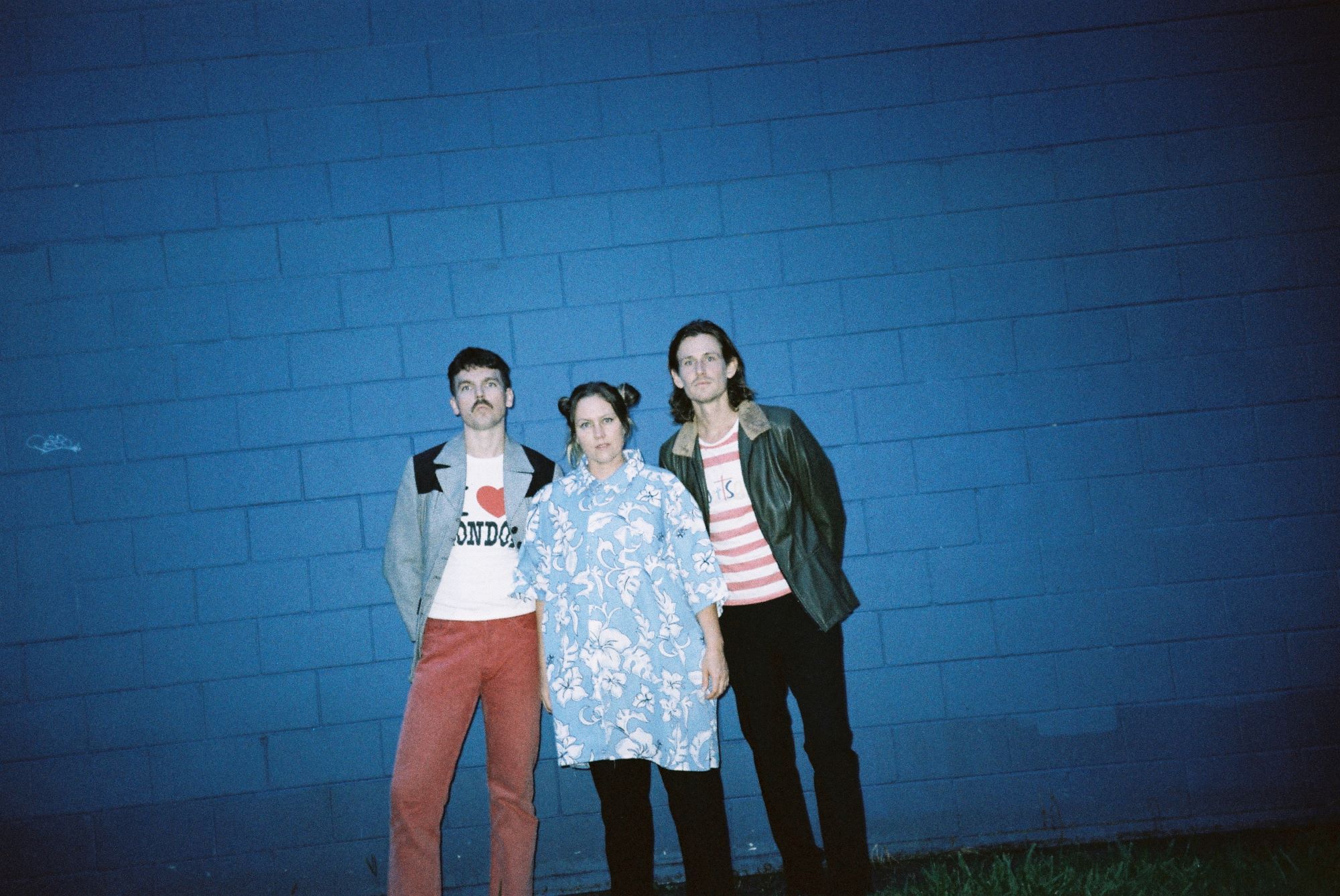 Double Talk Interview Image (c) the artists
“Sometimes, unpredictability is where the special sauce is."
Video