Name: Donovan Haffner
Nationality: British
Occupation: Saxophonist, composer, improviser
Current release: Donovan Haffner's debut album Alleviate was released on vinyl in 2025. More recently, he teamed up with Alex Ho for Serendipity.
Current event: Donovan Haffner is set to perform at Ronnie Scott's on July 18th 2026. For more information, and tickets, go here.
If you enjoyed this Donovan Haffner interview and would like to know more about his music, visit his official homepage. He is also on Instagram, bandcamp and Facebook.
When did you first consciously start getting interested in musical improvisation? What was your first improvisation on stage or in the studio and what was the experience like?
I started getting interested in improvisation around the time I started joining Tomorrow's Warriors classes when I was around 10 or 11.
If I remember correctly, I think my first time I improvised on stage was either in my school band concert in secondary school or a Tomorrow's Warriors concert. I remember feeling incredibly nervous and my heart was racing when I knew my turn was next, but I was in my element when I took the solo.
Tell me about your instrument and/or tools, please. What made you seek it out, what makes it “your” instrument, and what are some of the most important aspects of playing it?
For the saxophone, I remember watching my secondary school band perform (when I was still in primary school) and the saxophone seemed like another instrument I wanted to add to my arsenal (as I was already playing piano and guitar at the time). And so my mum bought me my first saxophone and started playing it.
I regard the alto saxophone as my first instrument and instrument I want people to associate me with because it is the instrument I have studied and played the most in my life. Also I think it speaks to me the most of how I see music.
Some of the most important aspects of playing it are like with any instrument is: tone, technique and how the music is played/requires you to play it.
How would you describe your own relationship with your instrument – is it an extension of your self/body, a partner and companion, a creative catalyst, a challenge to be overcome, something else entirely?
I would say the saxophone is a tool to fulfill musical needs from the other musicians I'm working with or the audience I am playing too.
I also am working very hard so it becomes fully a tool for my personal expression and can fully play what I hear, however I have a lot of work to do before I can fully get there.
Do you feel as though there are at least elements of composition and improvisation which are entirely unique to each? Based on your own work or maybe performances or recordings by other artists, do you feel that there are results which could only have happened through one of them?
Yes I do.
I think Miles Davis is the perfect example for this. Especially in the 70s era of Miles. He would get a bunch of musicians in the studio and would tell the engineer to record the whole session without stopping. Some bits of compositions would already be written beforehand but most of the compositions would come out through improvising in the studio, then it became tunes in the album.
Also, any recorded bits of improvising can become an entire new tune if the composer chooses!
When you're improvising, does it actually feel like you're inventing something on the spot – or are you inventively re-arranging patterns from preparations, practise or previous performances? What balance is there between forgetting and remembering in your work?
A lot of when I improvise, it's based on things that I have learnt in the past, or a permutation of a pattern I have previously learnt.
But my goal is to only think about creating melodies which are true to myself in the moment. The other musicians in the band will also alter my state of playing too.
Artists from all corner of the musical spectrum, not just “free jazz” have emphasised the importance of freedom in their creativity. What defines freedom for your improvisations?
I think freedom in my improvisations is feeling so comfortable with the tune/piece that you can truly start to explore other possibilities you may have never done before, but you know might sound good because you already have a solid basis.
You can also feed ideas from the other musicians in the band, or the audience, or the space that you are in. Endless possibilities.
In a live situation, decisions between creatives often work without words. From your experience and current projects, what does this process feel like and how does it work?
With my band, I try to leave elements of freedom in my compositions so the band can be free to make these decisions. When I feel that the decision is 'right', it feels great, and we can feed off on it to create something exciting and fresh.
I think the only way it can work if everyone in the band is on the same page with the kind of music you check out and and/or if the band has practiced certain things or have simply have been playing as a band for years.
Stewart Copeland said: “Listening is where the cool stuff comes from. And that listening thing, magically, turns all of your chops into gold.” What do you listen for?
I try to listen for everything: specifically and also non-specifically.
Sometimes listening to how loud the audience is could make you change playing the music on a gig in some way shape or form.
As a listener, do you also have a preference for improvised music? If so, what is it about this music that you appreciate as part of the audience?
Yes I have a preference of music with some element of improvisation.
I think it gives the music a lot more personality and spark and also in a way makes you more connected to the musicians who are 'improvising'.

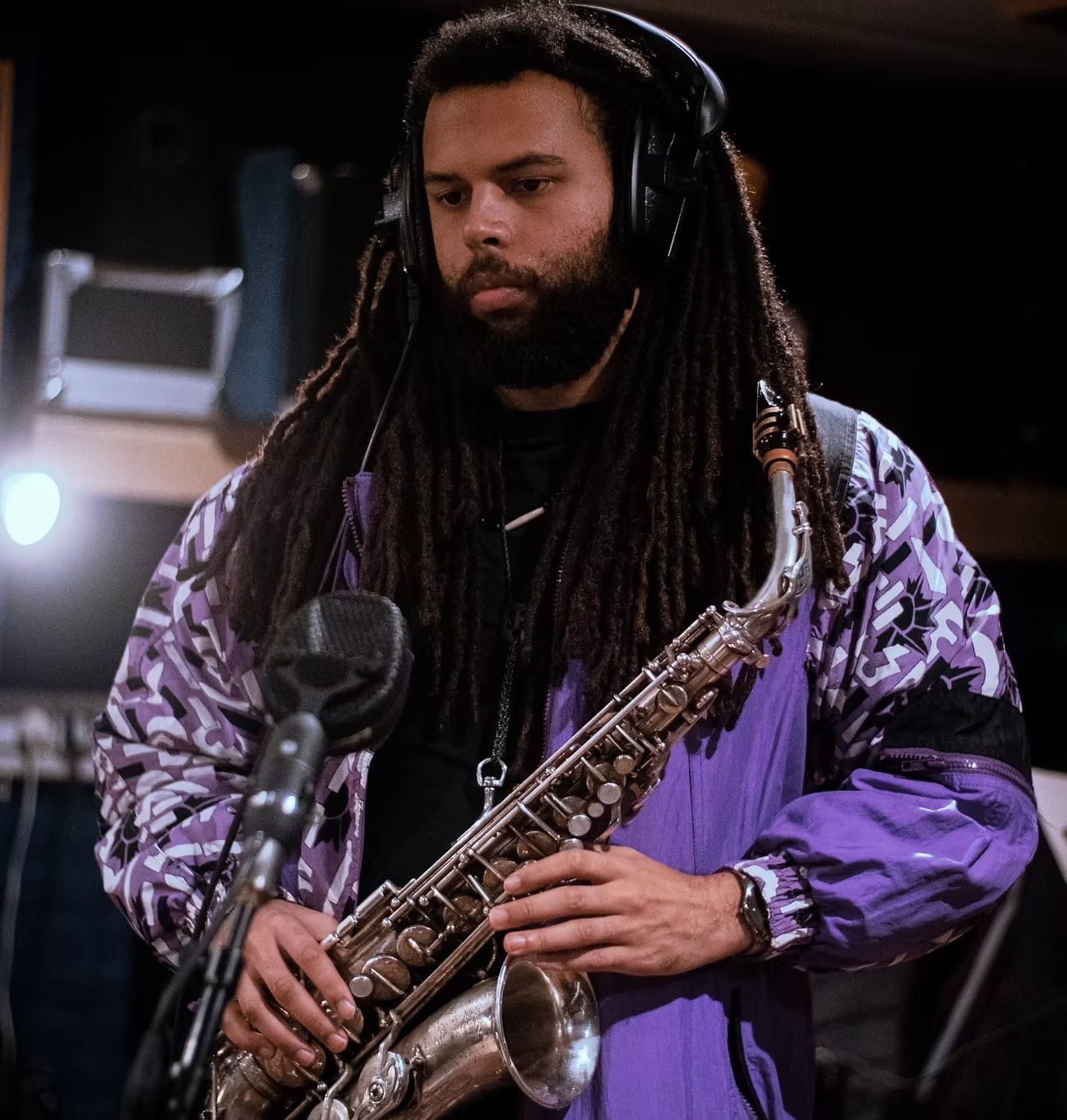 Donovan Haffner Interview Image by Pedro Velasco
“My goal is to only think about creating melodies which are true to myself in the moment.“
Video