Name: Vincent J. Ball aka DJ Alone Again
Nationality: American
Occupation: Producer, DJ
Current release: DJ Alone Again's new EP Orbital Constructs is out via Wolf Music.
Things that I am passionate about but rarely get to talk about: I think that Liz Pelly’s book, Mood Machine, which covers how Spotify is taking advantage of independent artists with the false promise of democratization, is necessary reading for any musician or listener. Instead of an egalitarian system, the major labels are provided an upperhand, the pay scale is unjust, and AI music is supported by the platform itself.
If this DJ Alone Again interview piqued your interest, and you would like to know more about his music, visit him on Instagram, and Soundcloud.
Are there examples of minimalism in music – and outside of music - that impressed you early on?
I always admired what the Neptunes were doing in their early productions, and that had a profound impact on how I go about filling out the stereo field.
It’s important that each band of the frequency spectrum gets some sort of representation throughout the song, but I’m careful not to overload any single aspect.
Outside of music, there’s this artist Mike Joyce who remade a series of gig flyers in the Swiss Modernist style. They accomplish a lot with a little, which is what I aim for in my music.
Do you tend to find that, as many claim, “less is more?” Are the notes you don't play really as important as the ones you do play?
Absolutely. Silence is such an important part of electronic music especially.
It’s those moments of suspense and anticipation that make you excited for what comes next.
Do you feel as that making music is a process of adding elements until it is done – or one where you chisel away pieces from something that is already there?
I approach it from the sense of adding elements until it feels complete.
I’ll often have a moment where I attempt to take things too far, by adding something that isn’t necessary, and that’s when I know I’ve reached the end of the songwriting stage.
Many artists are becoming more minimalist in their music as the years go on, focusing on the “essence.” How is that for yourself and how would you describe your development in this regard?
For myself, as well as a lot of DIY artists, I have to imagine minimalism is just as much of a choice as it is the result of our limitations.
If I had access to a proper mixing engineer perhaps I’d be more inclined to use more tracks than necessary just for the sake of taking things in an unprecedented direction. Yet, that’s unlikely to result in better music.
More than five primary elements would certainly lead to a cluttered mess, so I continue to stick with what works.
What were some of the starting points for your Orbital Constructs EP?
I love to start with the more melodic elements, like chords and synth lines, before moving into drums and bass.
Getting some chords down especially helps me to better understand the atmospheric direction of the track.
Do you like to set yourself limitations? If so, which were some of those limitations for the new pieces?
When recording for my other project, Vain Pursuit, the focus is on how the songs will translate to a live setting.
So I’d be limiting my tracks to two guitars, bass, drums, and vocals.
With house music, I’ve adopted a similar approach to keep the recordings free of clutter, which is something that can easily happen with electronic music.
I’m certainly more likely to add ear candy to these tracks than those for the band, but its purpose has to be completely justified. For instance, some of the glitchy, sweeping noises featured on “In Your Orbit.”
Thanks to sampling and digital synthesis, there are endless possibilities for sculpting the sounds and overall sound design of a piece or album. What are your considerations in this regard?
For me, making music will always be about attempting to express how I feel in that particular moment.
While there are times that I will chase a particular bit of sound design to the edge of the world, I’m not interested in driving myself crazy for hours on end. More interesting to me is that snapshot of a moment in time.
Would you say that you approach your creative tools with a minimalist mindset? Or do you need a wide choice of instruments and tools to make music?
An infinite amount of choices, which technology today provides us with, can be paralyzing.
Since I’ve recognized that, I tend to just focus on a couple of synths that I know really well and a handful of drum packs that rarely let me down.
What were some of the most important pieces of gear or instruments for this release?
The Korg Triton VST, Ableton’s Operator, or FM8 usually provided me with a solid starting point for each of these tracks.
If I wasn’t relying on one of these synths, then I was using Ableton’s Simpler to play out some sampled chord riffs. That’s something that can be heard on the first track of the EP, “Freedom of House.”
French producer Guillaume Duchastel told me: “Minimalism is about more than owning fewer things. It’s about focusing on what truly matters.“ What are some of your strategies for separating what matters from that which doesn't?
Musically speaking, I believe it comes down to the purpose and function of a particular aspect of a song. If the presence of one particular element does not matter, then it’s not functioning in a way that benefits the song’s final form.
When writing music, there’s plenty of room to experiment with what serves a purpose and what doesn’t, but the version that ends up being released should include only what’s necessary.
With so much incredible music instantly available, are you finding that you want to take it all in – or that you need to be more selective? How do you pick the music you really want to invest in?
It can certainly be overwhelming to determine what to listen to with everything at our fingertips, but I’ve started to use streaming as a trial run for what I’ll end up purchasing a physical copy of.
Would you say that minimalism extends into other parts of your life as well?
Less is always more.
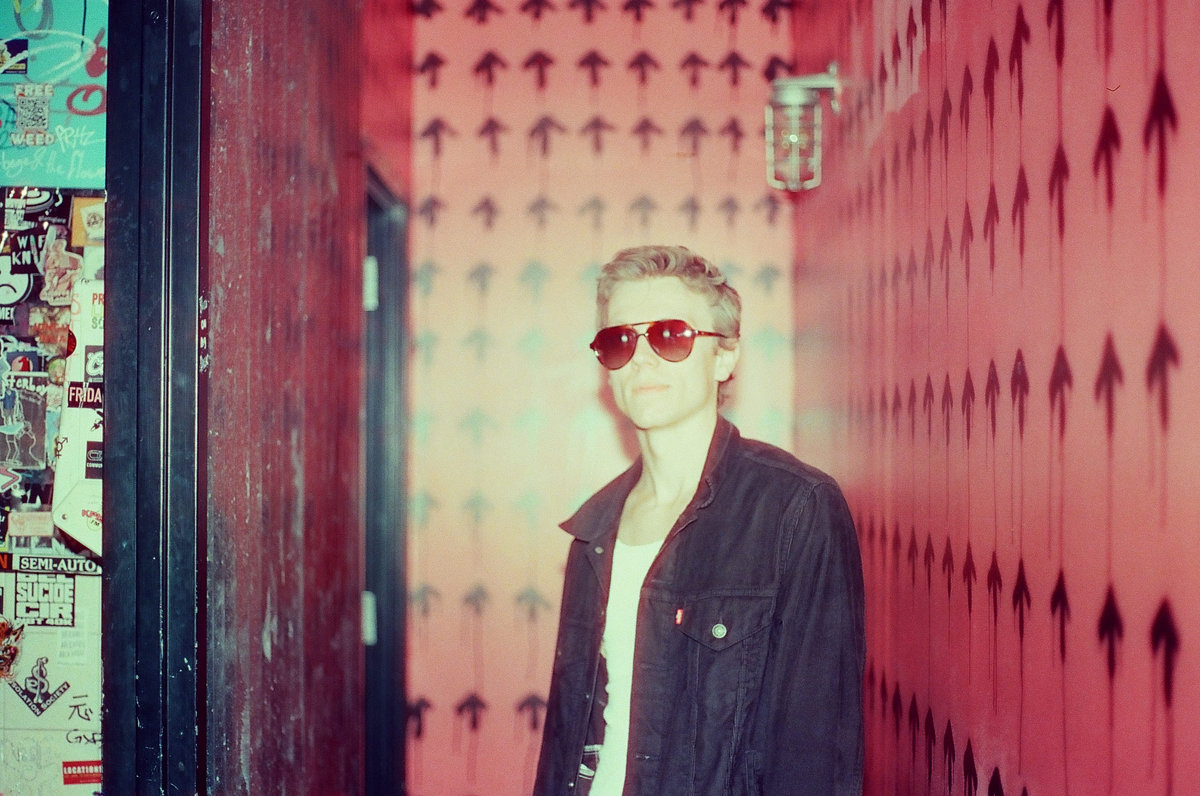 DJ Alone Again Interview Image (c) the artist
“It’s the moments of suspense and anticipation that make you excited for what comes next.“
Video