Name: Dario Faini aka Dardust
Occupation: Composer, pianist, producer
Nationality: Italian
Recent release: Dardust is releasing a deluxe edition of his Urban Impressionism album on March 7th 2025 via Masterworks. First single "Pavane Floue" is out now. He is also embarking on a tour to promote the release. Catch him live on one of these dates.
Global Recommendation: I definitely recommend visiting the Torre Velasca in Milan. It’s a brutalist building that many consider an eyesore, but I find it absolutely fascinating and beautiful.
If you enjoyed this Dardust interview and would like to find out more about his work, visit his official website. He is also on Instagram, and Facebook.
Are there examples of minimalism in music – and outside of music - that impressed you early on?
The first time minimalism really struck me might have been when I heard Arvo Pärt’s music in the film This Must Be the Place.
His use of silence, simplicity, and emotional depth left a strong impression on me—it was a perfect example of how less can evoke so much more.
Later, Steve Reich’s City Life deepened that impact.
His ability to take ordinary urban sounds like sirens and traffic and weave them into a rhythmic, minimalist composition made me realize how music could reflect real life while maintaining a structured flow.
This greatly inspired some of the sounds I sampled during my travels through the outskirts of Paris and New York—car horns, sirens, and street noise.
You can hear them, for example, in “Danse, Alba,” and “Mon Cœur, Béton Brut,” where these urban elements merge seamlessly with the composition.
In architecture, I’ve been equally inspired by brutalism, with its raw concrete forms and stripped-down designs. The concept of less is more applies perfectly here: brutalist buildings embrace their imperfections and textures, creating a dialogue between material and emotion.
Spaces like Les Arènes de Picasso in Paris or the Barbican Centre in London demonstrate how simplicity can carry depth, just as minimalist music allows silence to amplify meaning. Both art forms have shown me that reducing something to its core often reveals its greatest power.
Do you tend to find that, as many claim, “less is more?” Are the notes you don't play really as important as the ones you do play?
I realize that as the years go by, and I listen to my old albums or past productions, I find many embellishments and production artifices—ones I used to obsessively seek—now seem superfluous.
Beyond the more complex and technically virtuosic pieces like “Vertige,” that I included in the album as personal compositional and technical challenges, there are also very simple, sparse tracks on the melodic side.
For example, “The Art of Falling” could be played by a child in their first year of piano study.
But for me, that theme is incredibly powerful and resonates deeply on an emotional level. There are so few notes, yet they say so much to me.
Having done so much over the years, I now find more wonder in what is left unsaid or implied. It’s as if I leave space for something to be sensed, and the beauty lies in the fact that everyone can project or imagine whatever they want into it.
I find this approach more fascinating, richer, and aesthetically satisfying than something didactic or blatantly explicit.
Do you feel as that making music is a process of adding elements until it is done – or one where you chisel away pieces from something that is already there?
Defintely a little bit of both.
Sometimes it happens that I start improvising a theme on my piano and when something catches my attention I record it and begin to add analog elements in brainstorming . Then I leave the track there for days. When I come back to it with my fresh ears I begin to take some elements off and to reach a new balance.
In the case of Urban Impressionism, I went to Paris and New York to visit these brutalistic settings in the outskirts. I wanted to catch the vibes of these places and translate them into music. Except for three piece (“Le Bolero Brutal,” “Danse” and “Suburbia”), my goal was that the composition had to be independent from the electronic world. The focus was the melody not the arrangement. 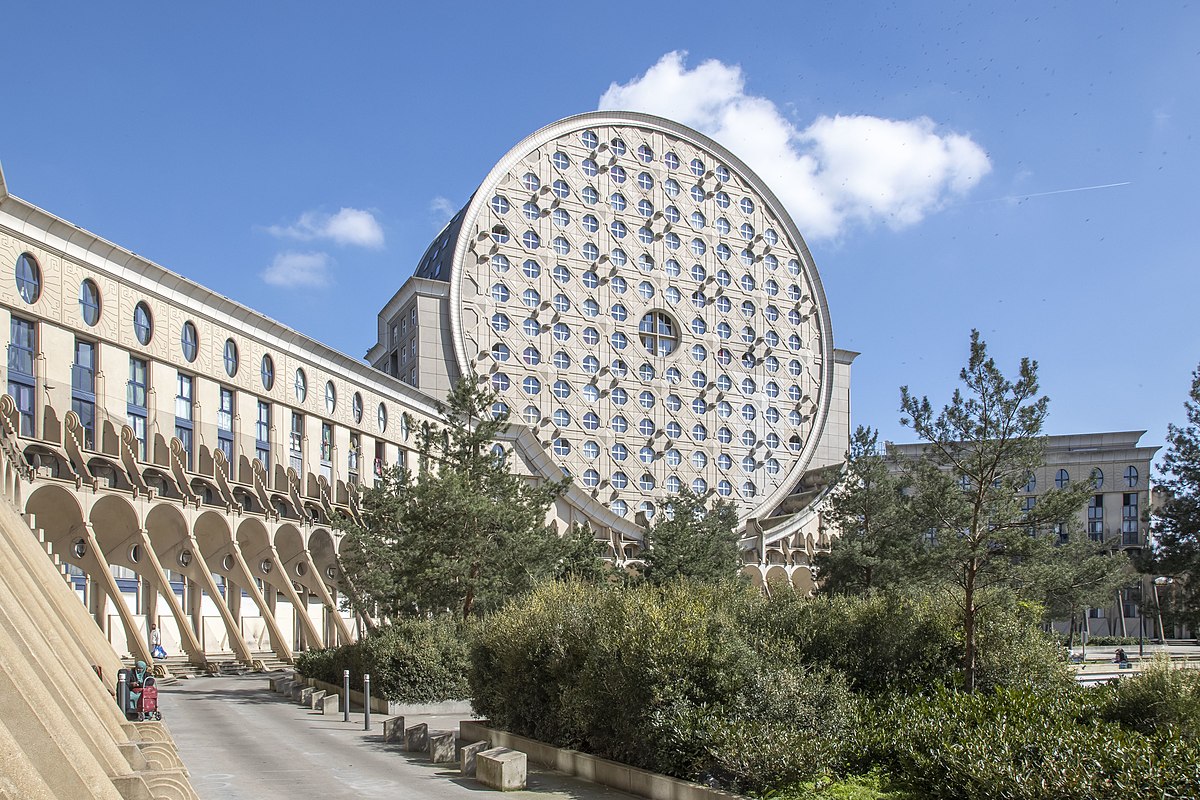
Arènes de Picasso Paris Photo by Arthur Weidmann
I tried to be naked in composition, just like the brutalistic buildings.
What were some of the starting points for Urban Impressionism?
The first consideration that I made was, that contemporary piano music is often associated with nature. It's something that has to make you calm and relaxed (Erik Satie would have said "Furniture music") ... I wanted to explore the imagery of cities and urban enviroment and to bring there the emotional vibes of piano. That was the starting point.
And because my latest album Duality and the associated tour were full of colors, I needed to explore creativity in a new minimalistic and essential way.
How did a minimalist mindset possibly inform the creative process?
I could say that this minimalist transition was also a necessity, something intentional and needed—a contrast born from a period full of sounds, colours, and instruments like Duality, after which I deliberately moved to the opposite side.
Saturation led me to new scenarios, and this shift was reflected in the visuals and the video concept of the tracks—exclusively black and white, with zero colours.
Do you like to set yourself limitations? If so, which were some of those limitations for the new pieces?
For this album particularly, I set myself some clear parameters.
For the acoustic part, I had the GodFather , a multi effect piano processer, created by an italian team. For the electronic part I wanted to use just my Juno 60, my Moogone and my Take 5 synthetiser.
[Read our feature on the Juno 60]
The last step was to add live string elements with Cavalazzi, an Italian trio. So definitely no digital effects or production tricks that I had been using since Duality.
Thanks to sampling and digital synthesis, there are endless possibilities for sculpting the sounds and overall sound design of a piece or album. What are your considerations in this regard?
In fact, I’m a bit obsessive when it comes to knowing everything—I have this fear of missing out whenever new plugins, virtual instruments, or other tools are released, so I immediately start studying them.
But the truth is, I struggle to navigate such a vast map of colours and possibilities. So, I think I unconsciously narrow down this range of tools and accessories that I want to use.
I believe it’s precisely this choice and how I decide to orient myself within that map that defines my artistic personality.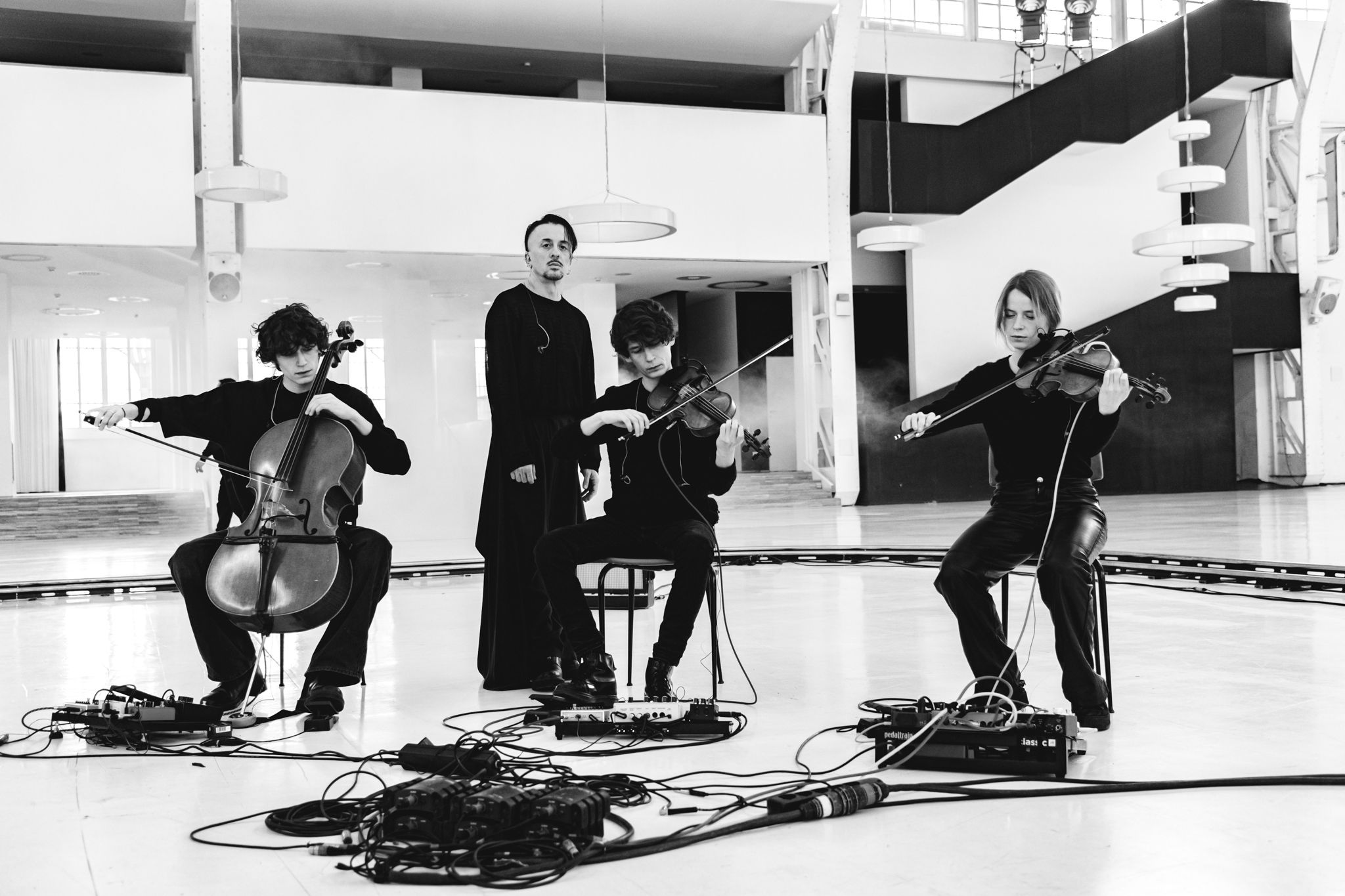
Dardust and String Trio Interview Image (c) the artists
Would you say that you approach your creative tools with a minimalist mindset? Or do you need a wide choice of instruments and tools to make music?
For each album, I create boundaries within which I want to move, aiming to achieve cohesion in the work. Sometimes I succeed, sometimes I don’t. For example, the electronic hemisphere of Duality was a playground of musical genres, and I ended up using countless different instruments, as opening one door would lead to a thousand others.
For this album, I essentially wanted to return to the piano to the intimacy of my room, to the sounds of the wood in my house, to something organic and analog. I wanted to be vulnerable and show myself stripped bare, without embellishments or production artifices.
This vision completely guided the entire creative and production process.
Reducing one's options and techniques often implies a different way of working with the materials. Tell me about yours, please.
It’s precisely when you set limits for yourself that you have to find your freedom within them. That’s the challenge and the beauty of it. The real opportunity lies in discovering all the potential of what you have, even if it’s not much.
For this album, the effects I had at my disposal included a delay that I created in real time by recording piano arpeggios through pedals connected to the same setup. You can hear these effects in “Bolero Brutal,” “Urban Impressionism,” and other textures—but nothing beyond that.
When that approach began to feel creatively exhausting, I relied almost entirely on the piano. I focused on making sure that each solo piano piece could stand on its own and make sense without external support.
As for the electronic side, I discovered that only a few sounds really resonated with me for this project, and that’s why there’s so little electronic presence in this album.
French producer Guillaume Duchastel told me: “Minimalism is about more than owning fewer things. It’s about focusing on what truly matters.“ What are some of your strategies for separating what matters from that which doesn't?
I’m not sure—it’s a matter of instinct or artistic intuition. You recognize when a phrase, a sound, or a melodic passage is important, when it resonates deeply, and you know it’s worth keeping.
At the same time, as I listened to the pieces over and over, I realized that certain sections were superfluous and didn’t add anything new to what I was already saying, so I cut them.
“Impression, Skyline,” for example, was originally very long—it lasted around seven minutes. In the end, I managed to condense it and say everything I needed to within 3 minutes and 41 seconds ...
I have to say that Carlo Jarno was a great help in this process—he acted like a guardian angel throughout the entire creative journey.
With so much incredible music instantly available, are you finding that you want to take it all in – or that you need to be more selective? How do you pick the music you really want to invest in?
That’s a great question! I often get lost in this process too ... but when I’m listening to music while doing something else and a track captures my attention, I immediately stop to find out who the artist is and then dive into their entire catalog. Sometimes, I also read a lot of reviews, even about lesser-known or hidden projects, to discover new things.
Of course, the more you grow, the more selective you become, and I admit this doesn’t happen frequently. But when it does, it’s like gold to me because it means that, beyond feeling inspired, I’ll learn something new and let it influence my work.
Would you say that minimalism extends into other parts of your life as well?
Over the past few years, I have become used to creating in my studio in Milan, which is like a spaceship, it has so many tools.
Now, I'm planning to move to London and set up a small home studio with a laptop, a small keyboard and nothing else, just to prove to myself that I can be creative without using anything.


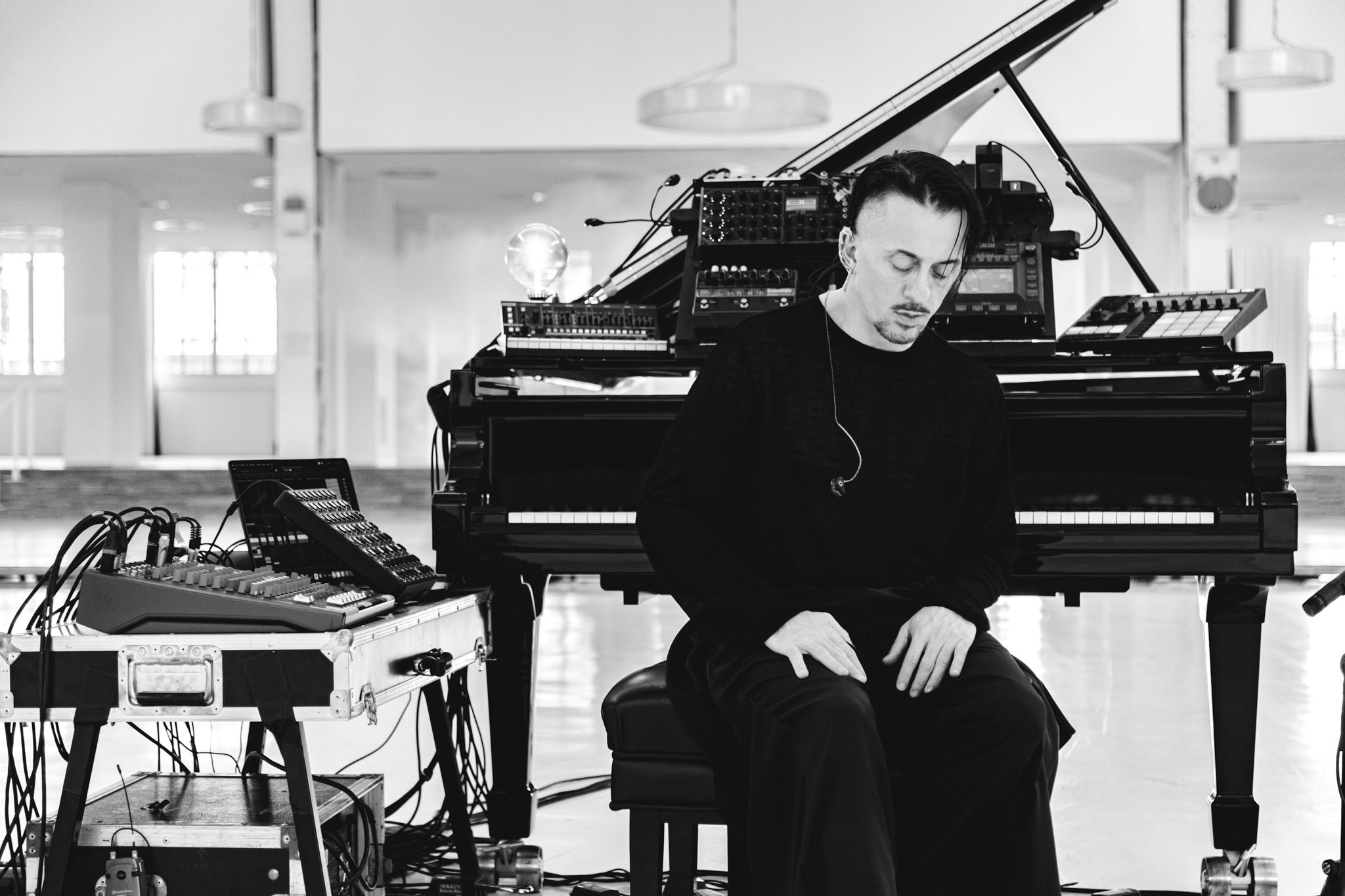 Dardust Interview Image (c) the artist
"I tried to be naked in composition - just like brutalistic buildings."
Video