Name: Patrick Dederich aka Dante
Nationality: German
Occupation: Producer, composer
Current release: Dante's third album, New Places, is out now.
If you enjoyed this Dante interview and would like to stay up to date with his music, visit his official homepage. He is also on Instagram, Soundcloud, bandcamp, and Facebook.
When it comes to experiencing strong emotions as as a listener, which albums, performances, and artists come to mind?
For me, it’s always different songs or artists – very diverse and completely different in their own way.
An album like Good Lies by Overmono, for example, has had a strong impact on me.
But it can just as well be a single track, like “Sold My Soul” by BSEARL or “Leroy St” by Sammy Virji.
Live, it was especially Fred again ... and Mura Masa who completely captivated me. But also very different moments – like seeing Eric Clapton play “Stairway to Heaven” – have deeply moved me.
There can be many different kinds of emotions in art – soft, harsh, healing, aggressive, uplifting and many more. Which do you tend to feel drawn to most?
In the past, I mostly made melancholic music. That was the dominant mood I wanted to convey – but always with a slightly daydream-like vibe.
On the new album, I consciously tried to show more facets: also aggression, anger, or a sense of inner unrest.
I have had a hard time explaining that listening to death metal calms me down. When you listen to a song or composition, does it tend to fill you with the same emotions – or are there “paradoxical” effects?
In the past, I often experienced paradoxical effects – for example, I would listen to Slipknot to relax.
Nowadays, it’s more like I listen to music that carries the same or a similar emotion as my current state – I deliberately search for a specific mood.
In as far as it plays a role for the music you like listening to or making, what role do words and the voice of a vocalist play for the transmission of emotions?
It really depends. For me, there are two perspectives:
On the one hand, a vocal can simply be an instrument – something that fits the vibe and gives the track a new dimension. In that case, it’s not that important what is actually being said. On the other hand, I find it interesting that sampled vocals often still match the content of the song.
I think that happens because you’ve already immersed yourself in a certain emotion and then pick exactly that sample. I believe that art comes to you – not the other way around. And that’s why what is being said often naturally fits into the feeling you want to express.
However, when working with other artists, it’s different – then the content of what is sung or spoken plays a much bigger role, because it directly conveys the emotion.
When it comes to experiencing emotions as as a creator, how would you describe the physical sensation of experiencing them? [Where do you feel them, do you have a visual sensation/representation, is there a sense of release or a build-up of tension etc …]
Since I develop my music strongly from my own perception and emotions, those feelings are usually already there. I don’t have to artificially imagine them – the music is more like a vent for them.
Sometimes certain emotions lie a bit in the past, but get reactivated by new triggers. It can also happen that a feeling settles over a longer period of time – simply because life circumstances are what they are. Then I come back to it later.
When it comes to composing / songwriting, are you finding that spontaneity and just a few takes tend to capture emotions best? Or does honing a piece bring you closer to that goal?
I’m generally a very spontaneous person and believe that decisions that come from real emotions are often the right ones.
Of course, there’s no absolute “right” or “wrong.” Sometimes it makes sense to consciously revisit something and reflect on whether you’ve really achieved what you wanted. Maybe you change a sound here or the entire drum pattern there.
But overall, I work very intuitively – because it simply feels more honest and pure.
How much of the emotions of your own music, would you say, are already part of the composition, how much is the result of the recording process?
For me, everything starts with composition. Even the decision for a genre, certain sounds, or samples is already an expression of emotion.
Since I often work with field recordings, they are more like an additional layer for me – they enhance or underline the feeling that is already embedded in the track.
For New Places, what kind of emotions were you looking to get across?
My new album is a mixture of different emotions. The underlying mood that runs throughout is the feeling of being stuck – both musically and emotionally.
Beyond that, there are many other facets: anger, disappointment, but also pride – especially in having made decisions that I truly stand behind.
How do you capture the emotions you want to get across in the studio?
A lot happens directly in the studio for me. As I said, the foundations often already define the emotional direction, and sound design and atmosphere are built on top of that.
With a track like “Flashbacks,” I wanted to make this restless and unsettled feeling tangible – both through the sounds and the drums.
But sampling was also very important here: I recorded the London Underground, because the sound when it starts moving is so distinctive and perfectly conveys this feeling of wanting to get away.
What role do factors like volume, effects like distortion, amplification, and production in general for in terms of creating the emotions, energies or impressions you want?
If I want to express an emotion like anger, it has to be reflected in the sound. For me, distortion is a very obvious tool for that.
For example, in “Sudden Silence,” I heavily distorted the main synth to create exactly that intensity.
In terms of emotions, what changes when you're performing live on stage, with an audience present, compared to the recording stage?
As soon as you play live, something fundamentally changes – because you openly show and share your emotions with others.
In the studio, you are alone, but once the music is out, other people bring in their own experiences and emotions. This creates a completely new dynamic, and a track can suddenly feel very different.
How does the presence of the audience and your interaction with it change the emotional impact of the music and how would you describe the creative interaction with listeners during a gig?
Many people tell me that they can hear how much attention to detail is in my music and that it has a certain depth.
It’s not music that just plays in the background – you have to engage with it. And that’s exactly what makes it special for many people: it doesn’t feel like a façade, but like something honest.
For me, that’s also the point where music becomes art.
How does the presence of the audience and your interaction with it change the emotional impact of the music and how would you describe the creative interaction with listeners during a gig?
Live, there is direct communication with the audience. This can intensify or even change emotions.
This exchange is exactly what makes it so special – the energy in the room motivates me and makes me more creative at the same time. You want to show people what you’ve created.
Would you say that you prefer to stay in control to be able to shape the emotions or do you surrender to them and allow the music to take over? Who, ultimately has control during a live performance?
As I said before, I believe that art comes to you – not the other way around. You have to go with the flow instead of forcing something.
A lot of my work comes from listening to myself and consciously perceiving my surroundings. Then I sit down and just let it flow. Often I’m like in a tunnel – and suddenly eight hours have passed.
The emotions that music is able to generate can be extremely powerful. How, do you think, can artists make use of this power to bring about change in the world?
I think the question is very complex. Artists have always represented the world from their own perspective – often in a critical way. I also learn a lot from other creatives. Female artists often have a different perspective on the world.
If you consciously perceive your surroundings, reflect on yourself, and translate that into art – whether musical or visual – it can be very powerful. Art can make things visible, highlight problems, and therefore also influence the world.
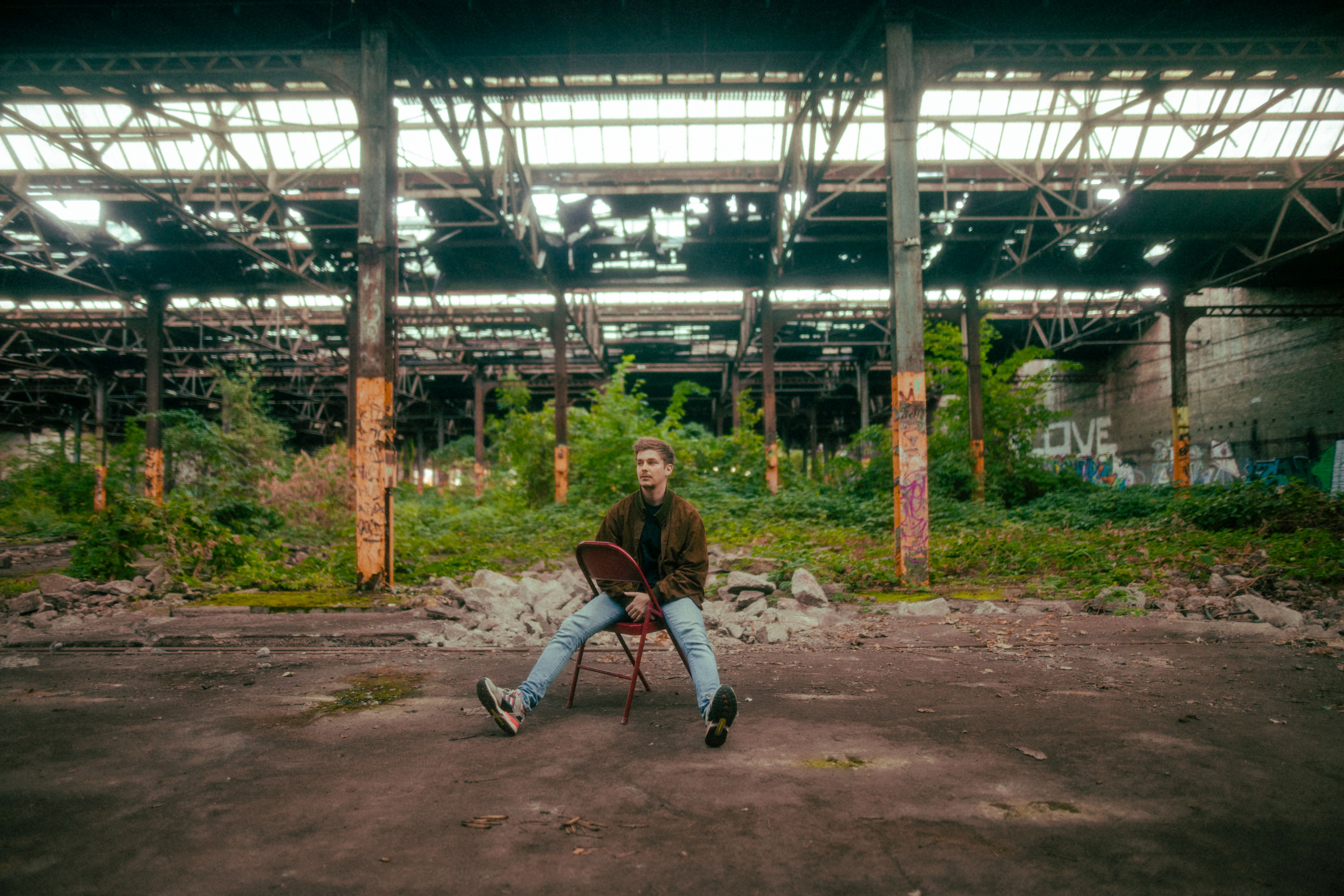 Dante Interview Image (c) the artist
“Art comes to you – not the other way around. You have to go with the flow instead of forcing something.”
Video