Name: Cheikh Ibra Fam
Nationality: Senegalese
Occupation: Singer, songwriter
Current release: Cheikh Ibra Fam's new album Adouna is out via Cumbancha.
Hometown recommendations: For Senegal, I would speak of Gorée Island. That is where the Door of No Return stands — the place where enslaved people were gathered before being sent to all corners of the world. For me, visiting Gorée Island means confronting a history that many forget today, even as racism unfortunately remains very much alive.
I live in Réunion, an island in the Indian Ocean with an immense cultural heritage. It is a place where people of different customs and religions live side by side. Its very name, La Réunion, reminds us that unity is born from sharing. You only have to reach out to others to see that for yourself.
If you enjoyed this Cheikh Ibra Fam interview and would like to know more about his music, visit his official website. He is also on Instagram, tiktok, and Facebook.
Where does the impulse to create something come from for you? What role do often-quoted sources of inspiration like dreams, other forms of art, personal relationships, politics etc play?
I would say that inspiration is the most magical thing about an artist. An artist without inspiration is like a tree that bears no flowers.
In my case, I sometimes find inspiration in other people's lives, but also in my own experiences. I'm fortunate to travel a great deal, to meet people, and that inspires me enormously. In Africa, every day leaves its mark. We have a saying back home: "Europeans have the watch, but we have the time" — ha.
For me, inspiration often comes through chance. Sometimes you simply have the luck of being in the right place at the right time, and witnessing a scene from life. That is something deeply magical.
Do you have certain rituals to get you into the right mindset for creating? What role do certain foods or stimulants like coffee, lighting, scents, exercise or reading poetry play?
What I need most to feed my inspiration is inner peace, faith, and above all concentration — that ability to connect with oneself.
And yes, a good coffee helps too.
For Adouna, what did you start with? If there were conceptual considerations, what were they?
The album Adouna captures that experience, after years of reflection. You only need to look at the world today: all these wars, this hatred, this racism that keeps growing. You just need the courage to write.
For me, we wanted to convey a message of love and peace, to touch hearts with songs like “Wakhtane,” which means "the discussion" — to avoid conflict with those around you. "Xam Xam" is knowledge, something essential for moving forward in life.
I often celebrate frican woman, and women everywhere, through my music. And African youth as well, so often faced with very difficult lives. Some are forced to take senseless risks, out of desperation, to reach Europe under suicidal conditions. I pay tribute to them through my song Shabida.
Tell me a bit about the way the new material developed and gradually took its final form, please.
When it comes to writing, I prefer to go with the flow. As the proverb says: "Appetite comes with eating." A work is never truly finished, especially when you're a perfectionist. But with experience, I've learned to step back and take my time before settling on a final version.
Selecting tracks for an album or EP is fairly straightforward, because music reflects life in its entirety. Musical styles can then be categorized from there. A production is like a tree with many branches. In my case, I compose while leaving room for the different people I work with. I sometimes even anticipate the making of a music video while writing a song. When an image and scenes from life speak to you, it unlocks inspiration.
After every single or album release, you always feel that sense of letting go — like a woman giving birth. But then you have to nurture the work, champion it, while staying in a spirit of sharing, doing things without expecting anything in return.
The success of a work can come right at release, but sometimes it arrives after years of perseverance — or even after the artist's death.

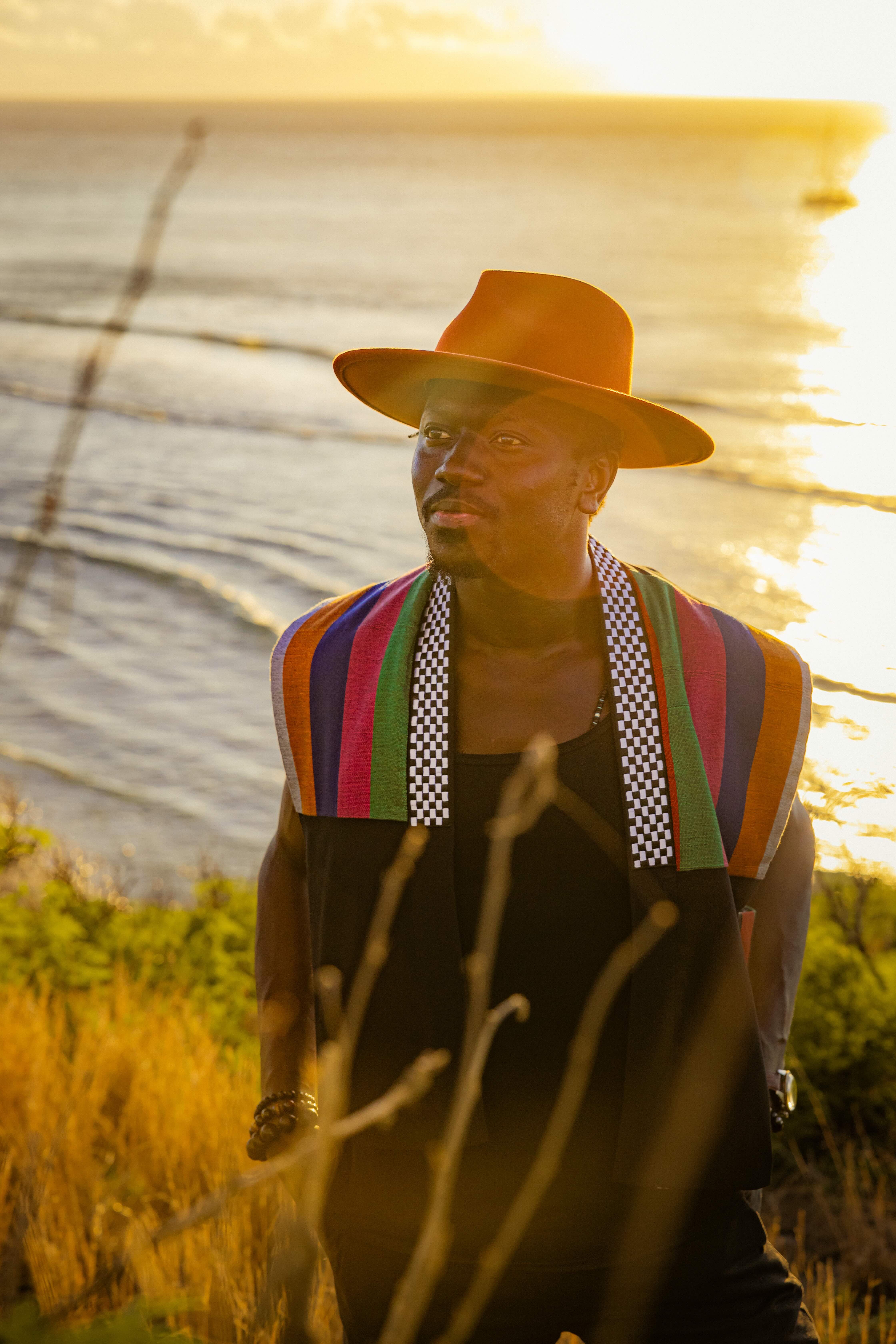 Cheikh Ibra Fam Interview Image (c) the artist
“A production is like a tree with many branches.“
Video