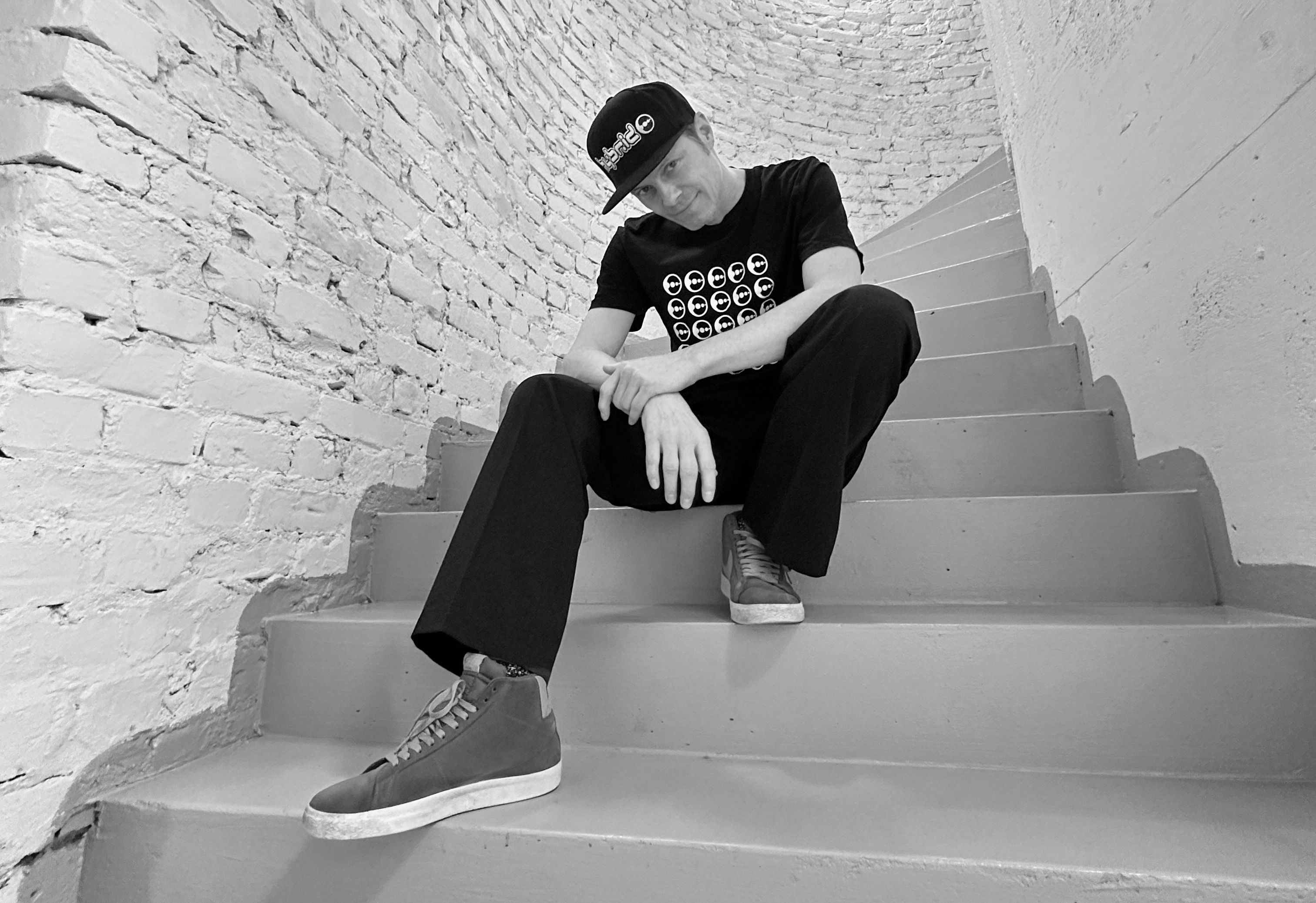


Name: Cari Lekebusch
Nationality: Swedish
Occupation: Producer, DJ, label founder @ H-Productions
Current Release: Cari Lekebusch's XYZ (Part One) is out via Mind Medizin.
Recommendations for his hometown: Both the Stockholm and Helsinki archipelagos are very unique compared to others ocean sceneries worldwide. There are many easy to grab boat trips, long and short ones, that are worth enjoying. Especially after being tired due to party damage.
Things I rarely get to talk about: Since childhood I have always been very fascinated by a cute bug called the Praying Mantis. They look a bit alien like and come in many exiting colours, shapes, sizes, and truly have an extraordinary way of life. There is even a form of Kung-Fu martial arts inspired by these critters that I am very fond of as well.
If you enjoyed this Cari Lekebusch interview and would like to know more about his music, visit him on Instagram, Soundcloud, and bandcamp.
What were some of the musical experiences which planted a seed for your interest in electronic music?
There are so many I would like to mention, but to narrow things down a bit, I would like to point to some of the early inspirations in my childhood between 1978-1982; “Eisbär” by Grauzone, “Bam Bam” by Sister Nancy, “Are Friends Electric” by Gary Newman …
... “Der Goldener Reiter” by Joachim Witt ...
... and most songs from Kraftwerk - but in particular “Its More Fun To Compute” and “Antenna”.
Most genres of music make use of electronic production means. What does the term “electronic music” mean today, would you say?
Yes electronic music is such a “broad” term, especially today.
To me it refers mainly to music that you can make yourself, in the sense that you don’t need a band playing various instruments together. And music in general that uses sound timbres created with electronic devices that do not sound like classic analog instruments like guitars, flutes and pianos, that one would record using an electric microphone.
I grew up mainly listening to electronic music but have of lately, along with others I've spoken to, been somewhat disappointed by most new releases. I'd be curious about your own view on this, the “creative health” of the scene and potential reasons for the disappointment.
I'm thinking that after many years of diving into any form of art will change your taste, as you begin to get a deeper sense of the art.
When quality becomes more and more important, one realises that there’s always going to be more quantity than quality. Especially today when pretty much anybody can compose, record and publish music. Thus making it harder to find those golden needles in an ever growing haystack.
What were some of the recent releases, or performances of electronic music that left a deep impact on you?
“Szeke” by Pierce.
“Vogue One” by A.Morgan. “Manta Ray” by Marcal.
I'm looking for that nice simplicity in arrangements and stripped down sound design. Clean and dirty at the same time ≈]
There are many other producers I would like to mention, here is an quick overview of some highlighted producers in 2024 (and some that I've also been working with): Mikrotakt, Alexander Johansson & Mattias Fridell, Alexi Delano, Benjamin Mull, Joline Scheffler, Orion, Valo, Dog on Acid, The Miller, UBX127, Alex Schultz, Franz Jäger, Blaine Mason, TWR72, Dustin Zahn, Joel Mull, FVKS, Jay York, The Advent, Uncertain, Gene Richards Jr, Klint, Vinicius Honorio, Spekki Webu, Rene Wise …
[Read our Dustin Zahn interview]
What kind of musical/sonic materials, and ideas are particularly stimulating for your work right now?
I really like the way one can work with music production nowadays in general. The mobility is great for sure, one is not locked down to a basement studio with no windows anymore. And there are so many tools that in combination give you so many possibilities.
It’s probably even quite intimidating for someone just getting started.
Where do most of your inspirations to create come from – rather from internal impulses or external ones?
Most of the time it’s from internal impulses, my ideas form during playtime. While testing new toys for example or while designing a palette of sound elements.
And usually after having a balanced palette in front of me, it’s easy to see what can be done with it, and what not. Riding that chaos and then using some parts for a more structured order.
Plenty of inspiration comes from performing live also of course.
Which current social / political / ecological or other developments make you feel like you need to respond as an artist?
There are so many channels out there, dealing with social, political and ecological developments, that I decided to stick to mainly music production on mine.
Music has become a lot more global, and incorporating elements from other parts of the world or the musical spectrum is commonplace. Do you still think there are city scenes with a distinct, unique sound? How does your local scene influence your work?
Deffo not that much localised to cities anymore.
I guess nowadays your local scene is more like your favourite genre. In my case the local scenes of Stockholm and Helsinki are important in the way that I work with other producers from there.
One of the underlaying ideas for my label H-Productions is to team up with the various producers from these locations to continue a tradition and community.
Today, electronic music has an interesting relationship between honouring its roots and exploring the unknown. What does the balance between these two poles look like in your music?
Reckon I run with mainly 3 different approaches here that should cover the whole playfield. Sometimes I go full retro or full future but most of the times trying to make combinations between the two poles is most fun.
I’m usually also aiming to keep it down to only very few sound elements, that I play around with instead of adding more and more new elements. A very stripped down and basic approach to the timeline arrangement is also something I prefer. So it leaves a lot of space and options for a DJ to blend the tracks during the set.
How much potential for something “new” is there still in electronic music? What could this “new” look like?
Yeah it’s hard to define new nowadays, since you can do anything with a few random clicks to generate sequences and melodies.
Maybe some of the new things will be in the area of how to perform this type of music. The way you can play it back to an audience basically. Anything from a new type of DJ player, mixer or music format, to instant audio visual feedback, augmented reality and of course new kinds of instruments or music creation tools. 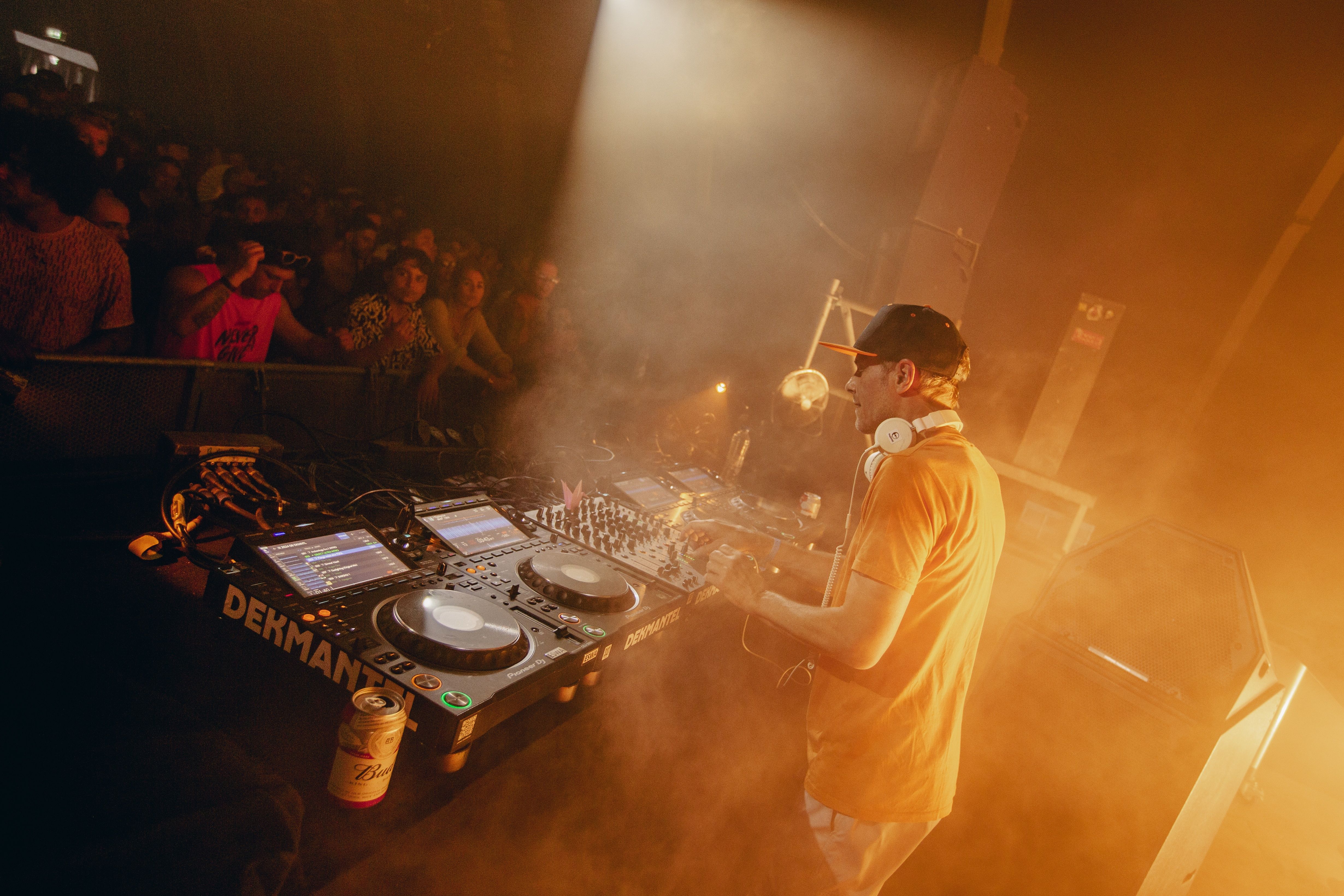
Cari Lekebusch Interview Image (c) the artist
All this would surely lead to the birth of a few new music genres. I am looking forward to experience that for sure.
What were some of the recent tools you bought, used, or saw/read about which changed your perspective about production, performing, and making music?
Actually most new music technologies have for the past years changed all of my perspectives a lot. There is so much crazy stuff going on and so much new gadgetry it's mind boggling.
A personal example would be the Bronze Composer that I have been doodling with for the past 2 years. Basically you don’t work with a typical finite timeline like in many other audio softwares. It’s more like an infinite timeline consisting of many interwoven circles. Makes me think of that ancient flower of life pattern by the way.
Do you think that there is a limit to what can be done in sound design – and what defines these limits?
The limits are being pushed constantly on how to generate audio frequencies, but in relation to that, for me a clear limit is the way you can play back the music to an audience. And one important detail in that would be the frequency range that we all can perceive. Although you can make sub bass music that only whales can heir, which is pretty cool. Maybe in the future we will be able to hear and see even more frequencies?
Either way, I would really like to see a future where you at least could, as a standard, include more senses in your music like smell, touch, vibration and visualisation of individual sound elements.
In as far as it is applicable to your work, how would you describe the interaction between your music and DJing/DJ culture and clubs?
Any cultural interaction that helps somebody to learn something new is a great thing I reckon. Guess a good example would be those moments when I feel that the whole audience, including me, is in perfect sync with the music - that is really something motivating.
It makes it a real fun ride to enjoy when you get that live and direct feedback from the crowd. It creates a real nice synergy, you get more power out than you put in. After a gig like that is when I feel that I’ve learned something new and I reckon so has the audience.
Most of my own, and the music I play from other producers, is mainly designed for DJs and is best experienced in a club or a warehouse event. I also try to have my ear to the ground and be mindful of all the general feedback I can come across, both live and direct and online.
Sorry, maybe I am gliding out of topic there a bit while having fun.
How, would you say are your live performances and you’r recording projects connected at the moment? How do they mutually influence and feed off each other?
Most live gigs bring me plenty of new ideas for the next studio session and the other way around as well. There are so many choices to be made during production or performance that it is vital to have some frameworks prepared for the work process, otherwise one can edit back and forth for years on the same track.
Playing many live sets can teach you how to get a good sense of the psychology in the audience - so you know how long to keep a drum break for example or when to drop the hook sound in or out.
Even if AI will not entirely replace human composition, it looks set to have a significant impact on it. What does the terms composing/producing mean in the era of AI, do you feel?
Hehe yeah now we need to lean how to write super good prompts instead of learning how that music instrument works.
Using AI anybody can generate music but the process of learning is lost. Hopefully it will move to somewhere else, like it has in the past. Perhaps we can draw experience from the early days of music made with sequencers, where many musicians playing instruments looked upon that as cheating.
Personally I really enjoy tinkering on music from scratch to finish and wouldn’t want to use AI for any parts during the process.
Are there approaches, artists, festivals, labels, spaces or anyone/-thing else out there who you feel deserve a shout out for taking electronic music into the future?
Could almost make an endless list after all these years, but will keep it to the last few. Big warm shout outs to: Mikrotakt (PRTL WRX), Benjamin Mull, Joline Scheffler, Orion (FI), Valo (FI), Beth Alana, Joel Mull, Linda Nilsson (Parabel), Uncertain, Dog on Acid (Radiance), Miia Magia (Motto Sono Records), Pierce, Alex Schultz, Mamwadi, Lego, The Miller, UBX127, Blaine Mason, Alexander Johansson, Mattias Fridell, Alexi Delano, Franz Jäger, DJ Lily, Dustin Zahn, Nima Khak, Steve Rachmad, …
[Read our Steve Rachmad interview]
TWR72 (Float Records), Spekki Webu (Mirrorzone), Lady Tazz (Mind Medizin), …
[Read our Lady Tazz interview]
Luke (Blue Hour), Philippa Pacho, Jessie Granqvist, The Advent, Dekmantel Festival (NL), Paradigm (NL), Tresor (DE), Medellin Style & Freedom Festival (Colombia), Pär Grindvik, Hasenbau & Apriori (Cologne, DE), PIP (The Hague, NL), Perron (Rotterdam, NL), Mala Junta (Berlin, DE), Museum of Technology (Helsinki, FI).