Name: Blessing Jolie
Nationality: Nigerian-American
Occupation: Singer, songwriter
Current release: Blessing Jolie 's debut album 20nothing is out now.
If you enjoyed this Blessing Jolie interview and would like to stay up to date with her music, visit her on Instagram.
When it comes to experiencing strong emotions as as a listener, which albums, performances, and artists come to mind?
When it comes to experiencing strong emotions as a listener, I’d say ‘CTRL’ by SZA. I was 15 when it came out, and I didn’t really understand it—though honestly, at that age, I would hope I didn’t.
Now that I’m closer to the age SZA was when she released it, I can see a bit of myself in it. Its lessons are actually applicable to my life now at 24, as opposed to when I was a high school freshman.
That’s the kind of connection I feel reels a listener in—not by trying to convince them “we’re the same,” but by naturally showing them that through being yourself.
There can be many different kinds of emotions in art – soft, harsh, healing, aggressive, uplifting and many more. Which do you tend to feel drawn to most?
I don’t think I’m drawn to one specific kind of emotion more than another.
It usually depends on what I’m subconsciously feeling, or what I subconsciously need to feel. Whatever that is tends to reveal itself through the music.
I have had a hard time explaining that listening to death metal calms me down. When you listen to a song or composition, does it tend to fill you with the same emotions – or are there “paradoxical” effects?
Most of the time I feel what a song is trying to communicate. I tend to meet it where it is emotionally.
In as far as it plays a role for the music you like listening to or making, what role do words and the voice of a vocalist play for the transmission of emotions?
They’re essential. I can say the exact same words two different ways and mean two completely different things.
The lyrics might tell you what I’m saying, but it’s not until they’re paired with my voice that you understand what I mean.
When it comes to experiencing emotions as as a creator, how would you describe the physical sensation of experiencing them? [Where do you feel them, do you have a visual sensation/representation, is there a sense of release or a build-up of tension etc …]
For me, it often shows up as excitement, especially when I say something clever or express something in a way that feels just right.
There’s a kind of internal spark when it clicks.
When it comes to composing / songwriting, are you finding that spontaneity and just a few takes tend to capture emotions best? Or does honing a piece bring you closer to that goal?
It depends.
If you’re not sure how you want something to feel, you have to figure that out—and that can take time, or it can come quickly. It really depends on how well you understand the emotion you’re trying to express.
Honing in on it can bring you closer, but in my experience, overthinking it too much can take you further away.
How much of the emotions of your own music, would you say, are already part of the composition, how much is the result of the recording process?
The emotions are embedded all throughout the music.
For 20nothing, what kind of emotions were you looking to get across?
More than anything, I want to create a sense of community. We’re all different, but we’re living through a lot of the same experiences.
When the music finds the right people, that connection becomes inevitable.
How do you capture the emotions you want to get across in the studio?
Honestly, just through writing. Being intentional with what I say and how I say it.
What role do factors like volume, effects like distortion, amplification, and production in general for in terms of creating the emotions, energies or impressions you want?
They give me control over where, when, and how strongly someone feels something.
Production helps shape the emotional experience just as much as the lyrics and performance.
In terms of emotions, what changes when you're performing live on stage, with an audience present, compared to the recording stage?
On stage, I have to do more than just say it—I have to show it. The audience isn’t just listening, they’re watching. So even if the music is sincere, I have to be convincing in every sense.
Getting the words right isn’t enough—I have to make it real.
How does the presence of the audience and your interaction with it change the emotional impact of the music and how would you describe the creative interaction with listeners during a gig?
Performing live breathes real life into the music.
It’s one thing for someone to stream your song and sing along, but it’s completely different when they show up, stand, and shout it back to you. That energy changes everything.
What kind of feedback have you received from listeners or concert audiences in terms of the experience that your music and/or performances have had on them?
People either recognize themselves in the music or begin to see how they’ve made others feel.
I hold a lot of reverence for that kind of awareness.
Would you say that you prefer to stay in control to be able to shape the emotions or do you surrender to them and allow the music to take over? Who, ultimately has control during a live performance?
We plan for it all, but ultimately, it’s wherever the performance takes me.
The emotions that music is able to generate can be extremely powerful. How, do you think, can artists make use of this power to bring about change in the world?
Be honest.
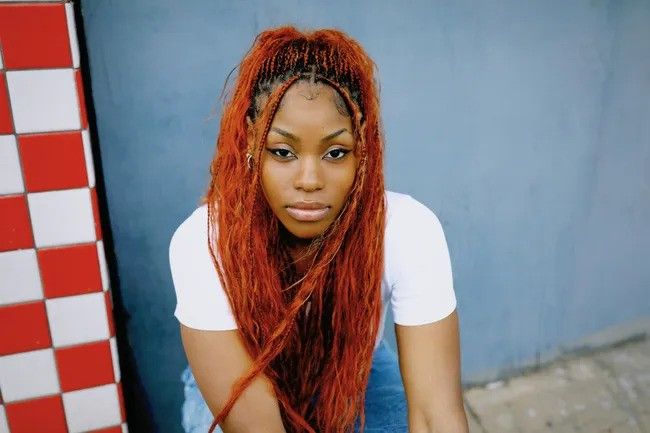 Blessing Jolie Interview Image by ro.lexx
“Getting the words right isn’t enough—I have to make it real.”
Video