Name: Barbara Ellison
Nationality: Irish
Occupation: Composer, sound artist, audio/visual artist
Current release: Barbara Ellison's new album Murdúchann is out via Unsounds.
If you enjoyed this Barbara Ellison interview and would like to stay up to date with her music, visit her official homepage. She is also on bandcamp.
The borders between producers, sound artists, and even songwriters are becoming increasingly blurry. What does being a composer mean today, would you say?
I only started calling myself a composer some years ago, probably in the mid-2000s, after it became clear that it was really the best word to describe what I was and had been doing for a long time.
I have a background in Fine Art Sculpture and no formal training in composition, so adopting the word ‘composer’ never sat entirely comfortably with me, as I would traditionally have associated composition with instruments and dots on paper, and I never worked that way.
There was a period where I left my visual world to one side completely to focus on sound creation, and thus composition eventually became the most useful word — partly because it's quite socially specific and legible, a bit like saying you're an architect or a doctor, and partly because it points to more open terrain than terms like “sound art” or “soundscape”.
Composition and musical listening to me are almost interchangeable. One can listen to the world in an everyday, survival way, and one can also listen in a more musical way. Tuning into the environment and hearing it almost as a form of orchestration is what I'm pointing to. For me, listening to the world as composition, in the widest possible musical sense, is much closer to how I think about what I do.
Aside from my interest in music as a child — I always really enjoyed foley-type sounds, like footsteps on different surfaces, the sound of rain on surfaces, wind, the crinkle of biscuit wrappers, butter paper, foil, etc. — and that kind of curiosity about the materiality of sound stayed with me and became more heightened, of course, as soon as I started to record such sounds.
This is close to what I think of as natural polyphony: if you really listen to the world, sounds are constantly forming layers, blending and separating, auditory streams appearing and disappearing, one masking another and then suddenly revealing it. A windy harbour, for example, can hold an extraordinary polyphony of boat masts knocking together, ropes, water, wind, and distant voices. Listening in this sense is already a kind of compositional activity.
I'm interested in levels of listening and what happens when you attend to something — what appears, disappears, shifts into the foreground, becomes part of the background, or suddenly seems to be something else altogether. I’m interested in the idea that perception isn't simply a matter of receiving what's out there, but that we are constantly organising, predicting and making sense of what we encounter.
This interest grew out of a master's I did at Trinity College Dublin in 1998–2000. Dermot Furlong, Professor of Electronic and Electrical Engineering, introduced our class to cognitive and Gestalt psychology, perceptual studies, Goethean science, phenomenology, direct perception, Helmholtz's ideas, etc. Helmholtz's idea of "unconscious inference" was something that influenced me years later to connect with ideas of the brain being essentially a prediction machine, constantly making informed guesses about the causes of what it is sensing rather than simply receiving a clean signal.
That period completely rewired my own brain in a way and opened up a new world for me, and sowed seeds for ideas that would resonate and eventually lead to my compositional work with Sonic Phantoms, where I play with ideas around perceptual ambiguity, apophenia, predictive processing, bistability and the instability between perceptual figure and ground, which can give rise to all kinds of illusions and oddities.
I find perceptual instability incredibly rich as a generator of compositional material. I work a lot with the phenomenon of bistability — the shifting between figure and ground — and with what happens when you deliberately exploit it.
A lot of my Phantoms pieces are like sonic blotscapes — open, polysemous auditory images which don't necessarily have one central thing that you're supposed to hear. There can be several potential focuses, and you can move between them. Something can become intensely present for a moment and then recede again.
My compositional world, under the banner of Sonic Phantoms, spans four realms: Phantasma Instrumentalis, Materialis, Humana, and Naturalis — the realms of instrument, object, voice, and nature. I work with a wide range of materials within those realms — prepared instruments and ensembles, amplified objects, human and non-human voices, field recordings, synthetic voices, and computer-generated or processed material.
The tools themselves are rarely the interesting part for me. I tend to use whatever I have at hand, and I'm often more interested in misusing a tool, pushing it somewhere it wasn't intended to go, or setting up a situation where it produces an unexpected result. There is a very intuitive and hands-on side to the way I work. I might spend hours with an instrument or a piece of material simply listening and experimenting until something starts to reveal itself (Instrumental Phantoms, Drawing Phantoms).
More recently — and after many years of focusing mostly on sound alone — I've been working much more audiovisually, but I work with the visual material compositionally, using many of the same processes that I use to generate and transform sound. It’s definitely a challenge for me to describe what I do (without demonstration), and that’s why for now I stick with composer or audiovisual artist. It gives a sense of what I'm doing without prescribing exactly what the material, medium, or method should be.
Like many other artists now, I am composing, producing, performing, recording, mastering, writing, etc. — so the boundaries are very fluid.
Many people perceive classical music and contemporary composition as having high barriers of entrance, both for listeners and musicians. What have your own experiences been in this regard?
I don't have a music or composition degree. I came at this from Fine Art — sculpture — and then technology, and I ended up on a music and media master's programme at Trinity College Dublin almost by accident, as one of a handful of people accepted without any formal music training. I entered this world at the end of the '90s, then, hungry for more exploration, went on to do Sonology in The Hague from 2000 to 2003.
There was, and had been for years, a thriving experimental sound-making scene outside of the institutions — a very rich DIY culture around cassette exchanges, home recording, amplified objects, homemade electronics, and all sorts of experimental approaches to sound. But in a pre-laptop world, access to sophisticated digital technology and software was not easy. If you wanted to work with particular computers, synthesis systems, processing equipment, or multichannel studios, you generally had to go into a specialist studio. The idea that you could have a powerful digital compositional environment sitting on your own desk was still relatively new.
For me, I managed to get around or under the barriers — but I also think I was lucky to get into and have access to such places without the official qualifications, and also that what I did at that time was very affordable, which is not the case anymore.
Getting my own computer — a desktop Mac — and recording equipment eventually became the real turning point. Laptops then were total gamechangers. What mattered was having a setup I could return to whenever I wanted, rather than having to book or gain access to a studio, without requiring software permissions, etc.
It's a completely different landscape today. Computers are ubiquitous, composition departments are far more open than they once were, and a lot of younger composers create, produce, record, and perform their own work entirely outside any institution.
What role do electronic tools and instruments play for your creative process today? What does your creative space / studio look like and what tools does it contain?
The tools I use are mostly generic, and I'm much more interested in the ways I can misuse them than in the tools themselves, so I will spare readers a boring equipment inventory.
The studio space itself is simple, open, bright, calm, and uncluttered—relatively minimal. I share the space with Francisco; we both have our own setups on different sides of the room. It’s a fact that my side of the workspace is admittedly considerably messier than his—all of the time—but I do try to keep it under control.
We have a clear view of the Reek—Croagh Patrick—right from where we work, and that is special. We don’t take that for granted.
We both like working with headphones, so that’s fortunate. We also share a large table in the centre of the space, using my half for drawing, writing, constructing things, and generally getting away from the machines for a while. All of our recording gear—microphones, field recorders, cameras, etc.—is kept entirely out of sight.
I can actually work well in any non-noisy setup as long as I have a laptop and good headphones. I have a separate multifunctional space for my detuned instruments—harps, dulcimers, guitars, fiddle, concertina—as well as the many non-instrument objects and things that I play with, and for acoustic experiments and recording sessions. It also doubles as a guest room.
Composing has always had an interesting relationship between honouring its roots and exploring the unknown. What does the balance between these two poles look like in your music?
Rather than tradition for its own sake, I'm more intrigued by the perceptual experience of the material.
I find connections between musical worlds that are geographically, historically, and culturally very far apart because they can sometimes reveal something surprisingly similar about how we listen. In fact, this very idea grounded a lot of my PhD research and thinking for my work with Sonic Phantoms: Composition with Auditory Phantasmatic Presence, later published as a book co-authored with Thomas Bey William Bailey.
The inherent patterns resulting from Amadinda xylophone playing, or the interlocking perceptual oddities that hover to the surface with Inuit katajjaq, have speed, tight coupling, interlocking, proximity of pitch and timbre, repetition, and other things in common. These conditions can generate fascinating sonic phantoms, and the performers often exploit these factors in order to accentuate them.
With the Amadinda, musicians play rapidly interlocking parts, but what we hear isn't simply those individual parts added together. We perceive emergent, inherent patterns that no individual player is actually playing. A third player can bring attention to these rhythmically complex patterns by picking out those hovering combined tones and accentuating them. There is a very striking mismatch between the physical actions we can see and the auditory image we experience.
Similarly, with Inuit katajjaq, two singers interlock their voices so closely that we hear entirely separate streams emerging from their combined sounds, making it difficult to determine who is actually producing which sound. The stronger that illusion, the more successful the vocal game becomes.
Beatboxing actually does something similar with a single voice and is another completely different cultural phenomenon that interests me for related reasons. A single performer can create the impression of several simultaneous sound sources—bass, percussion, voices—through rapid alternations of different vocal techniques and timbres. Again, the perceived polyphony isn't literally present in the physical source; it is constructed by the listener.
These practices have completely different cultural histories and meanings, but what interests me is the phenomenon itself. They all demonstrate, in different ways, that what we hear is not what we get—not a simple, transparent representation of what is happening physically.
That connects to the prediction-machine idea I mentioned earlier—the exact point where the physical organisation of sound and the perceptual organisation of sound begin to diverge is what interests me most. That is really at the heart of Sonic Phantoms. I became interested in how that gap could become a generative space for composition—whether you could deliberately create situations in which the listener's perceptual system becomes an active participant in constructing the music.
So I'm more interested in what is happening perceptually—what these very different musical practices reveal about listening—and then in seeing what happens when I create conditions for these phenomena to manifest in my own work.
To some, the advent of AI and 'intelligent' composing tools offers potential for machines to contribute to the creative process. What are your hopes, fears, expectations and possible concrete plans in this regard?
I've been following the research around AI, cognition, predictive coding / processing, and consciousness science out of pure curiosity for a long time. Although not a scientist, I am deeply interested in these ideas and how they can shed light on my own artistic work and beyond. Long before AI arrived into the mainstream, I have been fascinated by the question of how any system gets from a chaotic physical world to a lived, structured experience of that world.
This interest feeds directly into my creative world—and my Sonic Phantoms research—with ideas such as the brain as a prediction machine and Helmholtz's unconscious inference. It draws on a long lineage stretching back through Kant's structures of experience, Goethean science, Gestalt psychology, and Hippolyte Taine’s early observations on perception, to Rick Grush’s modern emulation theory, right up to the work of contemporary figures like Stuart Russell, Andy Clark, Jakob Hohwy, Chris Frith, Joscha Bach, Anil Seth, and Karl Friston's free energy principle and the predictive brain.
Zooming out, I am interested in the perceptual loop itself. AI models, much like biological brains, are essentially internal systems locked away, trying to construct a coherent reality out of probabilistic predictions, statistical tracking, and error corrections. Rather than using AI to generate musical content, I am more interested in the underlying mechanics of inference, expectation, and apophenia—albeit from a more creative perspective.

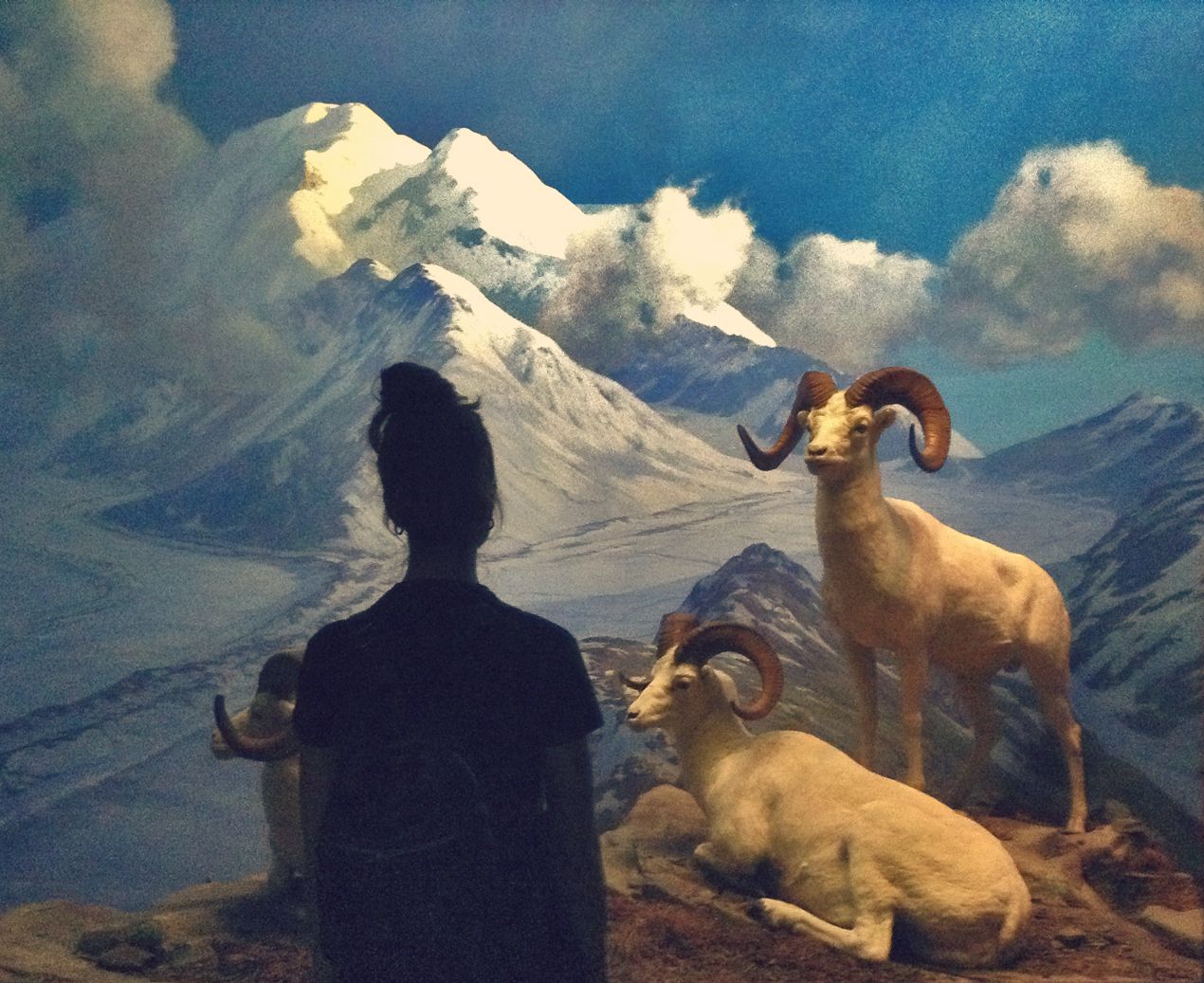 Barbara Ellison Interview Image (c) the artist
“I find perceptual instability incredibly rich as a generator of compositional material.“
Video