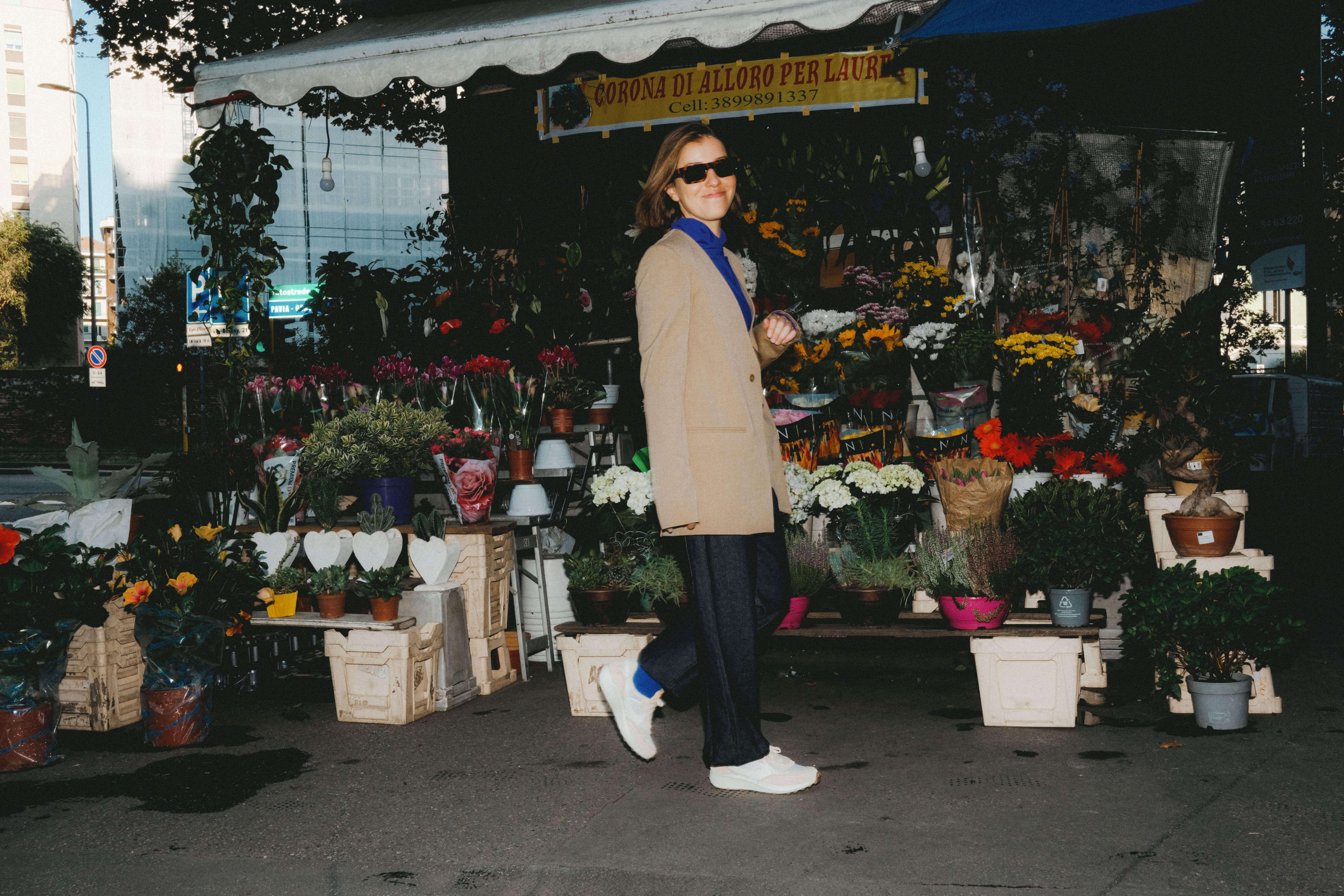


Name: Bárbara Boeing
Nationality: Brazilian
Occupation: DJ, producer
Current release: Bárbara Boeing's Memoir EP is out via Toy Tonics.
If you enjoyed this Bárbara Boeing interview and would like to stay up to date with her music and current live dates, visit her on Instagram, Facebook, and Soundcloud.
Do you think that some of your earliest musical experiences planted a seed for your interest in DJing? How and when did you start DJing?
My taste has certainly developed with time. I even took a hiatus from electronic music at one moment of my life, and this enabled me to fully develop as a selector with a bigger threshold for the music I love.
Of course I love electronic music and I believe that the almost hypnotic feeling that a good DJ can create when selecting and playing well, can be truly fascinating. Experimenting with other types of music can also increase the boundaries of what can be done in a set.
And to answer your question, I started to play 18 years ago and an early seed I planted is to be open and always listen carefully. Sometimes we cannot immediately understand what a track is trying to show us, and this is why attention to detail is crucial. Time and study are two important variables in this equation!
Today, DJs are rarely just DJs. Very often, they can be producers who are also DJs or DJs who are also producers. Where do you see yourself on this spectrum and what kind of potential issues and cross-pollinations does this create?
I am originally a selector. This is how I think about my music and this is how I create. I listen to different ideas, understand what works on the dance floor and I am always open to playing across genres.
Sometimes I get obsessed with some tracks, and understanding the reason for this also intrigues me.
Potential issues of being a selector and bringing this to the production is that somehow a reference will always be there. So creativity needs to be linked to this process, to avoid copy/pasted ideas.
What were some of the most important insights you gained from teachers/tutorials, other DJs, or personal experience? What does it mean to be a “better DJ?”
Maybe this comes from personal experience … I DJ the same way I used to when I started (18 years ago). This means I don’t even use the Record Box system to collate my music.
My insights came with time and a few of them are:
If you know how to DJ with a CDJ 100, you know how to DJ with anything. Trust your ears, not your machines!
Almost any unquantized music can still be mixed, you just need to feel your way into it by trying and trying and trying again.
Understand your crowd … More or less, mature music only works if the crowd is cohesive with your delivery.
For you, is there still listening outside of looking for music for your next sets? If so, what do you prefer to listen to and how does it possibly nonetheless have an influence on your performances?
Yes, a lot! But only Classical/Neo-Classical Music and also Ambient Music, it feels like almost listening to textures in a way … This resonates well with my inner-self nowadays.
I have created some Ambient mixes already, so it is something I can present to the crowd and on radios as decompressing music.
When digging, what are you looking for? Is the process all about taste for you, or is it about “going beyond taste?”
This process is a lot about taste but also about listening to recommendations from people I think know more about it all than I do! I am always happy and open to hear what owners of record labels or just people that listen to records, have to show me.
There are really good records that maybe, when I listen to them for the first time, I may not like … But sometimes, time may show me that I was wrong and that it was just not the right moment for me to hear it. Timing is everything, and the right knowledge will allow you to be ready to understand what is good now, and what is yet to come.
So going beyond taste, in my opinion, creates discovery. Even if I do not like something, I will always try it again, in an attempt to hear it from different angles!
On the basis of one of your most recent gigs, tell me about how the preparation- and decision making process works during a gig with regards to the inclusion of key records, the next transition and where you want the set to go?
In the end it all has to do with how I think the party will be. So I can prepare a bit, but sometimes my predictions will be wrong and I’ll need to change them on the fly. That’s not always my favourite moment, but I am used to it nowadays.
I have around 20 key records/tracks that I will choose, depending on the flow. They work as a transition from one genre to another and they will always help me change the vibe whenever I want to.
There must be endless ways of “matching” two or more tracks. How do you prefer to do it? What makes two tracks inherently “matchable” and what constitutes a great transition?
Some tracks were just made for each other.
Being in the same key helps the process, but I also think that mixing two tracks that have a similar drum sequence makes a lot of sense too.
How would you describe the experience of DJing, physically and mentally? Do you listen – and deejay - with your eyes open or closed?
I will not lie, for me, it is not always 100% pleasant. When I do this for other people, it is always guided by how the crowd and I interact with each other. It can be one of the most delightful moments of my life or even those types of moments that I wish will end soon.
When I dance and sometimes when I jump, it means I cannot even contain the happiness inside. At this moment I am super comfortable, and even though I do not close my eyes so much, I am enjoying the music profoundly.
Do you engage with audiences/dancers - and how? Taking one of your online DJ mixes as an example, how does the experience and the way you deejay change when you subtract the audience?
There is much more pressure to perform in front of other people, but the bigger the challenge, the bigger the reward.
I will be a DJ for the rest of my life because I love to select and find new music, but the reason I do this for other people is because I am interested in seeing the reactions of people when I play them the music I love. There is a true connection inside of this process when the result is positive!
Collaboration is a key part of almost every aspect of music making, but it is stil rare in DJing. Tell me about your own views on back-to-back DJing, interactions with live musicians or other forms of turning DJing into a more collective process.
Because I do not use Rekord Box, B2Bing with me might not be the most comfortable thing.
I think playing by myself is the only way I can musically reach places I plan in my head, but when the other DJ is almost a mind reader and can adapt to anything I am playing (and I can follow her/him too), the feeling of 2 in 1 grows to a higher level. It is a special moment …
How important is dancing for our well being on a personal and even on a societal level?
Everyone has their own way to fight their demons. For me, dancing is one of the healthiest ways to do that.
Music is completely linked to what is going on in society and the issues everyone is going through internally. Finding a way to vent is vital!
Especially in the light of advances in AI, where do you see the role of humans in DJing versus that of technology? Can AI act as a collaborator or creative stimulus?
DJs could have been replaced by computers for a while now, but this hasn’t happened because we always need the human touch … It’s the same way for musicians in general.
In the production field I would say AI acts as a creative stimulus. It is really hard to find multi instrumentalist-artists that play literally every instrument that is used within electronic music.
Ableton already helps people with shaping their music exactly how they want, I think AI will provide one extra boost to that.
Tinnitus and developing hyperacusis are very real risks for anyone working with sound. Do you take precautions in this regard and if you're suffering from these or similar issues – how do you cope with them?
I bought some really good custom made earplugs, but I cannot mix with them. So I try to keep my monitors low.
Not ideal, but that is how I can deal with it best.
Let's imagine you lost all your music for one night and all there is left at the venue is a crate of records containing a random selection of music. How would you approach this set?
I could not play with other people’s music collection.
It loses the whole sense of what I do, which is selecting music and records that I’m personally attached to and understanding how they work together.