Name: ASHRR
Nationality: American
Members: Ethan Allen, Josh Charles, Steven Davis
Interviewee: Josh Charles
Current release: ASHRR's new single "Deux Sons" is out now via 20/20 Vision. Still available is "Different Kind of Life," featuring a remix and a dub by Massimiliano Pagliara, also via 20/20 Vision. Full-length album Sunshine Low will follow September 20th 2024.
Recommendations:
Two Books: 1. Even This I Get To Experience, autobiography by Norman Lear; 2. Conspiracy To End America, by Stuart Stevens
Two Songs: 1. "School," by Supertramp, album - Crime of The Century; 2. "Pavilion of Dreams," by Brian Eno & Harold Budd, album - Pavilion of Dreams
Two Pieces of Art: 1. "L'Age du Bronze," by Demetre Chiparus 1925; 2. "The Persistence of Memory," Salvadore Dali 1931
[Read our Massimilano Pagliara interview]
If you enjoyed this ASHRR interview and would like to know more about the band and their music, visit their official homepage. They are also on Instagram, Facebook, and Soundcloud.
Do you think that some of your earliest musical experiences planted a seed for your interest in production and technology?
I played in bands and wrote songs, but in Austin I went into the studio for the first time with my band and it was an awful experience. The engineer was not engaged, the days long, and I left thinking the studio was not for me.
A few months later, I found myself in the same studio, but this time collaborating with a different engineer. It was a great experience, and I realised that the choice of who you choose to work and what they have to offer was extremely important.
After that, learning music production started to become something of an obsession.
What were your very first active steps with music technology and how would you rate the gains made through experience?
I started with a four track tape recorder, which is an excellent way to learn to make decisions early on. I remember using a delay pedal for the first time and being amazed at the possibilities.
My formative years of production and making records were fundamentally shaped by the people I worked under, and I was able to take part first hand in many different approaches to recording.
Now I am fully modern with all the tools available to us these days, but in production I think there’s no replacement for the craftsman - apprentice process of learning how to create and collaborate in any situation, regardless of the tools.
Were/are you interested in the history of production and recording? If so, which events, albums, artists, or insights stand out for you?
Hugely. I never stop exploring the present and past of recording. I’m a huge Beatles fan, as well as the history of Jamaican records. Music combined with experimentation has always fascinated me. I was fortunate enough to come under the likes of Daniel Lanois and Brian Eno, but I have many heroes in production like King Tubby, Tom Dowd, Rudy Van Gelder, Martin Hannett, and Wendy Carlos.
Artists are almost too numerous and wildly varied to list, but among many favorites are The Beatles, The Clash, Marty Robbins, post punk, funk and soul, dance music …the list would never stop really.
Making music, in the beginning, is often playful and about discovery. How do you retain a sense of playfulness and how do you still draw surprises from tools, approaches, and musical forms you may be very familiar with?
Whether with music or any exploration of art, I am often in the creative process. And there are many different ways of working in that space. I play tricks on myself all of the time, often in the form of limiting options as opposed to searching for more.
For instance, today I can only use these three things in the studio, or these two kick drum sounds, or I use an hourglass and I’ll explore this concept for an hour. Then you can free your mind to think of ideas and keep moving, as opposed to getting lost in options or assassinating young thoughts out of insecurity before they have a chance to breathe.
To me, there’s no greater feeling in the world than to make music. The initial riff, lyric, hook, sound, beat might help conjure up the rest of the material to take shape. But it’s the first moment of creation which is one of the best feelings in the world to know that you’ve just made something out of nothing and it has the potential to change people’s lives because music transcends everything.
In ASHRR, we draw from our unique backgrounds as individual artists and that gives us a sonic and rhythmic palate to choose from and in which we are fearless in our experimentation and quest to find that magic. 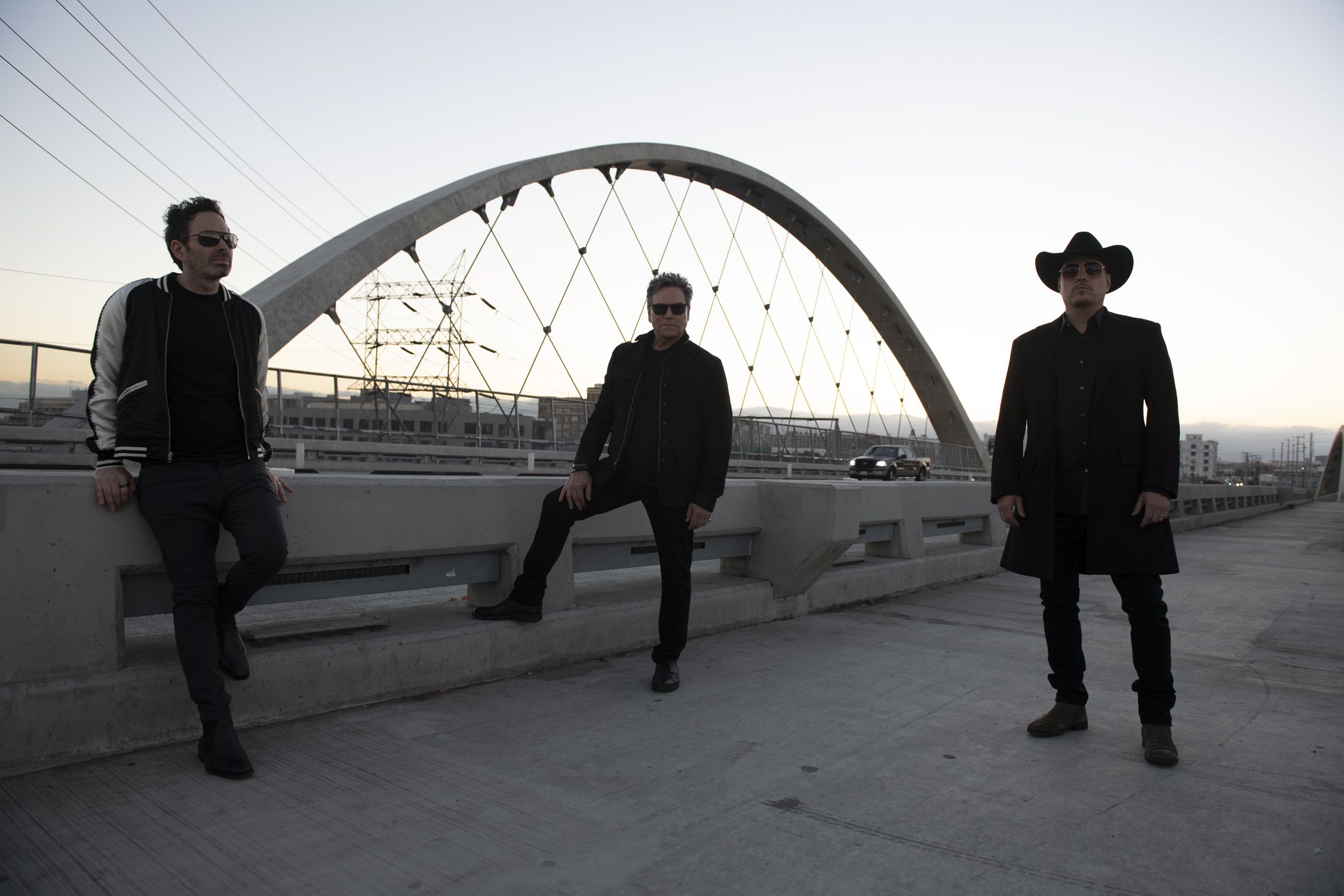
ASHRR Interview Image (c) the artists
How and for what reasons has your music set-up evolved over the years and what are currently some of the most important pieces of gear and software for you?
I started with the humblest of instruments and recording setups. Now there’s a lot more in my studio, but I don’t like collecting to collect. Everything I have now is a tool, or a means to an end, or something different around to inspire.
I have a computer with Pro Tools, Logic, and Ableton. I have a lot of old gear, because personality and character are the most important, irreplaceable aspects of creating. I use my vintage Neves and Neumann U67s everyday, as well as the piano. I have a lot of new things as well, from synths like the Sequential Prophet and Moog Matriarch, to endless bits of software and tech. Guitars, metal barrels, drums.
Ultimately I’ll make music with whatever I have available to me. Gear is a lot of fun, but I think it’s a mistake to come to believe that your creativity is dependent on the tools you use.
Have there been technologies which have profoundly influenced, changed or questioned the way you make music?
The computer certainly has changed things. But I still retain ways of working from the tape and analog days, which I think is important. I think a huge advance for me is the ability to record ideas and sounds into your phone at any time. Many ideas would have been lost for me without that.
With the advance of digital in the last 20 years, we’ve all shifted to working in DAW which makes certain things a lot easier than recording to tape although we love the sound of analog and tape. Nowadays, we use analog Neve, API preamps and consoles and record directly into the computer. The ability to call up any synth or drum machine ever made is alluring but also keeps you from focusing on what is most important - the song.
We try to limit the palette of tools to a few guitars, synths, etc. and then once we have a song’s foundation, that’s when the experimenting begins. We will create samples from scratch, and anything is fair game when it comes to creation.
Already as a little kid, I was drawn to all aspects of electronic/electric music but I've never quite been able to put a finger on why this is. What's your own relationship to electronic sounds, rhythms, productions like – what, if any, are fundamental differences with “acoustic“ music and tools?
I think the unique thing about electronic music is it’s sense of exploration. It gives you another mindset to try on, another world to walk into. It can be about the pulse, the beat … it can make you want to move. But it does the same to your mind. It can hypnotise, and elevate.
That being said, whether music is made with acoustic or electronic means isn’t as important as the spirit with which you make it. We do prefer using a lot of organic instruments in addition to electronic only, but for that reason.
For instance, I do love me some real bass guitar, as opposed to always using a Moog or what have you.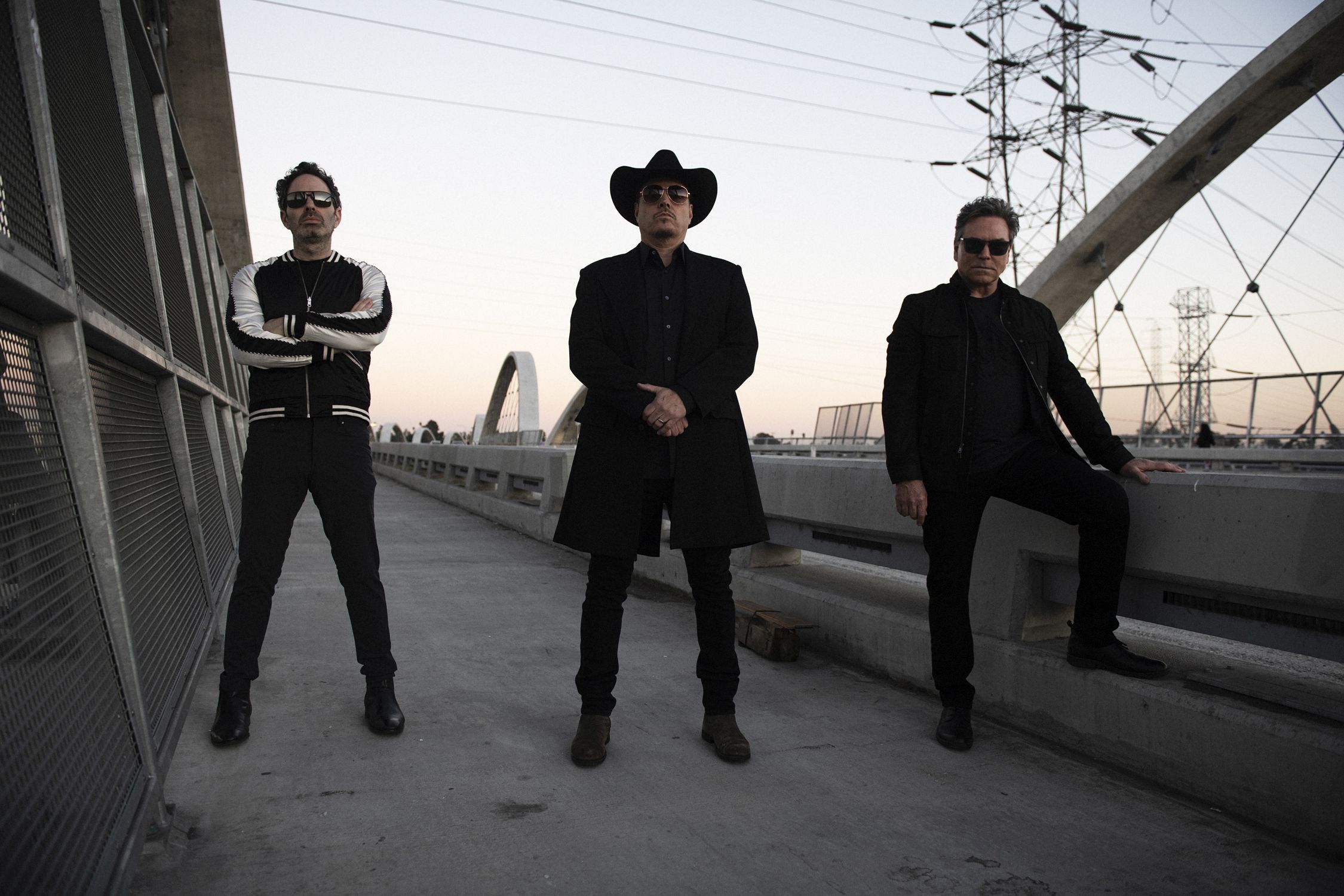
ASHRR Interview Image (c) the artists
Late producer SOPHIE said: “You have the possibility with electronic music to generate any texture, and any sound. So why would any musician want to limit themselves?” What's your take on that and the relevance of limitations in your set-up and process?
In limiting your creative options, you make a choice. A choice takes you in a direction, and along that path is the world of possibility, but with momentum.
But when you say any texture, any sound, if you are speaking within the world of synthesis and sound design, or rather the same electronic bag of tools everyone else is currently using, I personally see that as potentially unimaginative for me. Why not make something bespoke with anything that inspires you.
From the earliest sketches to the finished piece, what does your current production workflow/process look like?
I like to flow at first, and get paint on the wall before I start thinking too much.
For our newest work, we have been jamming on an idea in the studio and recording whatever is happening in that moment which can reveal some real gems that need mining or something magical just appears when you’re writing and recording real time.
In our latest session which we just did in the desert, we just said let’s record at 125 bpm and see what happens. The tape rolls, and music is born from the purest place possible. After a few weeks of not listening to what we recorded, we’ll unravel the sessions and go through and see what we ended up making and that will then go through the process of formulating a song or arrangement or other post-production ideas.
Oftentimes, a lyric will appear during this time but sometimes we write the melody and then lyrics are completed after the song is finished.
In relation to sound, one often reads words like “material”, “sculpting”, and “design”. How does your own way of working with sound look like? Do you find using presets lazy?
Actually presets can be a great place to start if you’re looking for a specific type of sound as a starting point. But then we always tweak to our particular liking which often involves a lot of modulation, envelope shaping, cut off etc … along with effects.
On the other hand, a big sound on our record was just plugging the guitar directly into the console giving it a super clean tight sound (heard on “Sunshine low” etc ) as well a Fender Twin Reverb which captures that classic dub spring sound that we use frequently which we used a lot on “Different Kind of Life” and others .
We always try to start from a place of simplicity and then expand from there.
What, to you, are the respective benefits of solo work and collaborations and do you often feel lonely in the studio? Can machines act as collaborators to you?
Solo work is very isolating as the title suggests and thankfully ASHRR is a band that is all about collaboration. Even if some songs come in as early demos with drum loops and basic sketches, once Ethan and I get together it always changes and grows and develops into the finished song. We all sing ideas into our phones or put 8 bar loop sections together as demos and there isn’t a right or wrong way to make music as long as the music gets made.
Personally, I love being in the studio with Ethan and creating from scratch from a drum loop, a sound, a riff, a melody.. it can come from anywhere and there is a definite advantage to having a drum machine or loops or whatever to help stimulate creativity whether alone or in collaboration.
If you could make a wish for the future directly to a product developer at a Hard- or Software company – what are developments in tools/instruments you would like to see and hear?
Behringer has been teasing the Linn Drum for a few years now and we are still waiting very impatiently for that to come out and hopefully it will include the ability to use your own samples within its classic architecture.
Also, the rebuilt Jupiter 8 would be amazing.

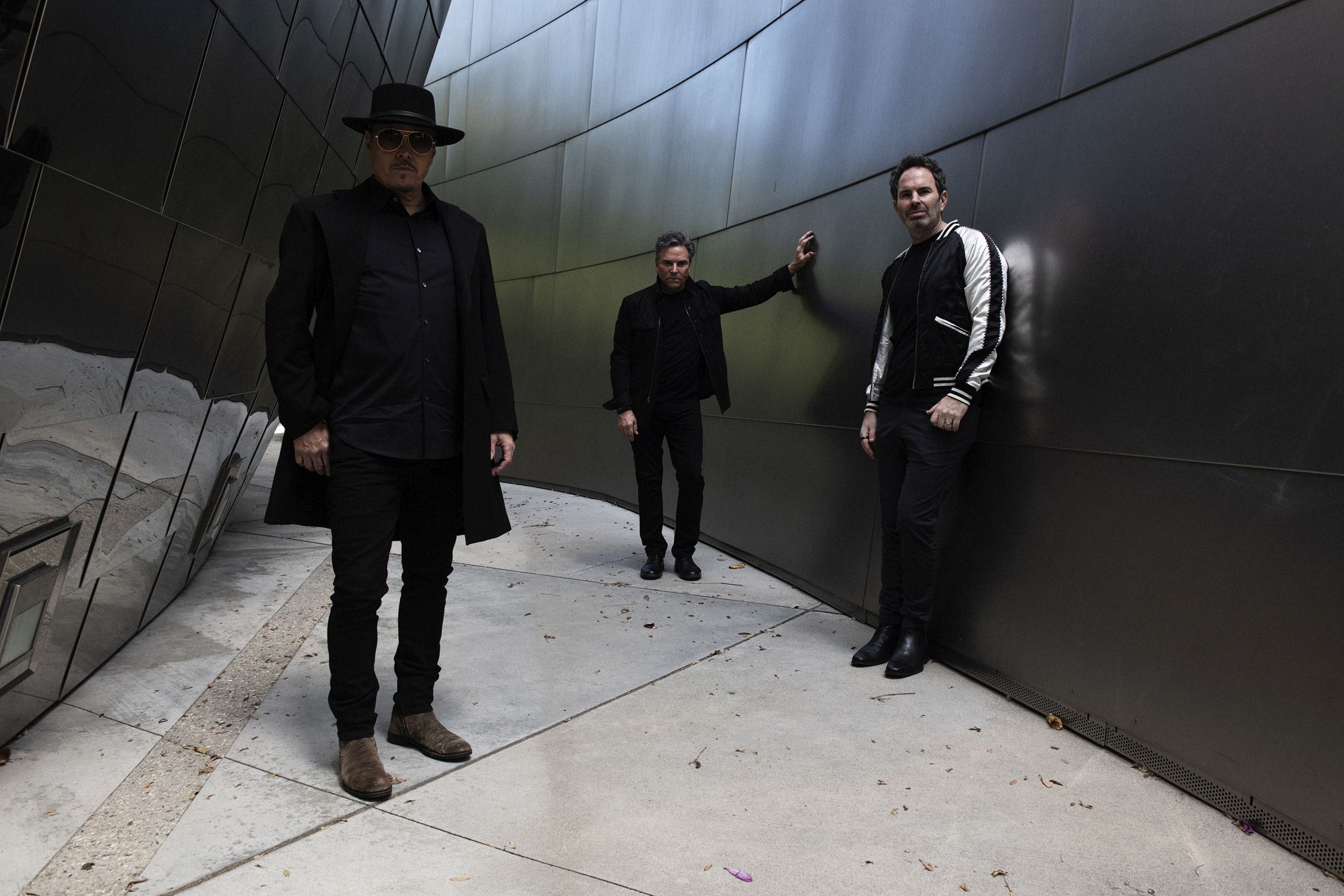 ASHRR Interview Image (c) the artists
"Why not make something bespoke with anything that inspires you?"
Video