Name: Ana Helder
Nationality: Argentinian
Occupation: DJ, producer
Current release: Ana Helder's Parket EP is out now via Chinotto.
Recommendations: For someone interested in music production and sound in general, I would recommend Hold On to Your Dreams: Arthur Russell and the Downtown Music Scene, 1973-1992.
Another great one is Mechanical Fantasy Box, a journal by Patrick Cowley. While it doesn't focus primarily on musical processes, it’s still very inspiring, especially for those who are fans of his music, as I am.
And something different but still very interesting is Musicophilia by Oliver Sacks.
If you enjoyed this Ana Helder interview and would like to stay up to date with her music, visit her on Instagram, Soundcloud, and Facebook.
What was the first time you were consciously impressed by technology – in and outside of music?
I think it was with color television and the first episodes of The Simpsons.
But also with the Macintosh Classic, the black and white Paint app, and the microphone.
Tell me about one or two of your early pieces that you're still proud of (or satisfied with) in terms of production – and why you're content with them.
"Complicado" and "El Groove …" don’t sound great, but I respect them because I made them with no experience at all.
That genuine freshness, which I could only have at that point in my life, has kept me making music to this day.
When it comes to arranging, sound design, performing, composing, etc – what are currently concrete topics and aspects that interest you and where you want to improve or simply challenge yourself?
My mind often tends to lose focus, so the biggest challenge for me is finishing a track.
Performing, on the other hand, is different. Because the music can’t stop, it’s living and leaving in the same moment.
Do you keep up with recent developments in terms of gear and software? If not, why not? If so, what are you looking for?
I have very little gear.
I love looking at what's new, but it feels like a waste of time for me because I know I’m not going to buy anything. I could spend hours thinking about how to acoustically treat my studio, but it’s just pure distraction. It’s better to make music with what you have and forget about the rest.
I’d love to have more instruments, an acoustic piano, and a properly treated room, though—those are my eternal dreams.
How and for what reasons has your music set-up evolved over the years and what are currently some of the most important pieces of gear and software for you?
For me, Ableton and the audio interface are most important because everything connects and is recorded through them, including MIDI synchronization. Everything else is in a constant rotation.
I have a soft spot for classic sounds so I use plugins and gear that are clones, like the Arturia V Collection.
In terms of evolution, I really like the polyphonic option in the Minimoog.
Jean-Michel Jarre maintained that, despite the advances in virtual technology, we are still "analogue animals made out of blood and bones who need buttons and knobs to touch.” In how far is this statement true or false for your own music?
It’s not easy to escape from buttons in the digital era...
What are examples of production tools/instruments that you bought for a specific purpose?
I would say the Keystep Pro specifically for sequencing, to synchronize and control all the synths that don’t have a keyboard.
Late producer SOPHIE said: “You have the possibility with electronic music to generate any texture, and any sound. So why would any musician want to limit themselves?” What's your take on that?
The limit could be the available time to work on a track and the CPU of the computer.
But in terms of expression, it’s true that we can do as much as we like.
From the earliest sketches to the finished piece, tell me about the production process for your current release, please.
“Vamos” and “Parket” follow a similar process.
I started by creating the rhythm and percussion structure with the RD-8 and some samplers; then I added the bassline and, finally, the rest of the harmonies and melodies.
“A Continuación” was different because I began with a sketch and took it to a rehearsal room along with the soundcard. There, I recorded Ani Castoldi on drums and Valentin Prieto on bass, both playing over the existing tracks I had made.
Years later, I reworked all that material at La Siesta del Fauno studio, where Lucas Romeo added extra synths and also assisted me with the mix and arrangement of "Aire."
For “Aire,” I also recorded and used instruments from the studio over a rhythm I had created at home with the Tanzmaus.
What does your own way of working with sound look like? Do you find using presets lazy?
Yes, it can be lazy sometimes to “zap” between presets, but I do it anyway.
I use them as a starting point and then tweak and change things to make them fit the sound I’m looking for.
Richie Hawtin, speaking about semi-modular equipment, has stated that a deeper understanding of sound synthesis can lead to “life lessons that go beyond what we can hear.” Can you relate to that statement?
I don’t have that level of knowledge or high state of consciousness. I just play with the basics.
What were some of your most positive collaboration experiences? How did this "human element" enhance your solo approach? Did you record via filesharing or in the same room and if so, what did the recording process look like?
During the beginning of the pandemic, I collaborated with Agustina Taborda and Valentin Prieto on the album for Por Mercurio, a band we developed through a file-sharing process.
It was like a long-distance relationship: Agus was in Ireland, Valen in Argentina, and I was in Cologne, Germany. I sent rhythms, sound ideas, and MIDI sketches to Agus, who worked on building structures, harmonies, and arrangements.
It was an ongoing process of feedback, mixing, and refining different versions. Honestly, it was a lot of work, but a rewarding experience.
To some, the advent of AI and 'intelligent' composing tools offers potential for machines to contribute to the creative process. What are your hopes, fears, expectations and possible concrete plans in this regard?
I should do more research on this. It sounds interesting.
However, I notice a certain darkness in AI generators, especially when linked to viralizing random images through algorithms. The word “fear” feels very relevant here. I never asked for this kind of anonymous “fear-bombing.”
AI is still full of erratic behavior and bugs. While it can be great for helping with language translation, when it comes to technical questions about music production, it often provides fake information, which ends up being a waste of time. It still needs significant improvement in many areas.
Have you used AI or generative music tools for your own productions? If so, in which way and what did they add?
I haven’t had the chance to use AI in my music yet.
What is a music production related question that you would like to add to this interview for other artists to respond to – and what's your own answer to it?
How similar is the initial idea for a track to the final result?
In my case, I sometimes start with specific objectives, like references: whether it’s meant for dancing, or exploring a certain aesthetic. But it’s hard to stay focused on a single idea until it’s finished, especially with so many possible sounds and pads to experiment with.
In the end, I often find myself more amazed by the process and imagining what the final result could be than by the finished piece itself.

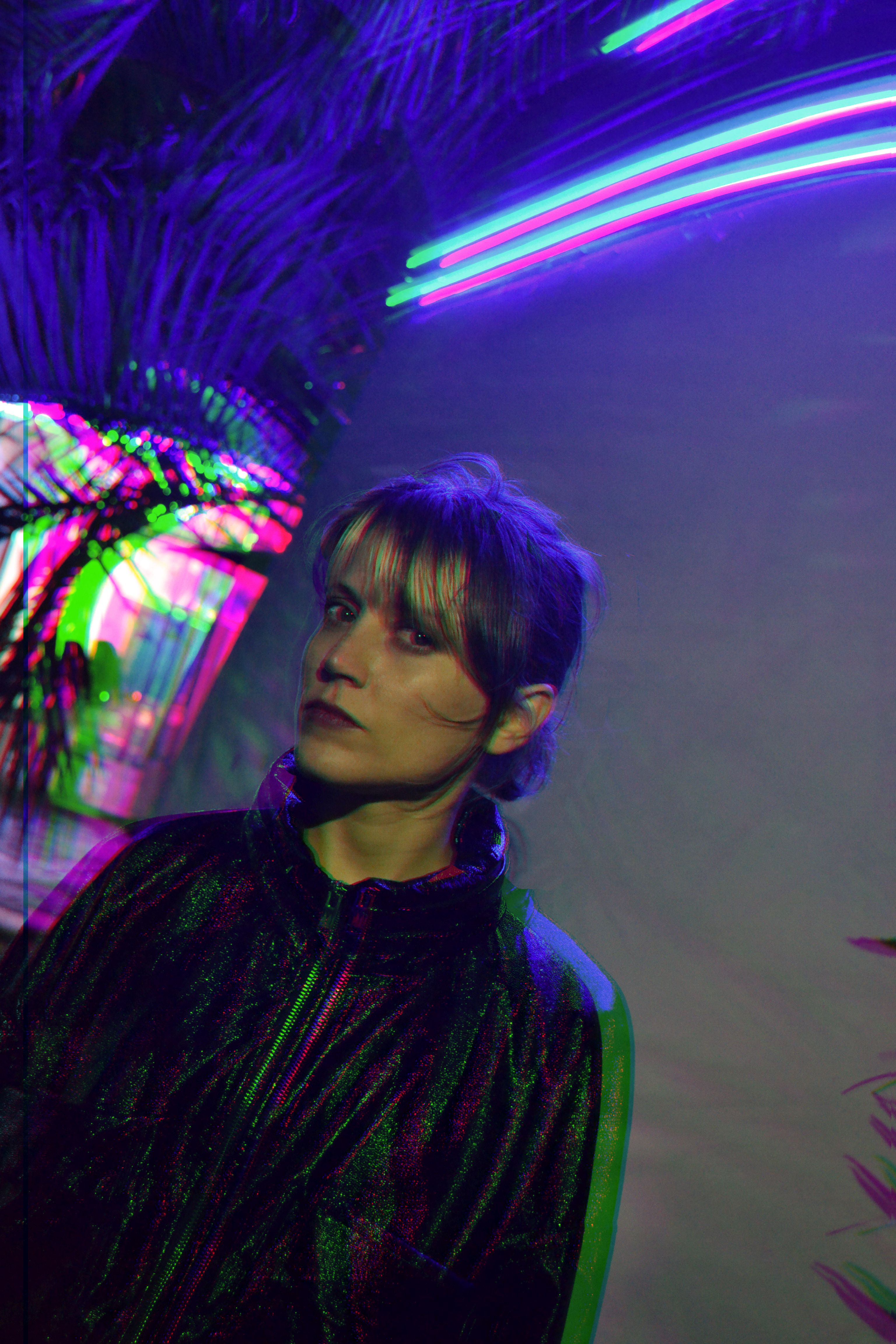 Ana Helder Interview Image by Yazmin Huenchuman
"My mind often tends to lose focus - the biggest challenge for me is finishing a track."
Video