Name: Amber Broos
Occupation: DJ, producer
Nationality: Belgian
Recent Release: Amber Broos's new single "Dance All Night" is out via Filth on Acid.
Recommendations: Book: Mijn ogentroost, mijn afgrond by Ed Franck. It’s a collection of poems based on the love sonnets of Shakespeare.
But I also like to read romanticy (romantic fantasy) books!"#$%&
Podcast: ‘’A Bad Bad Thing’ – true crime podcast, but it’s taken to whole new level.
If you enjoyed this Amber Broos interview and would like to stay up to date with her music and current live dates, visit her official homepage. She is also on Instagram, Facebook, and Soundcloud.
Do you think that some of your earliest musical experiences planted a seed for your interest in DJing?
I learned DJing from my dad when I was 12 years old.
His love and passion for Belgian retro music have always inspired me in my productions and DJ sets. His enthusiasm encouraged me to follow my own musical path and create my own unique sound.
I have always loved club music, but I was not initially a dancer very much. What was this like for you? How does being – or not being – a passionate dancer influence the way you deejay?
I have always loved dancing to club music, and it has significantly influenced my DJ sets.
For me, the most important thing is that the crowd is having a good time while I'm playing. My sets are always full of energy because I play the music I love to hear and dance to the most.
Being a dancer myself, I understand the vibe and energy the crowd wants, and I strive to deliver that in every set.
For your own DJing, what were some of the most important things you learned from teachers/tutorials, other DJs, or personal experience?
I learned all the basics from my dad when I was 12 years old, but I gained a lot of experience by playing for very varied crowds. Performing in front of different kinds of audiences has taught me how to respond to the energy on the dancefloor.
Every day, I still learn new things from my fellow DJs, and that's one of the things I find most fun about DJing—you can always keep learning.
How do you approach digging, what are you looking for, and what were some of the best finds of the past few weeks for you?
I love digging through new music. Because I work for the radio station Studio Brussel, I receive a lot of new promos every day, so that's where I usually start.
But I also check out music daily on Spotify playlists, explore new tracks from my favorite artists on Beatport and SoundCloud, and use social media to discover new producers and artists. Some of my best finds in the past few weeks have come from these sources, and it's always exciting to incorporate fresh sounds into my sets.
How do you experience "groove," and rhythm? What is the relationship between harmony, rhythm and melody?
To me, groove and rhythm are the heartbeat of any track. They create the foundation that drives the energy on the dancefloor. When I'm DJing or producing, I focus on how the rhythm can engage and move the audience.
The groove is what makes people want to dance and feel the music. The relationship between harmony, rhythm, and melody is essential. Harmony adds depth and emotion. Melody provides an element that can captivate listeners. Rhythm ties everything together, giving structure and pulse to the track.
When these elements are balanced, they create a powerful track.
How would you describe the experience of DJing, physically and mentally? Do you listen – and deejay - with your eyes open or closed?
DJing is both physically and mentally.
Physically, it's a high-energy activity where you're constantly moving, adjusting controls, and interacting with the crowd. Mentally, it's about being fully present and in tune with the music and the audience. You're always thinking a few steps ahead, planning the next track.
The feeling I get when I’m fully connected to the crowd is so extremely special, it’s hard to describe, but it’s the best feeling in the world and gives me an insane amount of energy.
How does the decision making process work during a gig with regards to the inclusion of key records, the next transition and where you want the set to go? How far do you tend to plan ahead during a set?
I start with a general plan and key tracks that must be included in my set.
I prepare my sets, but I also rely on reading the crowd’s energy to make decisions in real-time. I lay the groundwork for my sets, but I stay flexible, so I can choose a track based on the audience's response on a track I played earlier.
When you're DJing, does it actually feel like you're inventing something on the spot – or are you inventively re-arranging patterns from preparations, practise or previous performances?
It’s a bit of both: sometimes the venue or gig asks to invent things on the spot but on the other hand I do put in a lot of work and preparation in a set beforehand.
So most of the time I switch things up by making different clusters of tracks I know work well together on the dancefloor.
Do you engage with audiences/dancers - and how? Taking one of your online DJ mixes as an example, how does the experience and the way you deejay change when you subtract the audience?
Absolutely! I engage with audiences by reading the crowd’s energy and adjusting my set to keep everyone dancing.
When there's no live audience, I focus more on experimenting with new tracks I discovered. Without crowd feedback, I rely on my instincts and experience to deliver a nice set for online listeners.
Collaboration is a key part of almost every aspect of music making, but it is still rare in DJing. Do you have an idea why this is? Tell me about your own views on back-to-back DJing, interactions with live musicians or other forms of turning DJing into a more collective process.
I think this could be attributed to the perception of DJing as a solo performance art form, where individual skill and style are emphasized. However, there is a growing trend towards collaborations between DJs, such as back-to-back sets or interactions with live musicians.
In my view, back-to-backs can bring a fresh dynamic to performances. It allows artists to blend their styles and energies. Interactions with live musicians add a live element to DJ performances, adding depth to the music.
For example: the DJ set from Kolsch at the Tomorrowland mainstage was a collaboration between him and classical musicians which made a beautiful spectacle.
How important is dancing for our wellbeing on a personal and even on a societal level?
Personally, dancing is a form of physical exercise, but also stress relief and self-expression. I love to dance!
I never stand still behind the DJ booth. It contributes to my overall happiness.
Especially in the light of advances in AI, where do you see the role of humans in DJing versus that of technology? Can AI act as a collaborator or creative stimulus?
In my view, the role of humans remain essential despite advances in AI technology. We add a unique artistic vision and our personal expression.
However, AI can certainly serve as a tool by offering suggestions and it offers great creative input. I think the synergy between AI and human creativity has the potential to create innovative musical experiences.
Tinnitus and developing hyperacusis are very real risks for anyone working with sound. Do you take precautions in this regard and if you're suffering from these or similar issues – how do you cope with them?
As someone who has been DJing since a young age, I am well aware of the risks associated with sound exposure, such as tinnitus.
A few years ago, I made the decision to start DJing with custom earplugs, and it has proven to be the best choice I have made for my hearing.
I am committed to protecting my hearing so that I can continue doing what I love for as long as possible.
Do you feel as though DJing is inherently different from something like making a great cup of coffee? What do you express through music that you couldn't or wouldn't in more 'mundane' tasks?
DJing is a passion-driven art form. For me, the feeling experienced while performing sets it apart from the routine tasks of daily life.
But I suppose that for baristas, making a great cup of coffee is also an art form and an outlet for their creativity and love for the craft. Basically, we’re both want to make people happy with what we create.
Let's imagine you lost all your music for one night and all there is left at the venue is a crate of records containing a random selection of music. How would you approach this set?
If I had only a crate of random records to work with, I'd see it as a chance to explore new sounds. I'd embrace it as an opportunity to step out of my comfort zone.
I’d start by scanning through the records to find tracks that appeal to me. My goal would be to find tracks that create a cohesive flow.
This situation certainly would push my adaptability as a DJ.

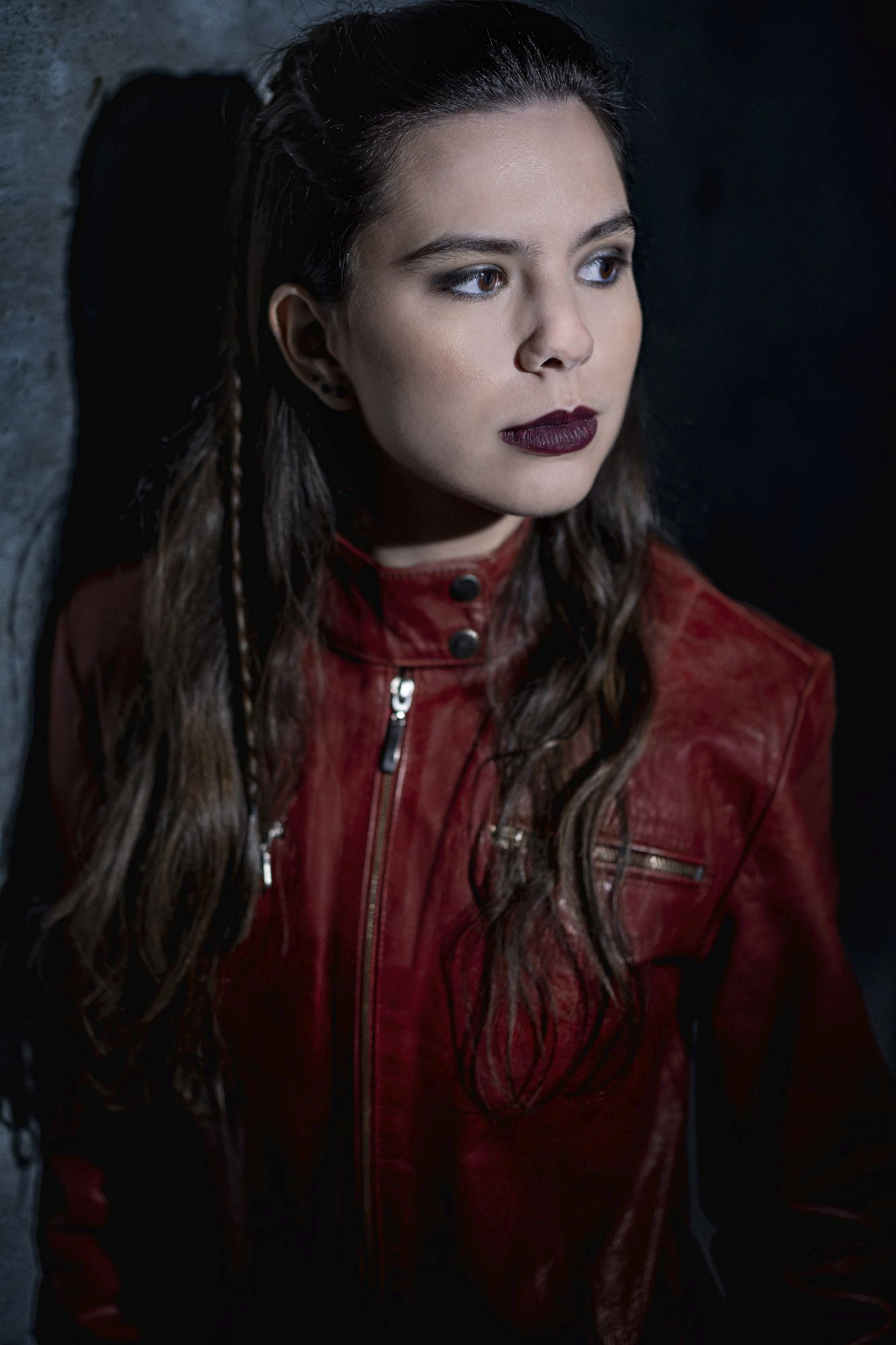 Amber Broos Interview Image by Stefaan Temmermann
“Dancing is a form of physical exercise. It also stress relief and self-expression.“
Video