

Part 1
Names: Alex Groves, Philipp Rumsch
Nationality: German (Philipp Rumsch), British (Alex Groves)
Occupations: Composer, curator (Alex), composer, pianist, producer (Philipp)
Current release: Alex Groves and Philipp Rumsch team up for their collaborative single "Single Form (Figure & Landscape)," featuring involvement by William Brittelle, Valgeir Sigurðsson (Björk, Sigur Rós, Hildur Guðnadóttir), Zino Mikorey (Thom Yorke, Nils Frahm) and the Goethe Institut, out via nynode.
Recommendations:
Philipp: Book: Allegro Pastell by Leif Randt - I think only available in German at the moment but one of the most inspiring and touch reads I had.
Typeface: Dinamo - I have a knack for typefaces and this Berlin-based studio is one of my absolute favorite. It’s a bunch of very nice people and they have been extremely successful in the past few years - and deservedly so!
Alex: Book: Raving by McKenzie Wark – I’m a nerd at heart so as much as I love losing myself on the dancefloor for hours and hours, I also love reading and thinking about the social, political and ethical connotations of those spaces. McKenzie’s book captures the experience of the club alongside the subtle and not-so-subtle ramifications of its atmosphere within wider society.
Music: brat by Charli XCX – I unashamedly have it on repeat at the moment. A high concept thrill ride from the adrenaline rush of the dancefloor to the anxious ruminations of the morning after.
[Read our Valgeir Sigurðsson interview]
[Read our Nils Frahm interview]
[Read our Hildur Guðnadóttir interview]
If you enjoyed this interview with Philipp Rumsch and Alex Groves and would like to stay up to date with their music, visit their respective homepages: Alex Groves; Philipp Rumsch.
Over the course of his career, Philipp Rumsch has worked with or appeard on releases by a wide range of artists, including Jana Irmert, Toechter, Shramm, and Moritz Fasbender.
[Read our Jana Irmert interview]
[Read our Toechter interview]
[Read our band interview with Toechter]
[Read our Shramm interview]
[Read our Moritz Fasbender interview]
Likewise, for the thoughts of Alex Groves's collaborators, read our Mira Calix interview, and our Sarah Davachi interview]
What were some of your earliest collaborations? How do you look back on them with hindsight?
Philipp: Collaboration has been a very important part of my musical practice from the beginning. When diving into music as a teenager I played in bands where we basically collectively tried to figure out our instruments and how to write songs.
Alex: Like Philipp, collaboration has always been a part of my music making. Most of my earliest collaborations were creating music for theatre and making weird and wonderful operas with friends. It was a fun time because we were all still kind of figuring things out, but working together gave us the confidence to take risks and push ourselves in ways we couldn’t have dreamt of on our own.
There are many potential models for collaboration, from live performances and jamming/producing in the same room together up to file sharing. Which of these do you prefer – and why?
Philipp: For me, it really depends on the project and its music. Being educated as a jazz pianist I really enjoyed this collective energy of creation when in a rehearsal space or on stage - and I still do. But especially in composed / produced musical environments there is nothing more exciting than receiving new ideas, sketches or tracks from a collaborative partner and bit by bit creating a piece of work together.
Alex: Most of my collaborations have been with non-musicians (choreographers, directors, writers) or classical performers, so often the actual compositional process has been quite a solitary thing. Instead, I like to have lots of conversations about the ideas behind a piece, the experience we want to create for an audience, the personal motivations for creating and performing the work. Then it’s about testing early and often, playing through sketches and discussing them, critiquing them and developing them.
With Philipp, I feel like we had a similar process to this but what was nice was that once the piece had been “composed” on paper, we then collaboratively composed it on record and were able to feed into the piano recording, the electronics and the spatialisation as it all came together.
How did this particular collaboration come about?
Philipp: In 2020 I went to Iceland to do an internship at Valgeir Sigurðsson’s (known for his collaborations with i.a. Björk, Sigur Rós, Ben Frost) Greenhouse Studios. I had the idea to record an EP of piano pieces while being there and reached out to the American composer William Brittelle who then connected me to Alex. The EP actually never happened but I’m so blessed that it led to the connection to Alex.
Alex: I had taken part in a course run by William Brittelle’s label New Amsterdam and when he emailed saying Philipp was looking for collaborators, I jumped at the chance. I love making new connections and seeing where they lead and, listening to Philipp’s music, I knew we were on a similar wavelength so I was really excited to see where a collaboration might lead.
What did you know about each other before working together? Describe your creative partner in a few words, please.
Philipp: I didn’t know about Alex before William introduced me to him. After Alex reached out I dived into his work and was both stunned by his beautiful work but also felt an immediate connection to the aesthetic worlds he’s creating.
What fascinates me most about Alex is his keen eye for detail and his confidence in compositional processes and developments – which is especially brave and valuable in a time when pieces often get only a few seconds of attention. I’m also a big fan of his ability to create soundscapes using a wide variety of instruments through very specific playing techniques. On top of that he is also a wonderful person to chat and exchange ideas with.
Alex: I’d not come across Philipp’s work before we connected over email but when I listened to his work and read about what he’d been making, I knew he was approaching things in a similar way to me. I love people who find a way to make stuff happen – putting on gigs and making recordings is never easy but if you're open to new ideas and collaborations there are so many ways to make things work.
Listening to Philipp’s back catalogue and seeing the incredible work he does with his ensemble and loads of other collaborative partnerships, I knew he was the kind of person who was open to a bit of adventure, to setting a goal just out of reach and finding a way to get there, and I think that’s a fantastic place to start a collaboration from because it means you both learn and grow along the way.
What do you generally look for in a collaborator and what made you want to collaborate with each other specifically?
Philipp: We both composed for different musical settings beforehand but it’s quite unusual in the context of “classical” music to compose collaboratively. So we thought it could be a fun experience creating a piece of written music together and sharing the whole process – from the first note on paper up until the final master.
Alex: As Philipp says, collaborative composing isn’t really a thing people do in “classical” music so I was intrigued to give it a go and knew Philipp would be a fun person to work with. I think having that open minded approach to collaboration – bringing in ways of working/thinking that might be more common in pop and electronic music and applying them to more classically-informed work.
I think it makes total sense to question how things are made and experiment with your own process and that’s something I’m definitely looking for in potential collaborators.
Tell me a bit about your current instruments and tools, please. In which way do they support creative exchange and collaborations with others?
Philipp: I’m very much interested in creating new digital instruments that are based on acoustic sounds / samples I made myself. The electronics for our piece “Single Form (Figure & Landscape) are created from recordings of the same piano that you hear – only this time I played it with an E-bow and we then processed it.
In the last few weeks, I immersed myself again creating custom instruments with Kontakt and an AI-powered sound synthesis method called timbre transfer.
Alex: I work a lot with acoustic instruments and classically-trained performers, combining they’re playing with live processing through Ableton like in Trace I and Curved Form (St Endellion). What I love about this way of working is that I have to really understand the people and instruments that I’m writing for – what do they enjoy doing, what are they trying to communicate with their instrument, what can the instrument do well, what are the limitations of the instrument?
With these questions in mind, I can then create a piece that amplifies the unique characteristics of the players and instruments creating something much larger and more detailed than the sum of its parts.
Before you started making music together, did you in any form exchange concrete ideas, goals, or strategies? Generally speaking, what are your preferences when it comes to planning vs spontaneity in a collaboration?
Philipp: We had some zoom meetings were we just talked about music and art in general. Alex brought up the work of British sculptor Barbara Hepworth early on and how this influenced his work. We were also talking a lot about “rhythm” and “tempo” in music that is not necessarily connected to a grid but to other reference points such as the own breath etc.
I tried similar things in a piece for my ensemble - “Prologue” from the first album “reflections”.
Alex: Like Philipp says, there was a lot of conversation around what the piece could be – exchanging influences both musical and non-musical – and discussing what the concept behind the piece could be.
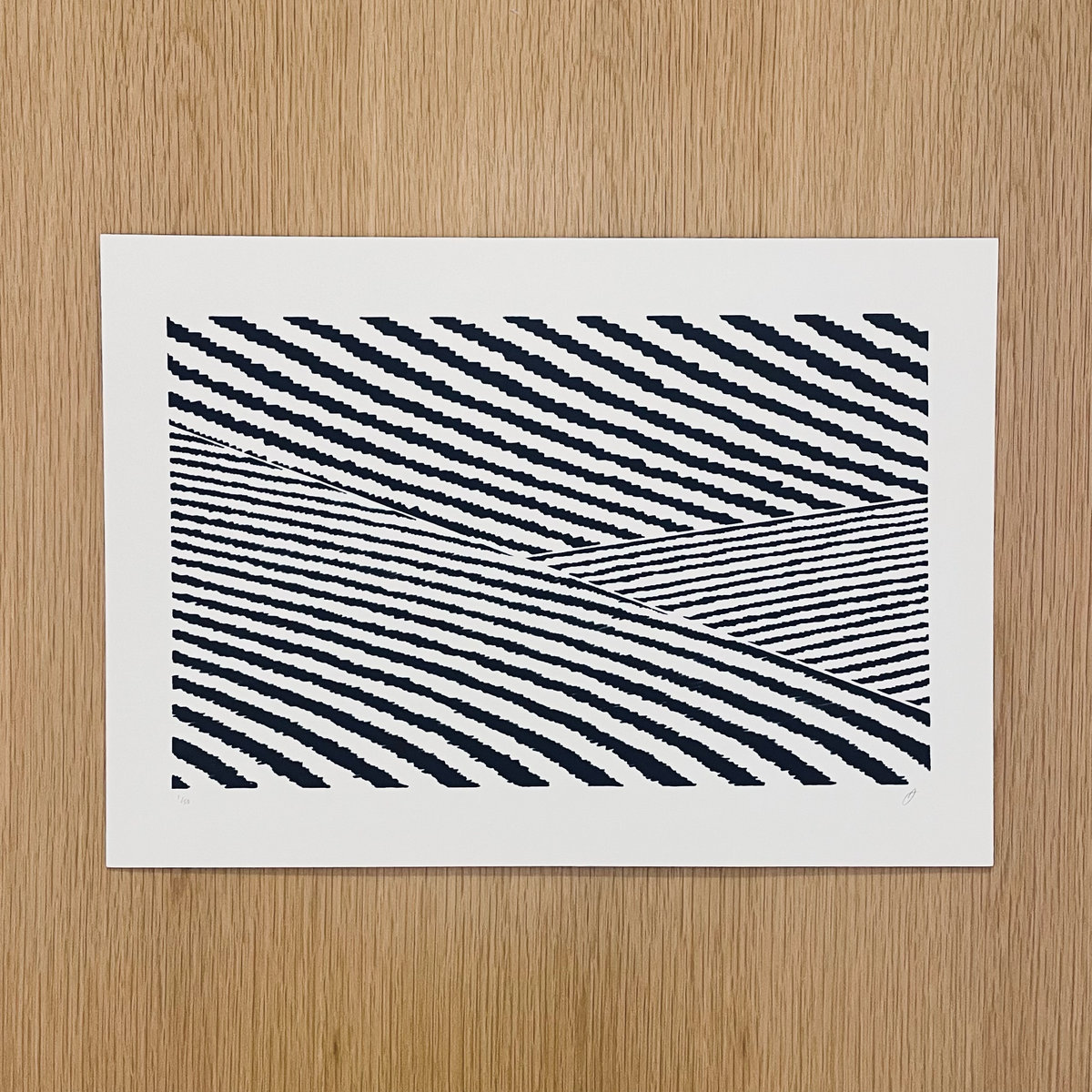
We had fairly loose goals around the fact that it would be for piano and electronics and of a certain length, but the rest was fairly open ended. As the piece progressed, it felt very natural that the plans and goals shifted – spatialising the electronics with Dolby Atmos, creating a music video and a print to accompany the release.
I think because we hadn’t put too much expectation on the project, we allowed it to grow bigger and bigger in a very organic way.