Name: Adam Schatz
Nationality: American
Occupation: Saxophonist, multi-instrumentalist, composer, producer, improviser
Current Release: Adam Schatz's new album Civil Engineering Vol 1, featuring himself on piano, tenor saxophone, synthesizer and live processing as well as Carmen Quill (upright bass) and Qasim Naqvi (drum kit) is out via Jealous Butcher.
If you enjoyed this Adam Schatz interview and would like to find out more about his music and current tour dates, visit his official homepage. He is also on Instagram, and bandcamp.
When did you first consciously start getting interested in musical improvisation? What was your first improvisation on stage or in the studio and what was the experience like?
I played saxophone from an early age so it didn’t take long for me to end up in some extracurricular ensemble situations.
There was a dad in our town who ran a jazz band program out of his basement, and I would get together with a handful of kids and play through tunes and generally have a blast doing it. In those situations, you were learning the forms, playing the melodies and then taking individual solos, but that was the first encounter I had with that sort of jumping into the deep end musically.
As I grew studying jazz I was simultaneously sitting at the piano and writing songs at the piano that I’d go on to sing with my band of friends, and from the earliest I can remember most of my songwriting has come out of just sitting at an instrument and seeing what came out.
There wasn’t too much conscious inspection of what I was doing, but my process now 25 years later really hasn’t actually changed that much. I’ve just continued to feed the machine that pushes out the ideas when I’m least expecting it.
Tell me about your instrument and/or tools, please. What made you seek it out, what makes it “your” instrument, and what are some of the most important aspects of playing it?
I mostly jump between keyboards, saxophone, and a bunch of pedals to process, loop and ripple those sounds. But I’m just as happy to have the power go out and play acoustically.
Honestly the longer I’ve been doing it, the biggest constant is people. It could be contrived to say people are the real instrument, but, it’s the body and brain that does the heavy lifting, and I am nearly always considering how other bodies & brains will interpret what I’m doing. Once you add a few more bodies and brains to make music with me, well that’s the good stuff right there.
I have fun doing live sampling / processing of my own sounds and letting an audience hear the journey it can go on, even if maybe it’s not nearly as apparent to them what I’m doing as it is to me, I still like the tightrope of taking something in real time and moving it around from space into a machine, playing with duration and placement and all the ways that you can surprise yourself.
Happy accidents are one of the best things about improvising and making music in general. I think you work your whole life just to increase the likelihood of the happiest accidents occurring.
Derek Bailey defined improvising as the search for material which is endlessly transformable. What kind of materials have turned to be particularly transformable and stimulating for you?
I am constantly listening to music both from ancient recorded history and the great sounds my friends make. Both are given equal weight, I think.
Then there’s sitting at home and just learning songs & little portions of other people’s playing that I’ve loved as I hear it, all of that gets pushed into the pile of exposure, an evolving adventure of proof of all the ways you can do something within the finite spectrum of sound.
But I think nothing is more important than living a damn life. The way I play and engage with others now is so different than ten years ago, and I could never point to a specific instance that changed me. It just keeps a-goin’.
When you're improvising, does it actually feel like you're inventing something on the spot – or are you inventively re-arranging patterns from preparations, practise or previous performances? What balance is there between forgetting and remembering in your work?
To me it usually feels like spontaneous composition, even when I’m playing with other people for the first time.
Without a doubt harmonic and melodic ideas that I’ve played with in the past will come out. There’s consonance I love, there’s dissonance I love, but there’s a million little parameters of arrangement & sonics that all but guarantee nothing will happen the exact same way twice. And that’s a joy for me.
I think I am very good at forgetting. I’ll hear a studio improvisation I did and it could take a minute for me to realize it was me. Forgetting is maybe a fun part of it, I suppose, to make room for whatever comes next.
On the flip side, during an improvisation I challenge myself to remember moments from earlier and find ways to weave them back in, however that might come true. That’s my idea of a good time.
Artists from all corner of the musical spectrum, not just “free jazz” have emphasised the importance of freedom in their creativity. What defines freedom for your improvisations?
The willingness to let whatever happens happens is a beautiful thing, and then cross-referencing that with the desire to still do a really good job, that makes for some action packed freedom experiments right there.
What are some of your favourite collaborators and how do they enrich your improvisations?
There was a group of friends in school (NYU Jazz) and we got deep into studying improvisation as a group. We started a group called Father Figures and had professors like Wayne Krantz and Ralph Alessi push us around in the best way and we lived together and played in the basement of our apartment and could go for hours trying to make collective improvisations that got us excited.
The drummer of that project is Ian Chang, he also drummed in my band Landlady and we’ve just played so much music together. When you’re taking music journeys with people you love, and everyone keeps trying to get better, this mind-reading starts to occur. It’s nearly impossible to describe, but you anticipate each other’s motions and land on ideas sometimes at the exact same time, anticipate each other’s changes in dynamic or tempo, action and space.
I’ve got a big pile of people like that who I love to play with and honestly it’s still 70% about how much you enjoy eating food and hanging out together, and 30% how well the music gels. It’s just a treat when it all lines up.
Carmen Quill is an upright bassist who I’ve started to play with much more recently and she’s a part of my Civil Engineering album that came out earlier this year. We’ve done a fair amount of duo improvising and I just love the choices she makes and how we are beginning to learn each other’s language.
But honestly I think there’s a huge sphere of people who approach improvisation in a generous way, not predisposed to one approach other than just trying to make melodic sense of each other and have fun while doing it, and that leads me to have as much fun playing with someone for the very first time.
Stewart Copeland said: “Listening is where the cool stuff comes from. And that listening thing, magically, turns all of your chops into gold.” What do you listen for?
I do think one of the secrets to improvisation is the ability to play and listen at the exact same time.
As I took improvising more seriously I realized how often I was alternating listening and playing, and the practice of ingesting what’s happening around out and playing at the same time, takes a ton of work, as does any coordinated habit or action.
I listen for space I can shift. I listen for space I can invent by not playing. I listen for a pulse that can be developed and engaged with. But I suppose we could get real meta and say I also want to be listening to make sure that I’m listening.
Because if you stop listening and think just about a cool thing for you to do, you might end up like Stuart Copeland.
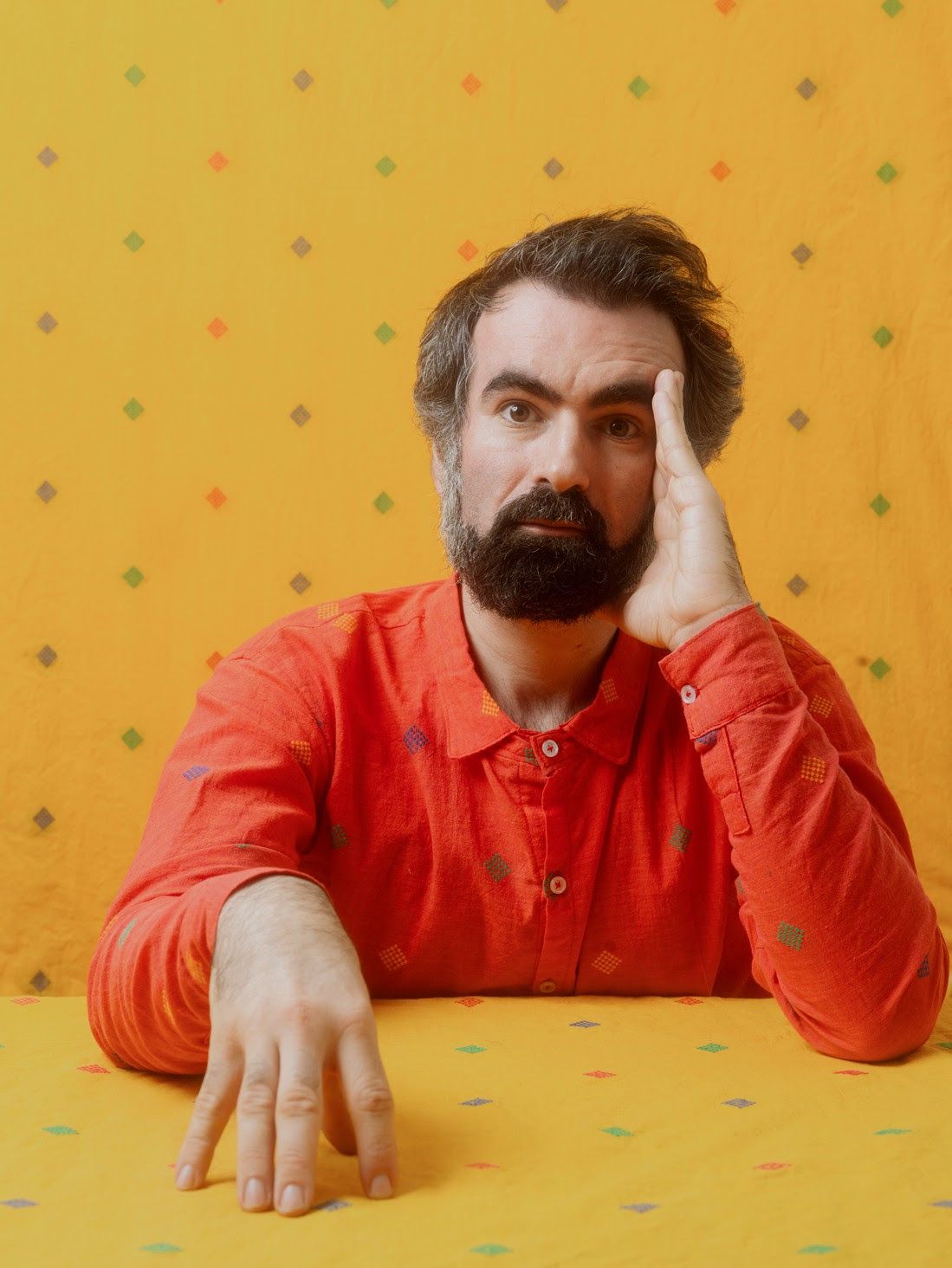 Adam Schatz Interview Image by Graham Tolbert
“Nothing is more important than living a damn life.“
Video