Name: Adam Fenton aka Adam F
Nationality: British
Occupation: Producer, composer, multi-instrumentalist
Current Release: Adam F's re-imagination of his classic debut album Colours - Colours Revisited - is slated for release on Friday 21st February 2025. Pre-order the record on CD or vinyl via his official store.
If you enjoyed this Adam F interview and would like to know more about his music, visit him on Instagram.
It seems that, for a variety of reasons, the music media were particularly interested in Manchester and Bristol during the 90s. What was London like at the time and how would you describe the creative environment into which Colours was born?
I was born in Liverpool and moved to London by the time the album Colours was created. I left home at 15 years old, rented a room in a flat in Liverpool Road, Islington London and made money by selling cans of Coke from two ice buckets balanced on my shoulders in Camden market, as well as from busking in the London Underground tunnels.
I saved up to buy a guitar and a large African Djembe drum. Eventually, I set up a market stall, which cost £5 a day to rent where I sold coffee, orange juice, and over time, I saved enough to buy some second hand/used equipment.
This included an Atari 1040 STE with Notator as my DAW (Notator, which later became Logic - Audio), an Akai S1000 sampler, a second-hand Allen & Heath mixing desk, a Fender Rhodes, and various other analogue out board gear and synths that became the foundational equipment used when recording,composing and producing Colours. all in my bedroom studio, Bible Studios.
Here's a photograph below taken at the time: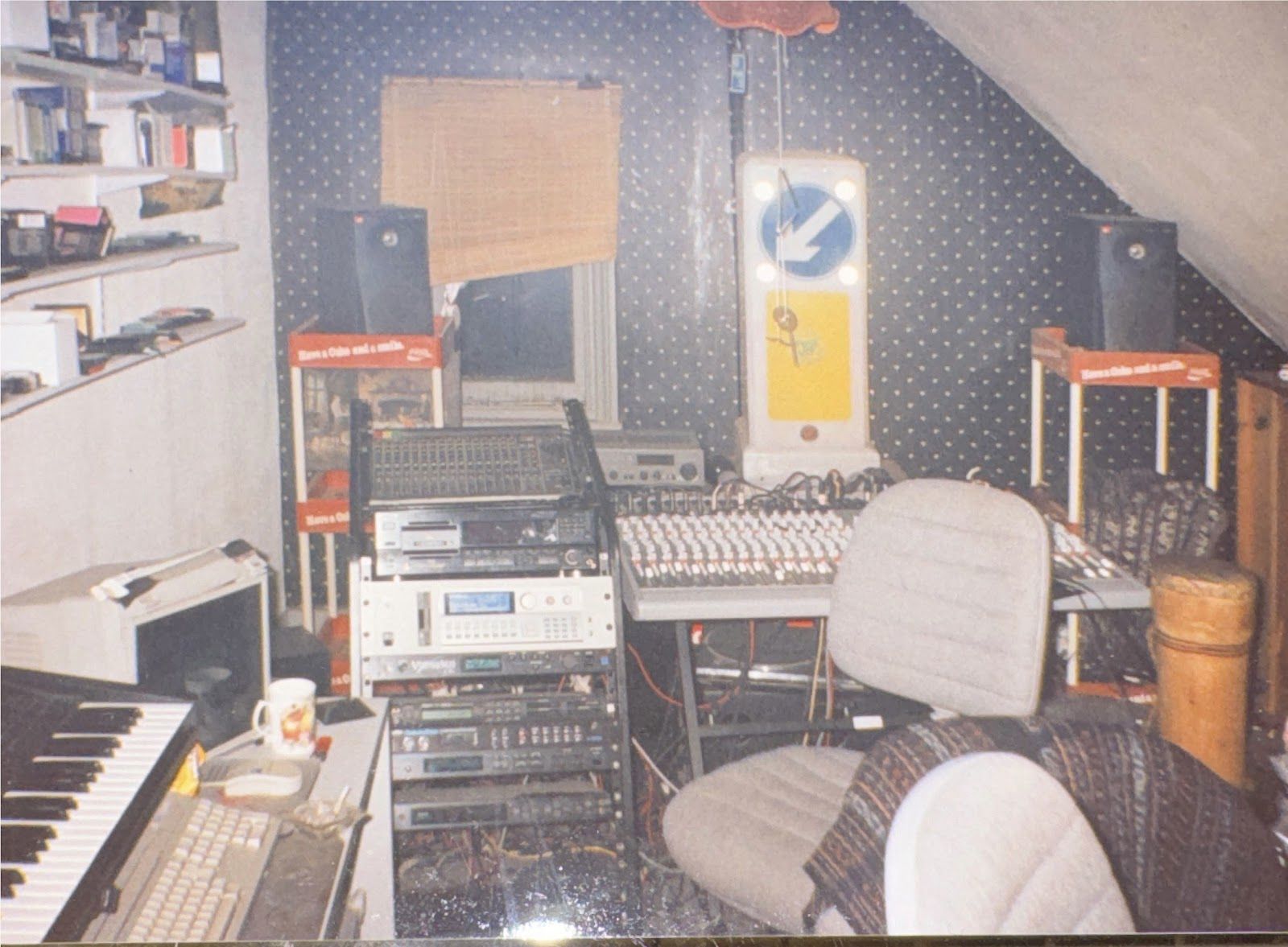
Bible Studio Photo by Adam F
I found an interesting piece of trivia online - that you played for the Moody Blues during their US tour. How did that happen and what was that like?
I had an incredible opportunity in my teenage years to gain work experience as a gopher in a studio owned by Alexis Korner in Scrubbs Lane in London. Alexis was a pivotal figure in the British music scene and played a vital role in the formation of several British bands, including the legendary Rolling Stones and Free.
During my time at the studio, I was able to learn my way around a high spec analogue recording studio, and record some early song demo ideas and vocals and I had the opportunity to collaborate on songwriting ideas with the composer and musician ‘Bias Boshell.’
He'd worked with Barclay James Havest and composed many big records at the time such as ‘Kiki Dee's hit "I’ve Got the Music in Me."
I was invited to go on a massive tour across the USA with the Moody Blues, supported by the band Chicago.
The tour turned out to be the beginning of an amazing experience and journey across America, performing in venues that echoed the iconic Woodstock festival. I was surrounded by rolling hills and a sea of hippy-chic fans that was unforgettable.
How did that experience feed into the music you would make upon returning to Britain?
I wouldn’t say that this experience directly fed or influenced the music I created in anyway what so ever as my influences came from other genres and artists. But it provided me with invaluable insight into performing, playing, and the teamwork and rehearsals necessary that goes into performing live especially with large audiences!
I was in a funk band as a lead singer performing as a singer and composing songs way before Jungle and DnB.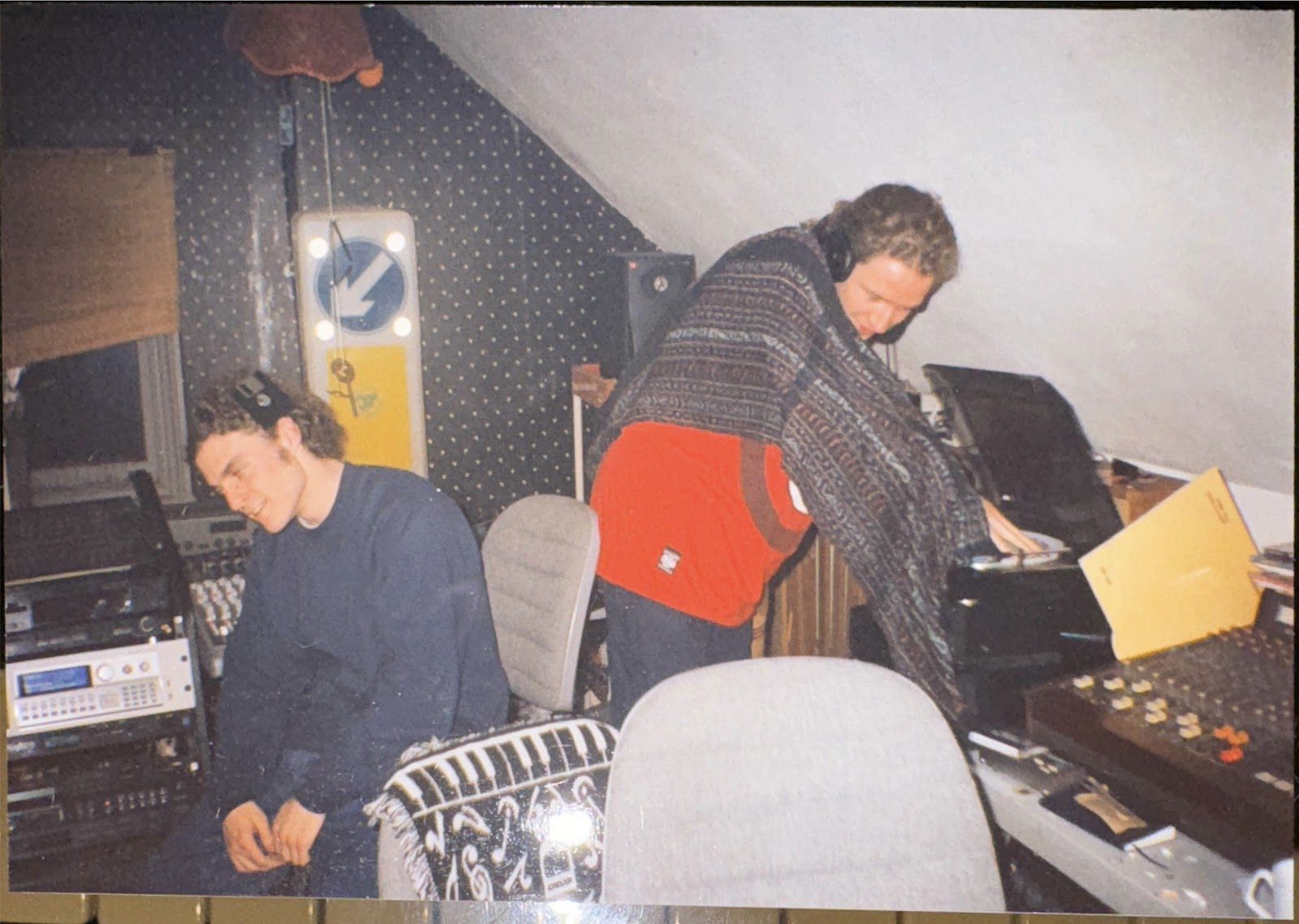
Bible Studio Session Photo by Adam F
Drum n Bass was very much in the spotlight in mainland Europe as well, but the experience was more one of listening to albums, compilations, and mixes. Can you take me through your memories of experiencing this music at some of the best clubs as it was happening?
Two of the best club nights were Speed at Orange, hosted by Fabio, LTJ Bukem, and MC Conrad, and the infamous Blue Note Jazz Club in Hoxton, Shoreditch.
Besides the music, what made these nights so special was that it was one of the rare occasions when all the artists in the scene would congregate and listen to each other's music. This sense of community inspired me, and both clubs had a distinctly different atmosphere.
It was a musical soundscape and journey, encompassing so much more than individual dance tracks. Those were the days when tracks could be eight minutes long plus, and the mixes were slow and respectful of the original tracks. A time where the DJ took you on a musical journey, an experience shared by the audience and artists in the scene simultaneously.
When I spoke to Kruder & Dorfmeister recently, they said that part of their goal was to create something immersive and musical, to slow things down and create a counterpoint to techno culture. Is that something you can relate to?
I deeply resonate with the idea of creating an immersive musical experience through music, inviting listeners into complex soundscapes that evoke emotion.
Culturally, drum and bass, previously known as jungle—celebrates diversity and experimentation, fusing, sampling, and drawing from influences from the sound system era of MCs and genres including, rave, hip hop, jazz, and reggae to name a few examples and blends these worlds together.
Kruder and Dorfmeister were there during the evolution of the genre and had a massive impact on the scene. I’m also personally a fan of some of their work.
Drum n Bass was super analytical in the sense that it sliced sampled performances into thin wafers and then re-arranged them. Your approach seemed to be the exact opposite, it was about blending different parts into something coherent and then look at the details. What was your perspective of a processed way of working with music compared to one where actual human performance was at the centre?
I had no idea that jungle and drum and bass was so analytical when I first created ideas and if I had known that or taken it into consideration at the time of making Colours, I’m sure that approach would have had a negative impact.
I was quoted when being asked "what genre would I describe the tracks on Colours in a Japanese interview to which I said "free style." I think that is because I chose to infuse the music I was influenced by into an open and developing genre through incorporating live instrumentation as well as sampling without any restrictions.
The track “Aromatherapy” was influenced by the uplifting and musical atmosphere of the club "Speed," whereas “Metropolis” was specifically inspired by the dark and cinematic ambiance I took home from a Metalheadz night at the Legendary Blue Note Club.
To this day, I remember very vividly seeing “Circles” on MTV for the first time! More recently, about the original “Brand New Funk,” a Youtube comment said: “I remember Mary Ann Hobs playing this one evening on radio 1 show - i skipped work the next day, got a train to London and scoured all the shops until i found a copy.” How did you experience the impact of Colours yourself at the time?
I am genuinely humbled by the fact that all the songs on the album remain relevant even to this day. It’s incredible to think that something I created nearly three decades ago still resonates with people.
At the time of Colours, I wasn’t even a fully fledged artist in the genre; I was still working in a record shop run by Moving Shadow Records and I was helping at the door with the guest list for a club night in the heart of London called Voodoo Magic behind the Record label ‘Moving Shadow’ owned by ‘Rob Playford’ who also composed, recorded and co-produced the debut album Timeless by Goldie.
In between managing the guest list and letting people into the voodoo magic events, I would often hear DJs like Grooverider or Frost playing one of my tracks and then run downstairs into the crowd to hear my tracks and feel the reaction firsthand. I remember Grooverider playing and rewinding “Circles “ at a night called heaven for the first time and then cutting the first early version of the track “Metropolis “ on dubplate and handing it to Grooverider at a Metalheadz night at Blue Note, the very first play of the track which Goldie rewound.
I had no idea at the time that the album and tracks would have such an impact on the genre and then go on to be nominated and receive a MOBO Award for Best Album, especially considering the album was up against renowned artists like Massive Attack.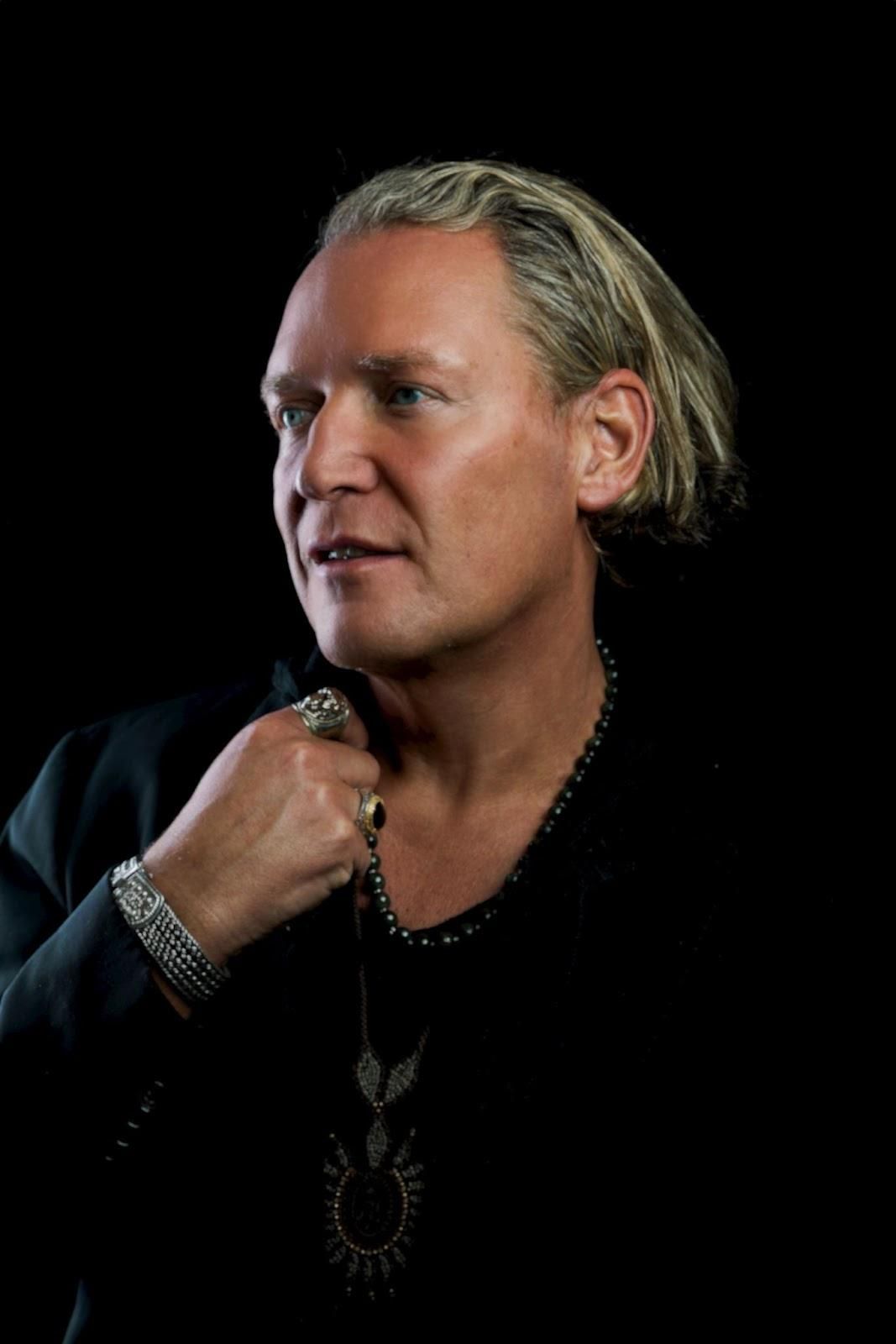
Adam F Interview Image (c) the artist
What I find interesting about the time since the Kaos hip hop album and the accompanying drum n bass versions that followed Colours is not so much your exploration of other styles but that there has not been a full-length album release. What's your view of the relevance and ongoing value of albums?
Hip-hop has been a massive influence and an important part of my journey, particularly with the two albums you mentioned: Colours and Kaos: The Anti-Acoustic Warfare. In the several years following the making of both albums, I performed live with a full band for the Colours album, collaborating with a mixture of live musicians, lasers, and an MC all across the world.
For Kaos, the hip-hop album, I toured live with artists featured on the album, such as Redman, De La Soul, and M.O.P., known for tracks like "Ante Up" and "Cold as Ice."
In the early 2000s, I recognised that, with my platform and status as an artist and producer, I had an opportunity to highlight and propel new artists who were emerging in the early DnB years with their first releases at the time, such as Pendulum, Chase and Status, and Nero and took on a new role releasing music on my newly formed record label.
By the end of the 2000s, having successfully achieved those goals, I wanted to further explore working with visuals, both in trailers and as a film score composer, as well as a ghostwriter and vocalist for other artists in different genres.
Some of my later achievements include composing and producing for Sacha Baron Cohen in the film "Ali G Indahouse," which featured a multitude of live-recorded orchestral-themed compositions that I worked on with Anne Dudley (Art of Noise) and John Bell (orchestrator for Star Wars).
I also contributed to various film trailers, including a 20th Century Fox production entitled Let’s Be Cops. The track for this trailer was a composition I co-wrote and produced featuring Method Man (Wu-Tang).
Additionally, as a writer and ghost vocalist for another emerging artist, I achieved a UK National Chart No. 1 with the artist Second City for the song "I Wanna Feel."
I first experienced music through listening to full artist albums and I personally believe albums are the only way to truly immerse oneself in what an artist is expressing in the context of a specific time and work.
What sparked the idea of revisiting Colours?
It felt completely natural and It was a labor of love, to say the least. It seems many artists with a well known repertoire celebrate 25 or so years of their albums by remastering the original tracks. There is a real fusion of influences coming from everywhere right now that includes a lot of 90s influences creating a new musical melting pot. You’ve got new producers and established ones playing and performing together, collaborating creatively.
In the last few years, "Circles" has re-emerged into new audiences, worldwide thanks to artists like PinkPantheress with the track "Break It Off."
This track has introduced "Circles revisited" to a younger fanbase and has introduced many new to me fans as well. We realised that none of my music has ever been available on vinyl since its first release, digitally or for streaming, and I wanted to make it available again and re-recording allowed me to achieve this.
My wife Kirsty and I set up a new label called 181 Recordings, and the first album to be released will be Colours revisited. Kirsty also re-sang the Tree Knows Everything from Colours which is one of her favourite songs.
When re-listening to Colours, do you recognise the person that was behind this music? Or has it become the work of someone else in a way?
A question that has always intrigued me is, “What are your favourite tracks that you have made?” I believe that a great artist is never fully satisfied with their work. As time goes by, some may think they could have added more or less to improve it.
Time and distance create a kind of separation as one evolves on their musical path. It can feel, as you mentioned, ‘like the work of someone else—in a way.’
However, re-recording this album has allowed me to reconnect and go back to that time in space … here and now.
What do you make of the claim that you can't enter the same river twice?
At this stage in my life, I never expected to be revisiting the past. Yet, like rivers that change their courses over time, life evolves and sometimes comes back full circle.
Looking back at my early twenties has proven to be unexpectedly rewarding on an emotional level. I've gained a wealth of experience and have truly enjoyed the process with a new generation showing appreciation.
Of all the new versions, “Brand New Funk,” to me, has the most intriguing arrangement – a more powerful bass, somewhat more refined percussion sounds, a beautiful Rhodes passage towards the end. Can you take me through the process of working with the material based on this piece and some of the considerations for your decisions?
The “Brand New Funk” version you refer to is not what I consider a re-record, like the other compositions on the Colours/Colours Revised album. More of a new take of "Brand New Funk."
It's what I call a reboot to blend in with the current sonic landscape in the genre, while also having some fun elaborating on what I have always considered to be one of my most interesting and unpredictable arrangements of a composition in this genre—the original "Brand New Funk."
Colours was genuinely life-changing for me in that it drew me into something that had seemed alien to me and opened up new ways of appreciating music. I thought Kaos was a fascinating follow-up, but I also thought that it would have been great to see you explore different corners of the same sonic galaxy just one more time. How do you see that yourself – and what would a sophomore album closer to Colours have looked like, do you feel?
It's perfect timing to ask this question. Simply put, I can answer by saying that, over the last three years, with my wife, Kirsty Hawkshaw (Opus III), I have worked on a follow-up album to Colours, tentatively entitled Return to Colours. Kirsty has co-written and co-produced it as a joint artist.
This follow-up album is influenced by the nostalgic sound we were first known for in the 90s and fuses elements in the same sonic galaxy of that early era you talk about. It will follow after the 2025 album Colours Revisited on our 181 Recordings.

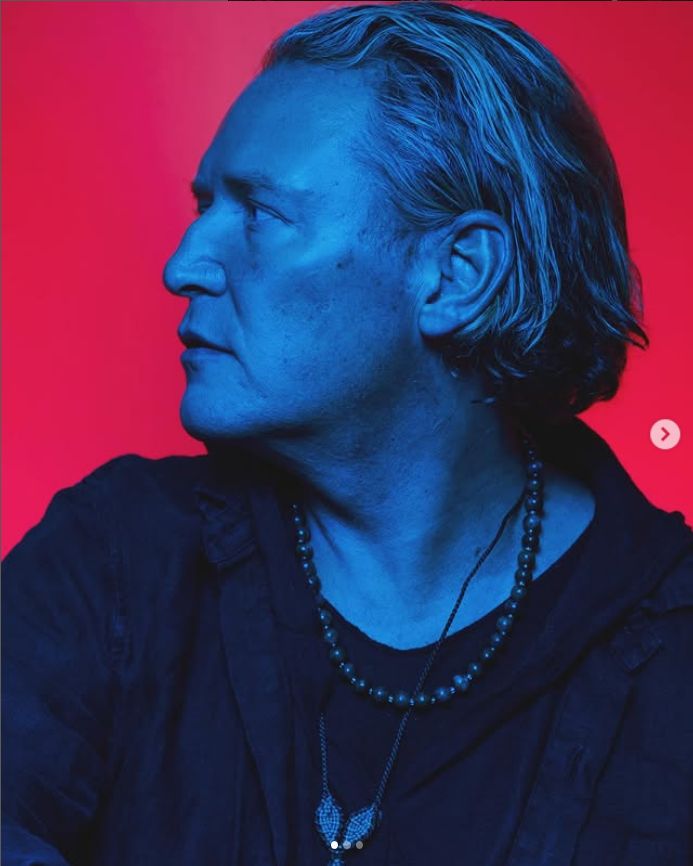 Adam F Interview Image (c) the artist
"Re-recording Colours has allowed me to reconnect and go back to that time in space … here and now."
Video